
In most Islamic classes in Singapore, we spend a great deal of time on Islam — the pillars, the fiqh, the halal and haram — and a reasonable amount of time on Iman — the articles of belief, the theology.
But there is a third dimension of this faith, one that the Prophet ﷺ himself placed at the apex of the entire religion, that rarely gets the attention it deserves. It is called Ihsan. And it may be the key to everything that feels missing from our religious lives.
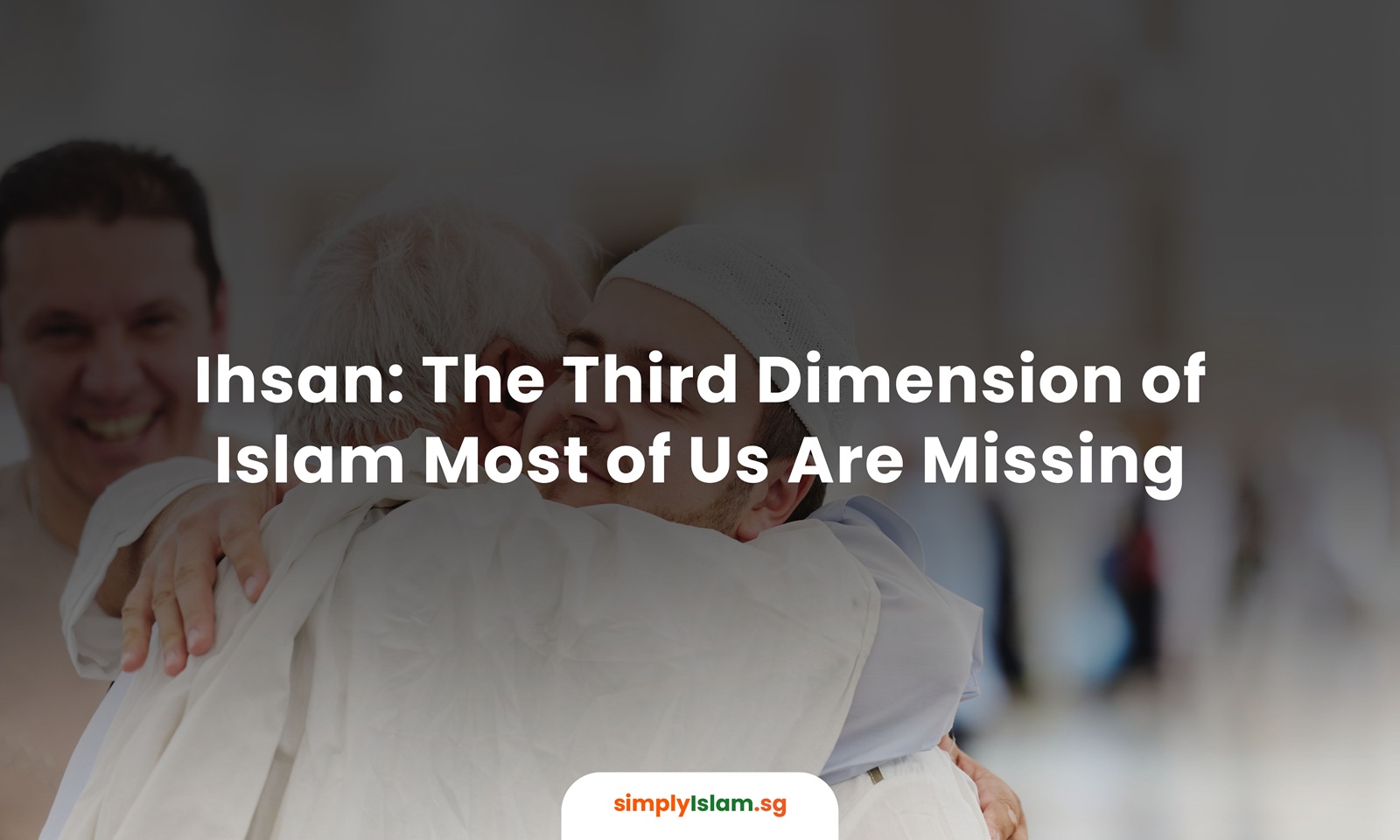
Ihsan — from the Arabic root meaning goodness, beauty, and excellence — is the state of worshipping Allah as though you see Him, and knowing with absolute certainty that He sees you. It is not a spiritual luxury for saints and scholars. It is the goal that every sincere Muslim is called to pursue. And the science of reaching it — called Tasawwuf or Islamic spirituality — is one of the oldest, richest, and most profoundly relevant traditions our faith has to offer.
The Hadith of Jibril: Our Most Complete Map of the Faith
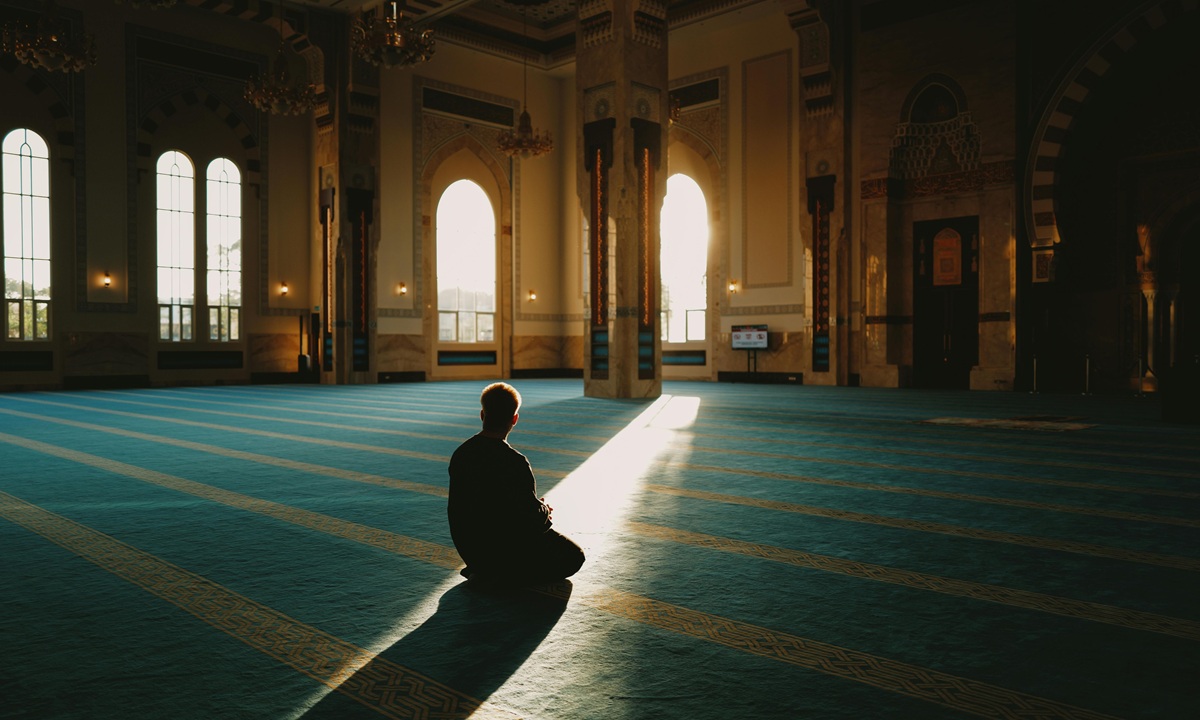
The foundation of understanding Ihsan is the famous hadith narrated by Sayyidina Umar ibn al-Khattab, known as the Hadith of Jibril. The angel Jibril appeared to the Prophet ﷺ in human form and asked several questions, three of which unlocked the three great dimensions of Islam.
‘Tell me about Islam,’ he said. The Prophet ﷺ described the five pillars: shahada, prayer, zakat, fasting, and Hajj. This is the first dimension — outward submission to Allah’s commands.
‘Tell me about Iman,’ he continued. The Prophet ﷺ described the six articles of faith: belief in Allah, His angels, His books, His messengers, the Last Day, and divine decree. This is the second dimension — the inner theological foundation.
‘Tell me about Ihsan,’ Jibril asked finally. And here the Prophet’s answer was singular and luminous:
أَنْ تَعْبُدَ اللَّهَ كَأَنَّك تَرَاهُ، فَإِنْ لَمْ تَكُنْ تَرَاهُ فَإِنَّهُ يَرَاك
‘That you worship Allah as though you see Him; and though you do not see Him, know that He sees you.’
When Jibril departed, the Prophet ﷺ told his companions: ‘That was Jibril. He came to teach you your religion.’ Notice: he did not say ‘he came to teach you half your religion’ or ‘the technical parts of your religion.’ He said: your religion. Islam, Iman, and Ihsan together constitute the whole.

What Does Ihsan Feel Like? Recognising the Signs
In the Prophetic Tradition, it was narrated:
إنَّ اللَّهَ كَتَبَ الْإِحْسَانَ عَلَى كُلِّ شَيْءٍ
Verily, Allah has prescribed Ihsan in everything
Ihsan is not an abstract concept. It produces recognisable fruits in the soul and in daily life. Here are some of its signs:
You pray differently. When Ihsan is present in prayer, the experience changes from a mechanical sequence of movements and words to a genuine conversation with Allah. You become present. Time seems to slow. You feel, in some measure, the weight of standing before your Creator. This is khushu’ — presence and reverence in prayer — and it is one of the most precious things a Muslim can experience.
You are more conscious of Allah in daily life. The person cultivating Ihsan begins to feel the Divine Presence in everything — in blessings, in difficulties, in the faces of people, in the turning of seasons. The Quran is full of invitations to this awareness: ‘Wherever you turn, there is the Face of Allah’ (2:115).
You become more careful about your inner states. Ihsan turns your attention inward — to the condition of your heart. Arrogance, envy, miserliness, anger — these are no longer just moral problems but spiritual illnesses to be treated. And virtues like gratitude, reliance on Allah (tawakkul), and contentment (qana’a) become active practices, not just words.
You find your character changing. The Prophetic character — gentleness, generosity, forbearance, deep care for others — becomes your aspiration and, gradually, your reality. Not because you are trying to be impressive, but because the light of Ihsan naturally shapes you toward the Prophetic character.

The Science of Ihsan: What Tasawwuf Actually Is
For centuries, the systematic cultivation of Ihsan has been called Tasawwuf — Islamic spirituality, sometimes translated as Sufism. This is perhaps one of the most misunderstood terms in contemporary Muslim discourse, so it is worth being precise.
Tasawwuf is not a separate religion. It is not about folk practices disconnected from the Quran and Sunnah. At its core, it is the science of purifying the heart (Tazkiyat al-Nafs) and drawing closer to Allah — through the same sources that govern all of Islam: the Quran, the Sunnah, and the guidance of the Prophet’s companions and those who followed them. Imam al-Ghazali, perhaps the greatest Islamic scholar of the medieval period, wrote in his magnum opus or masterwork, Ihya Ulum al-Din (The Revival of the Religious Sciences), that without this inward dimension, Islam becomes hollow. A scholar who knows all of fiqh but has no ihsan in their heart, he warned, is like a lamp with no oil — it has the structure of light but gives no illumination.
Imam Daarul Hijra, Malik Ibn Anas, famously said:
من تصوف ولم يتفقه فقد تزندق، ومن تفقه ولم يتصوف فقد تفسق، ومن جمع بينهما فقد تحقق
“He who practices Tasawwuf without learning Sacred Law corrupts his faith, while he who learns Sacred Law without practising Tasawwuf corrupts himself. Only he who combines the two proves true.”
In Southeast Asia and the Malay Archipelago, Tasawwuf was not an exotic import, it was the very vehicle through which Islam arrived. The scholars and traders who brought Islam to our shores were largely Sufi practitioners, following the great spiritual orders: the Qadiriyya, the Naqshbandiyya, the Ba’Alawiyya, the Shadhiliyya. Their method was not coercion or conquest but character, and the character of a person in whom Ihsan is alive is irresistible.
It is no coincidence that the regions of the world where Sufism was strongest are also the regions where Islam spread most peacefully and most durably. Love is a more powerful force than law.
The Schools of Purification: A Living Tradition
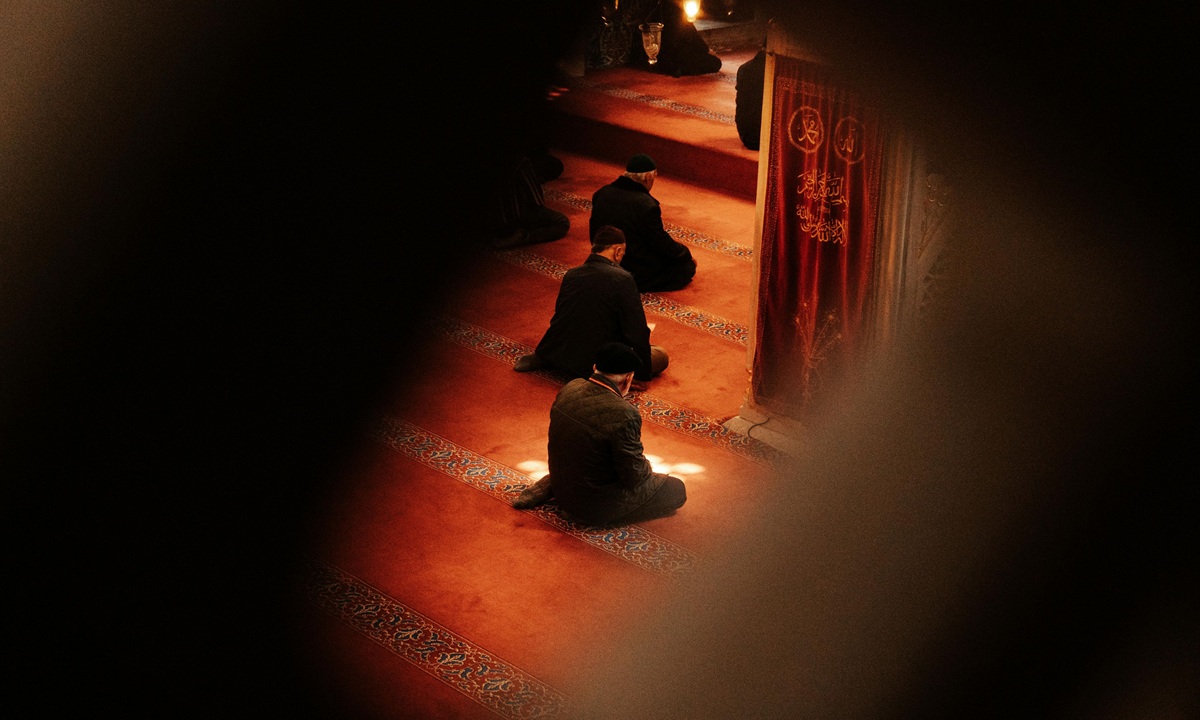
The great Sufi orders developed structured programmes for cultivating Ihsan — what they called Tazkiyat al-Nafs, the purification of the self. These programmes typically involved three phases that align closely with the Quranic description of the soul’s journey.
The first phase is Takhalli — emptying. This involves identifying and working to remove the blameworthy traits of the ego: arrogance, greed, envy, heedlessness. This is not self-hatred but honest self-knowledge — the kind of inner audit that very few of us do systematically.
The second phase is Tahalli — adorning. Having worked to remove the negative, the practitioner actively cultivates praiseworthy qualities: gratitude, patience, generosity, love of Allah and His Prophet ﷺ, compassion for creation. These virtues are not merely ethical ideals; in this tradition, they are spiritual practices.
The third phase is Tajalli — illumination. As the heart becomes purer, it becomes more receptive to the light of divine knowledge and proximity. The practitioner begins to experience what the Quran calls the ‘tranquil soul’ (al-nafs al-mutma’inna) — a settled, peaceful, joyful relationship with Allah.
In Singapore, there are still practitioners and communities who follow these traditions — often quietly, without fanfare. There are multitudes of Sufi circles that gather weekly for dhikr or remembrance of God, along with scholars who teach these sciences across mosques and venues. These scholars and circles represent a living connection to this heritage that our community would do well to value and preserve.
Practical Steps Toward Ihsan: Starting Where You Are
You do not need to join a Sufi order or spend years in retreat to begin the journey toward Ihsan. The Prophet ﷺ himself gave us accessible, practical guidance. Here are three foundational practices:
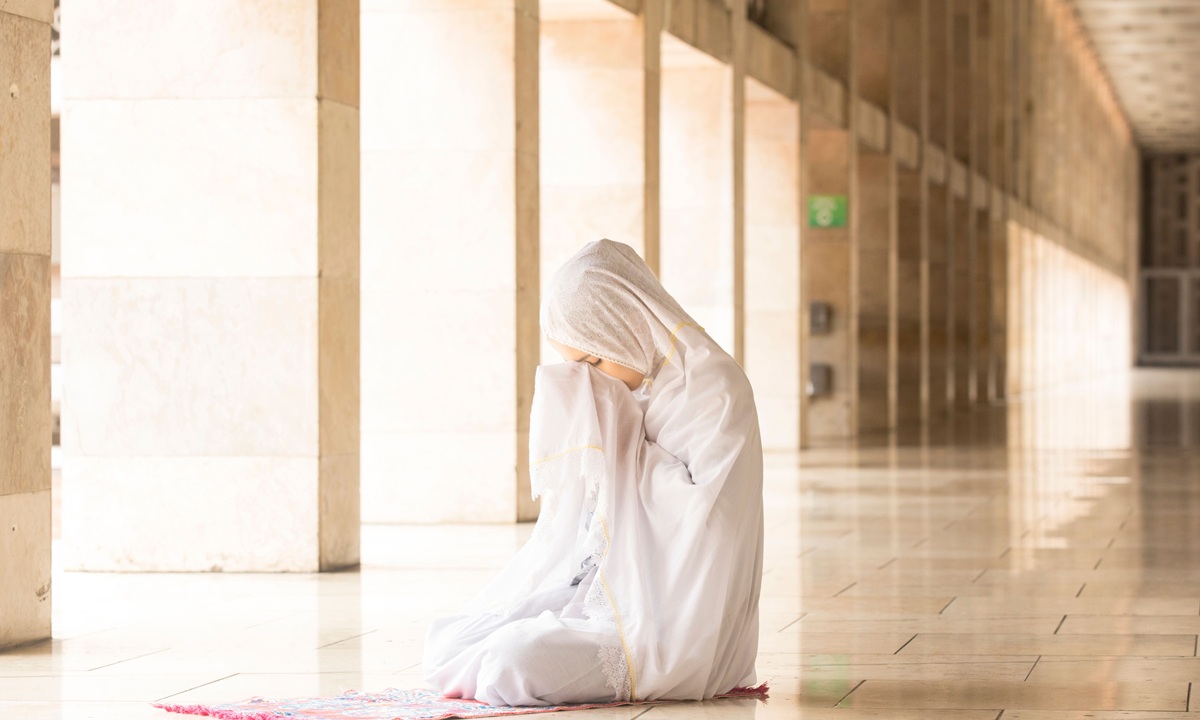
First: Prayer with presence. Before you begin your next salah or prayer, pause for a moment. Take a breath. Remind yourself: I am about to stand before Allah. Try to begin each prayer with that awareness — and when your mind wanders, gently return. Even one moment of genuine presence in each prayer is a beginning.
Second: Dhikr — remembrance of Allah. The Quran says:
ٱلَّذِينَ ءَامَنُوا۟ وَتَطْمَئِنُّ قُلُوبُهُم بِذِكْرِ ٱللَّهِ ۗ أَلَا بِذِكْرِ ٱللَّهِ تَطْمَئِنُّ ٱلْقُلُوبُ
‘Those who have faith and whose hearts find peace in the remembrance of God – truly it is in the remembrance of God that hearts find peace’. (Qur’an 13:28).
Start with simple practices: repetitions of Astaghfirullah, SubhanAllah, Alhamdulillah, Allahu Akbar, especially after each prayer. Let your tongue and your heart work together. Over time, this practice builds a background awareness of Allah that begins to colour everything you do.
Another example, narrated by Abu Huraira:
كَلِمَتَانِ حَبِيبَتَانِ إِلَى الرَّحْمَنِ، خَفِيفَتَانِ عَلَى اللِّسَانِ، ثَقِيلَتَانِ فِي الْمِيزَانِ سُبْحَانَ اللَّهِ وَبِحَمْدِهِ، سُبْحَانَ اللَّهِ الْعَظِيمِ .
The Prophet (ﷺ) said, “(There are) two words which are dear to the Beneficent (Allah) and very light (easy) for the tongue (to say), but very heavy in weight in the balance. They are: ”Subhan Allah wa-bi hamdihi” and ”Subhan Allah Al-`Azim.” [Sahih al-Bukhari]
Third: Accountability of the self (Muhasaba). Before sleep, each night, take five minutes to review your day. Where did you fall short of your highest self? Where did you treat someone poorly, speak thoughtlessly, or let heedlessness win? Ask Allah’s forgiveness and make a sincere intention to do better tomorrow. This simple practice, done consistently, is transformative.
The journey of a thousand miles begins with a single step. The journey toward Ihsan begins with a single moment of genuine presence before Allah.

Why Ihsan Matters for Singapore’s Muslim Community
In a city as busy, competitive, and materially successful as Singapore, the temptation is always to define success by external measures — career, income, academic achievement, social status. These are not bad things. But as believers, they are simply insufficient. A life built entirely on external success, without the inner richness of Ihsan, is a life that feels progressively emptier no matter how full it appears from the outside.
Singapore’s Muslim community has remarkable institutional strengths. We have MUIS, our mosques, our madrasahs and our Muslim organisations. What we need, alongside all of this, is a living culture of Ihsan — of Muslims who pray with presence, who remember Allah constantly, who treat every person they encounter with the consciousness that Allah is watching, and whose character reflects the beauty of the Prophet ﷺ.
That is the community our scholars have always envisioned. That is the community SimplyIslam works to nurture. And that journey begins with you — with a single honest moment of turning your heart toward the One who is always, already, turned toward you.
May Allah grant us the gift of Ihsan — the ability to worship Him as though we see Him, and to live every moment in the light of His gaze. Ameen.
Ustadh Muhammad Salleh Bin Abdul Aziz is a graduate of Singapore’s prestigious Madrasah Aljunied Al-Islamiah and completed his full-time pre-university studies at the madrasah. He also studied at the National University of Malaysia, before completing his Bachelor’s Degree at Al-Azhar University in Cairo, Egypt. He is an accredited Asatizah (Islamic Religious Teacher) certified by the Islamic Religious Council of Singapore and the Asatizah Recognition Board. He is SimplyIslam’s Education Chief, and has been with SimplyIslam since its inception. He has a flair and deep interest for Prophetic healing and medicine and regularly conducts SimplyIslam’s popular “Prophetic Healing” and “Ruqyah” course. He is proficient in Arabic, English and Malay languages.