

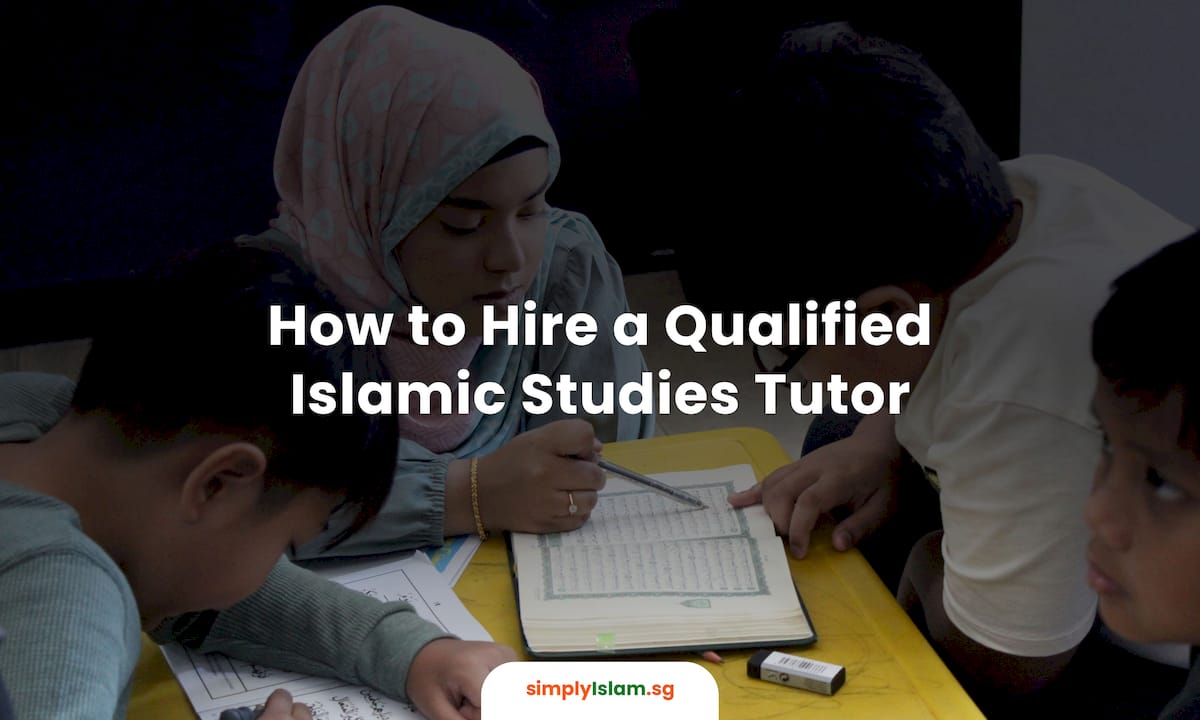




Hiring a qualified Islamic studies tutor means securing an educator with authentic credentials, verified teaching capability, and appropriate safety clearances.
The standard industry term for this process is “asatizah vetting,” a practice formalized in Singapore through frameworks like the Asatizah Recognition Scheme (ARS).
Whether you are a parent building your child’s Islamic foundation or an adult deepening your own knowledge of Tawhid, Fiqh, or Tajwid, the quality of your tutor shapes the quality of your faith education. This guide gives you a clear, step-by-step path to find the right person with confidence.
What qualifications define a qualified islamic studies tutor?
A qualified Islamic studies tutor holds verifiable credentials, not just self-reported experience. Two credentials stand above the rest: the Ijazah and ARS recognition.
Ijazah is an authorization certificate granted after oral Quranic recitation with Tajwid to a qualified student, certifying their ability to teach and transmit the Quran through a connected chain called a sanad. This chain traces back to the Prophet Muhammad (peace be upon him) through an unbroken line of teachers. A tutor with Ijazah is not simply someone who has memorized the Quran. They have been formally authorized to teach it correctly.

ARS recognition is equally critical in Singapore. ARS was launched in 2005 and requires any Islamic subject teachers in mosques or madrasahs to hold ARS or Quranic Teachers Recognition Scheme (QTRS) recognition. This framework, administered by MUIS (the Islamic Religious Council of Singapore), sets minimum professional standards for asatizah. It is publicly verifiable, which removes the guesswork from hiring.
Beyond these two credentials, look for:
- A Bachelor’s or Master’s degree in Islamic Studies from a recognized institution
- Demonstrated experience teaching subjects like Tajwid, Aqidah, Fiqh, and Sirah
- Familiarity with age-appropriate teaching methods for children versus adults
- A track record of consistent Tajwid correction, specifically addressing makharij (articulation points) and sifat (characteristic sounds)
Pro Tip: Ask any prospective tutor to name their sanad chain. A tutor with genuine Ijazah will know their chain without hesitation. Vague answers are a red flag.
Many parents underestimate the difference between Quranic recitation proficiency and the ability to correct Tajwid errors in real time. Reciting beautifully and teaching correctly are two different skills. Your tutor needs both.
How do you verify a tutor’s credentials before hiring?
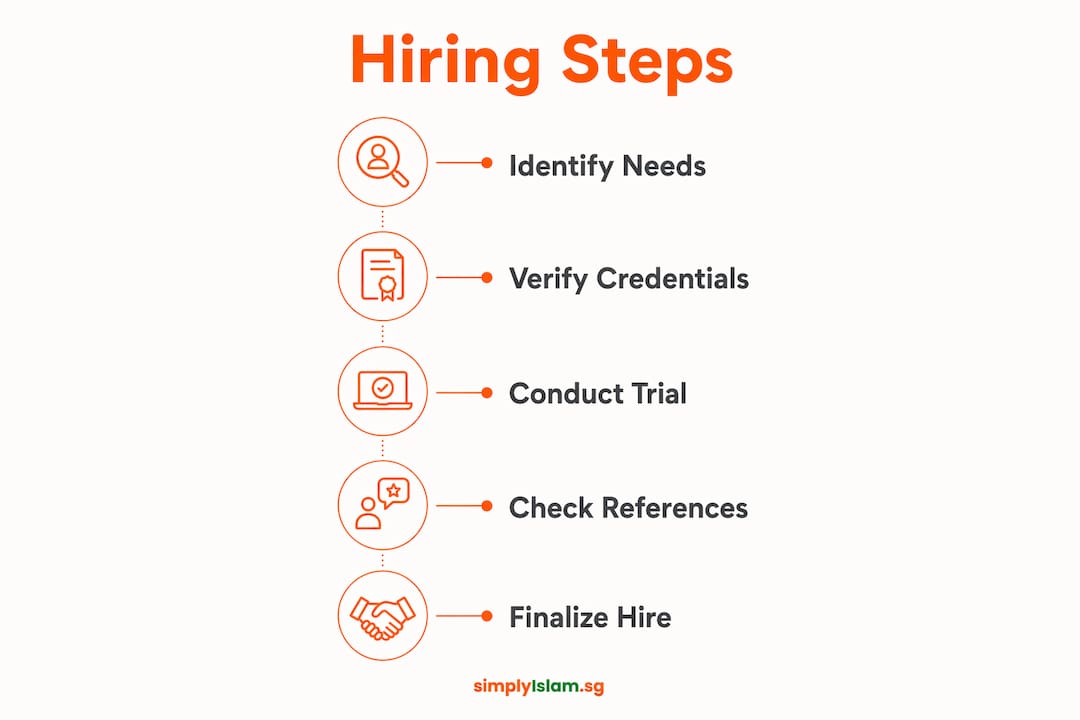
Verification is not optional, especially when the learner is a child. Follow these steps before committing to any tutor.
- Confirm Ijazah authenticity. Ask the tutor to provide the name of the scholar who granted their Ijazah and the institution where they studied. Cross-reference this with the institution directly if possible. An authentic sanad is traceable.
- Check ARS or QTRS registration. MUIS maintains a public registry of recognized asatizah in Singapore. Visit the MUIS website and search the tutor’s name. ARS recognition provides a publicly verifiable standard that protects parents from unverifiable tutor claims.
- Request academic certificates. Ask for copies of degrees or diplomas in Islamic Studies. Tutors like Abdullah A. and Mahdiyyah D. on platforms like Preply display recognized degrees alongside their teaching profiles, which sets a useful benchmark for what verified credentials look like.
- Run a background check. For private tutors working with children, this step is non-negotiable. Background checks for tutors vary by context. School district hires often require fingerprint-based FBI and state criminal history checks, while private tutors may only provide third-party screening. Federal clearance times range from 48 hours to 3 weeks. Do not skip this step because the tutor comes through a personal referral.
- Use platforms that pre-vet tutors. Trusted platforms and local madrasahs provide institutional verification of tutors’ qualifications, reducing risk for parents significantly.
“Every shepherd is responsible for his flock.” (Bukhari) Choosing a tutor for your child is an act of Amanah. Verify before you trust.
For children’s safety, always conduct the first few lessons in a shared space or via video call where a parent can observe. Set clear communication expectations from day one.
Where can you find qualified islamic studies tutors?
Finding the right tutor requires knowing where to look. The options range from global online platforms to local Singapore institutions, and each has real trade-offs.
| Source | Best For | Key Advantage | Limitation |
|---|---|---|---|
| Wyzant | Adults seeking flexible scheduling | Hourly rates from $17 to $140, wide tutor range | Credential verification varies by tutor |
| Preply | Online learners, adults and children | Structured profiles with degree details | Limited ARS-specific filtering |
| Local madrasahs | Children needing structured curricula | ARS-recognized asatizah on staff | Less scheduling flexibility |
| SimplyIslam | Singapore families and working adults | ARS-certified instructors, interactive methodology | Singapore-focused |
| Community referrals | Families wanting trusted word-of-mouth | Personal accountability | Harder to verify credentials formally |
For adults in Singapore, exploring Islamic evening classes for professionals offers a structured alternative to private tutoring. These classes are taught by recognized scholars and fit around work schedules.
When comparing group classes to private lessons, consider these factors:
- Group classes cost less and build community, but offer less personalized Tajwid correction
- Private lessons allow the tutor to address your specific weaknesses in real time
- Online tutoring removes geography as a barrier and often provides more scheduling flexibility
For parents researching local options, SimplyIslam’s guide to madrasahs in Singapore lists institutions with vetted teaching staff, which is a practical starting point.
Pro Tip: Budget matters, but the cheapest tutor is rarely the best investment for your child’s Islamic education. Prioritize verified credentials over the lowest hourly rate.
Step-by-step guide to selecting the best islamic studies tutor
A clear process prevents costly mistakes and protects your child’s learning experience.
- Define your learning goals. Are you seeking Quran recitation with Tajwid, Fiqh for daily practice, or a broader Islamic studies curriculum? Adults deepening their knowledge of Tawhid have different needs than a seven-year-old learning the basics of Salah. Write your goals down before you search.
- Shortlist based on credentials. Use the qualification checklist above. Prioritize tutors with Ijazah for Quran-specific learning and ARS recognition for Singapore-based instruction. For adults, finding a qualified Islamic instructor requires matching the tutor’s specialization to your subject area.
- Prepare targeted questions. Before the first call, ask: How do you correct Tajwid errors during a lesson? What curriculum do you follow for this age group? How do you handle a student who is struggling? The answers reveal teaching philosophy, not just knowledge.
- Request a trial lesson. Trial lessons allow observation of the tutor’s Tajwid teaching approach and student compatibility. Watch how the tutor responds when the student makes a mistake. Patience and clear correction are non-negotiable qualities.
- Negotiate rates, schedules, and safety protocols. Agree on lesson length, frequency, cancellation policies, and how lessons will be conducted (in-person or online). For children, confirm that a parent or guardian will be present or observing during sessions.
- Formalize the arrangement. A simple written agreement covering lesson terms, fees, and communication expectations protects both parties. Review progress every four to six weeks and adjust the curriculum if the student’s needs change.
For families considering supplemental learning during school breaks, SimplyIslam’s holiday programs offer structured Islamic education with qualified instructors, which pairs well with ongoing private tutoring.
Common mistakes to avoid when hiring islamic studies tutors
Even well-intentioned parents and adult learners make avoidable errors in this process. Knowing these pitfalls in advance saves time and protects your child.
- Accepting self-reported qualifications without verification. A tutor claiming to have Ijazah without being able to name their sanad chain has not earned that credential. Always verify.
- Skipping background checks for children’s tutors. Private tutors working with minors require the same level of scrutiny as institutional hires. The absence of a formal background check is a gap in your child’s safety.
- Ignoring teaching style compatibility. A tutor with excellent credentials but a rigid, rote-memorization approach may frustrate a child who learns through conversation and interaction. Observe at least two trial lessons before committing.
- Failing to set lesson expectations upfront. Ambiguity about homework, lesson pace, and communication channels leads to frustration on both sides. Clarity from the start builds a productive learning relationship.
- Choosing based on price alone. Affordable Islamic education tutors exist, but the lowest rate does not guarantee quality. Balance cost with verified credentials and teaching effectiveness.
If a tutor relationship is not working, address it directly and early. A respectful conversation about expectations is always better than months of ineffective lessons.
Key takeaways
Hiring a qualified Islamic studies tutor requires verifying Ijazah and ARS credentials, conducting background checks, and using structured platforms or institutions to protect both learning quality and child safety.
| Point | Details |
|---|---|
| Verify Ijazah and ARS credentials | Confirm the tutor’s sanad chain and check MUIS public registry before hiring. |
| Background checks are non-negotiable | Private tutors working with children must be screened, even through personal referrals. |
| Trial lessons reveal teaching quality | Observe at least two sessions to assess Tajwid correction and student engagement. |
| Match tutor to learning goals | Adults and children need different curricula; define goals before shortlisting candidates. |
| Use vetted platforms and institutions | Platforms like SimplyIslam and local madrasahs reduce credential verification risk. |
How SimplyIslam supports your search for quality islamic education
SimplyIslam is Singapore’s trusted platform for Islamic education, serving over 22,000 participants through our weekend Madrasah, courses, events, and community programs taught by ARS-certified instructors. If you are searching for structured learning that goes beyond private tutoring, SimplyIslam offers a range of options designed for both children and working adults.
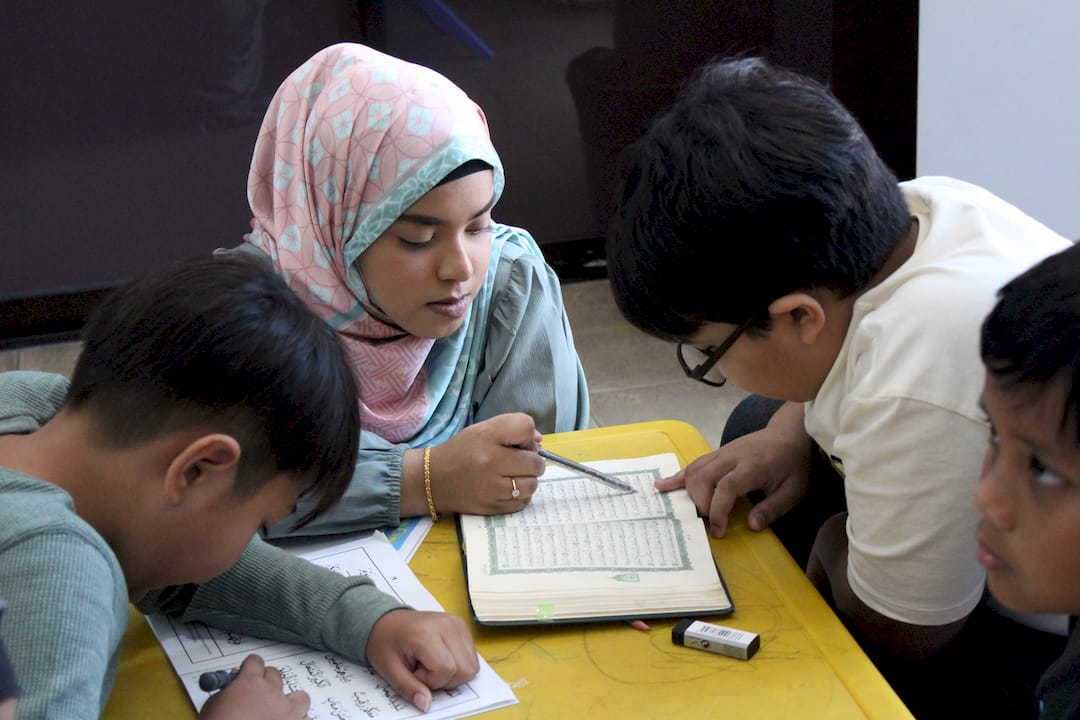
From online Islamic courses covering Aqidah, Fiqh, and Quranic studies to Islamic events that connect you with recognized scholars, SimplyIslam provides a verified, community-rooted alternative to the uncertainty of unvetted private tutors. Families can also explore the Al-Mishkat Certificate in Islamic Studies for a structured, credentialed path to deeper Islamic knowledge. Visit SimplyIslam to find the right program for your family’s needs in 2026.
FAQ
What is an ijazah and why does it matter?
An Ijazah is a formal authorization certifying that a tutor can teach and transmit the Quran through an authenticated chain of teachers tracing back to the Prophet. It confirms correct transmission, not just memorization.
How do i check if a tutor has ARS recognition in singapore?
MUIS maintains a public registry of ARS and QTRS-recognized asatizah. Search the tutor’s name directly on the MUIS website to confirm their registration status before hiring.
What should i ask during a trial lesson?
Observe how the tutor corrects Tajwid errors and whether they explain makharij and sifat clearly. Ask the tutor to walk through their correction method for a specific recitation mistake.
Are online islamic studies tutors as effective as in-person tutors?
Online tutors on platforms like Wyzant and Preply offer hourly rates from $17 to $140 and can be highly effective, provided they hold verified credentials and conduct structured, interactive lessons.
How do i handle a tutor who is not meeting expectations?
Address concerns directly and early with a specific conversation about lesson goals and teaching approach. If the issue persists after two to three sessions, it is reasonable to seek a replacement tutor.