
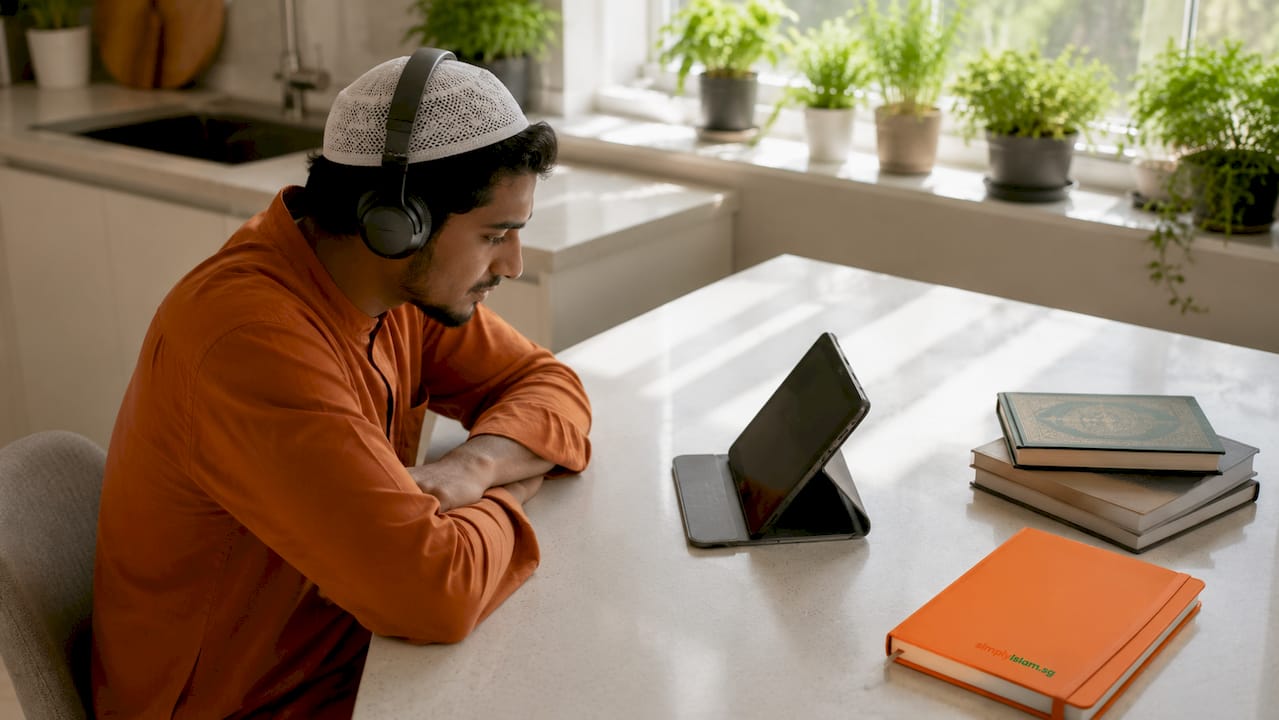




Recorded lectures in Islamic study are defined as audio or video lessons that learners access on demand, outside the boundaries of a fixed classroom schedule. The role of recorded lectures in Islamic study is to give you flexible, repeatable access to religious knowledge, whether you are a working adult in Singapore or a parent fitting study into a packed day. A 2026 study found that 80.4% of lecturers and 63% of students in Islamic education support hybrid and digital learning. That level of support signals a genuine shift in how Muslims engage with their faith. SimplyIslam recognizes this shift and has built its curriculum around making that access real, structured, and spiritually grounded.
What are the key benefits of recorded lectures in Islamic education?
Recorded lectures give learners something no fixed timetable can: the freedom to study when understanding is highest. You can pause a lesson on Tawhid at midnight, reflect on it during Fajr, and return to the same segment three days later without losing your place. That kind of pacing is not a luxury. For complex topics like fiqh or Quranic tafsir, it is often the only way to build genuine comprehension.
Research confirms this. Integrating open Islamic educational resources into digital courses increased student understanding by 18% over traditional methods. That gain comes directly from learners being able to revisit content at their own pace rather than keeping up with a live session in real time.
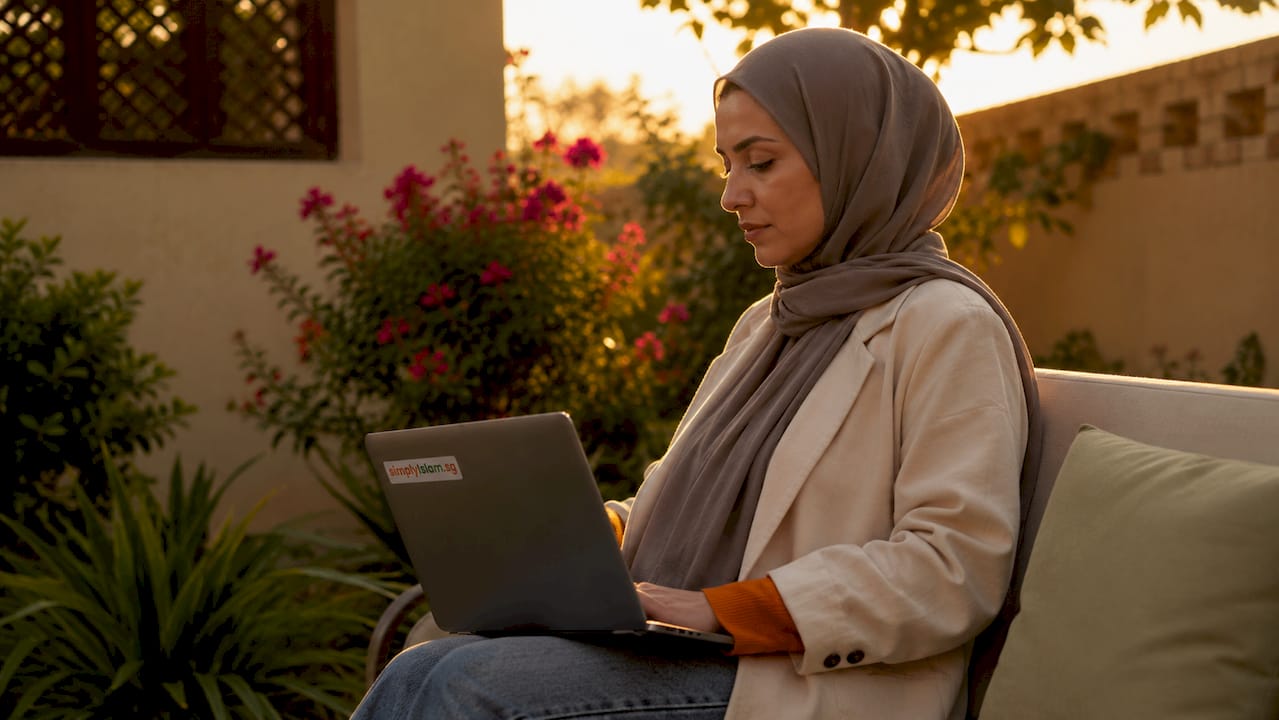
Recorded lectures also serve learners who cannot attend in person due to location, disability, or work schedules. Digital technology enables personalized, inclusive Islamic learning that respects diverse study styles and improves retention through recorded lessons. This matters deeply for Muslims in Singapore who balance demanding careers with their commitment to seeking knowledge.
Key benefits include:
- Flexible timing: Study after Isha prayer, during a lunch break, or on weekends without missing content.
- Repeatable access: Revisit difficult concepts in aqeedah or Arabic grammar as many times as needed.
- Inclusive design: Learners with hearing impairments, mobility challenges, or irregular schedules gain equal access.
- Multimedia depth: Video, audio, and slides together support visual, auditory, and reading-based learners.
- Self-paced review: Pause, rewind, and reflect without social pressure from a live classroom.
Pro Tip: Set a specific intention (niyyah) before each recorded session. Treating each lesson as an act of worship, not just study, keeps your focus sharp and your motivation grounded in faith.
How do recorded lectures integrate with live sessions in Islamic studies?
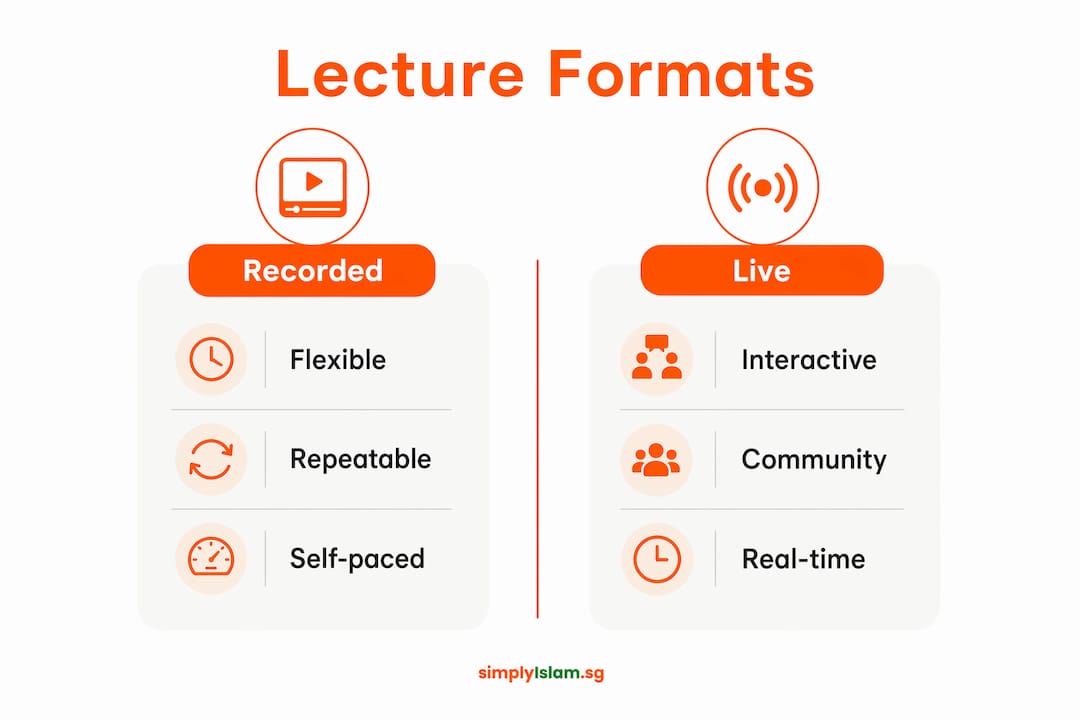
Recorded content works best as the foundation, not the whole structure. Live sessions then build on that foundation through questions, discussion, and community. This blended model is not new in Islamic tradition. Scholars have always combined written texts with direct teacher interaction. Recorded lectures are simply the modern equivalent of the written text.
Distance learning programs in Islamic studies achieve success when they stop trying to replicate the physical classroom online and instead build around their own strengths. Recorded content delivers foundational knowledge efficiently. Live Q&A sessions then address misunderstandings, deepen reflection, and create the community bonds that sustain long-term learning.
“The most effective Islamic education programs use recorded lectures to deliver core content, then reserve live interaction for the kind of dialogue that builds both understanding and brotherhood. One without the other produces an incomplete education.”
A well-structured blended program typically follows this sequence:
- Watch the recorded lecture before the live session to arrive with baseline knowledge.
- Note your questions while watching, so live time focuses on genuine inquiry rather than basic explanation.
- Attend the live session for discussion, du’a, and peer engagement that recordings cannot replicate.
- Review the recording after the live session to consolidate what was clarified in discussion.
- Apply the knowledge through practice, whether that means memorizing a du’a, adjusting your prayer, or discussing the lesson with family.
| Learning format | Strengths | Limitations |
|---|---|---|
| Recorded lectures | Flexible, repeatable, self-paced | No live interaction or immediate feedback |
| Live sessions | Community, real-time Q&A, accountability | Fixed schedule, harder to revisit |
| Blended approach | Combines both strengths | Requires self-discipline and planning |
Recorded lectures should supplement but not replace live learning because social interaction and community engagement produce benefits that no recording can deliver. The Prophet, peace be upon him, taught in gatherings for a reason.
What challenges exist when relying on recorded Islamic lectures?
The biggest risk with recorded lectures is not poor content. It is the false sense of progress that comes from watching without engaging. Students who use lecture recordings achieve higher grades due to flexibility, but availability can increase procrastination in less regulated learners. This is the lecture capture paradox: the same tool that helps disciplined learners can quietly undermine those without a clear study structure.
Common challenges include:
- Procrastination: Knowing a recording is available makes it easy to skip live sessions or delay study indefinitely.
- Passive viewing: Watching a lecture like a television program, without pausing or taking notes, produces little lasting retention.
- Digital literacy gaps: Not all learners are comfortable navigating online platforms, especially older community members.
- Infrastructure barriers: Reliable internet access is not universal, even in urban Singapore.
- Reduced community connection: Heavy reliance on recordings can isolate learners from the ummah bonds that sustain faith.
The microlearning approach in Islamic studies addresses some of these challenges by breaking content into short, focused segments that are easier to complete and less likely to be postponed.
Pro Tip: Treat each recorded lecture like a live class. Sit at a desk, close other tabs, and commit to a fixed start time. The physical ritual of “showing up” to a recording builds the same discipline as attending in person.
How can you use recorded lectures to deepen your Islamic studies?
Effective use of recorded lectures starts with knowing how long to study. Advanced Islamic learners benefit from 1–2 hours daily; foundational or intermediate learners see strong results from 30–45 minutes. Matching your study duration to your current level prevents burnout and keeps motivation steady.
Follow this sequence for each recorded session:
- Set your intention. State your niyyah clearly before pressing play.
- Watch at normal speed first. Resist the urge to rush through at 1.5x speed on your first viewing.
- Pause and write. Stop after each major point and write a one-sentence summary in your own words.
- Return to difficult segments. Use recordings for targeted revision, focusing on the specific moments you did not fully grasp rather than re-watching the whole lecture.
- Discuss what you learned. Share one insight from the lesson with a family member or study group before your next session.
Active engagement with recorded lectures, including pausing to complete activities and writing notes, improves retention far more than passive viewing. This is not a suggestion. It is the difference between knowledge that stays and knowledge that fades.
| Learner level | Daily study time | Recommended approach |
|---|---|---|
| Foundational | 30–45 minutes | One topic per session, heavy note-taking |
| Intermediate | 45–60 minutes | Recorded lecture plus supplemental reading |
| Advanced | 1–2 hours | Recorded content, live discussion, and written reflection |
Pair your recorded study with free Islamic resources that reinforce what you have watched. Discussion groups, Quran memorization practice, and written reflection all deepen what recordings begin. Avoid binge-watching multiple lectures in one sitting without reflection time between them. Volume without depth produces shallow learning.
A structured Islamic curriculum gives your recorded study a clear sequence, so you are not picking topics at random but building knowledge the way a scholar would, layer by layer.
Key Takeaways
Recorded lectures enhance Islamic study most when learners engage actively, follow a structured curriculum, and balance digital content with live community interaction.
| Point | Details |
|---|---|
| Flexibility is the core benefit | Recorded lectures let you study at your own pace, revisiting complex topics like fiqh or aqeedah as needed. |
| Active engagement drives retention | Pausing, note-taking, and targeted review produce far better outcomes than passive watching. |
| Blended learning outperforms either alone | Combining recorded content with live Q&A sessions builds both knowledge and community connection. |
| Procrastination is the primary risk | Availability without discipline leads to delayed study; fixed study times and clear intentions counter this. |
| Study duration should match your level | Foundational learners need 30–45 minutes daily; advanced learners benefit from 1–2 hours with reflection built in. |
What I have learned from watching Muslims engage with recorded Islamic content
I have spent years observing how Muslims in Singapore and beyond use recorded lectures, and the pattern is consistent. The learners who gain the most are not the ones who watch the most. They are the ones who watch with purpose. They pause. They write. They bring questions to their next live session. They treat the recording as a conversation with a scholar, not a podcast to consume on the commute.
What concerns me is the growing assumption that access equals learning. A library full of recorded lectures does not produce a learned Muslim any more than a kitchen full of ingredients produces a meal. The preparation, the intention, and the effort are what create something nourishing.
The transformative potential here is real, especially for working adults who genuinely cannot attend traditional classes. Recorded lectures have brought Islamic knowledge to Muslims who would otherwise have no access at all. That is a profound gift. But the gift requires stewardship. Self-discipline, community accountability, and a clear curriculum structure are what turn access into actual growth in faith and character.
SimplyIslam’s approach, which pairs recorded content with live sessions led by ARS-certified instructors, reflects this balance. The recordings carry the knowledge. The live sessions carry the community. Neither works as well without the other.
— Lily
How SimplyIslam supports your recorded and live Islamic learning
SimplyIslam offers a structured path for Muslims who want to combine the flexibility of recorded content with the depth of live instruction.

The platform’s online Islamic courses are designed specifically for working adults and busy families, pairing recorded lessons with live sessions led by ARS-certified instructors. Whether you are starting with the fundamentals or deepening an existing practice, SimplyIslam’s curriculum gives your study a clear sequence and real accountability. For a practical starting point, the guide for working adult learners outlines exactly how to fit structured Islamic study into a full schedule without sacrificing depth or community connection.
FAQ
What is the role of recorded lectures in Islamic study?
Recorded lectures give learners flexible, repeatable access to Islamic knowledge outside fixed classroom hours. They are most effective when paired with live sessions and active study habits like note-taking and targeted review.
How long should I study using recorded Islamic lectures each day?
Foundational learners benefit from 30–45 minutes daily, while advanced students see strong results from 1–2 hours. Consistency matters more than session length.
Do recorded lectures reduce the need to attend live Islamic classes?
Recorded lectures supplement live learning but do not replace it. Live sessions provide community interaction, real-time Q&A, and the social bonds that sustain long-term faith practice.
What is the biggest mistake learners make with recorded Islamic lectures?
Passive viewing is the most common mistake. Watching without pausing, writing notes, or reflecting produces little lasting retention. Active engagement is what converts watching into genuine understanding.
How do I avoid procrastination when using recorded Islamic lectures?
Set a fixed study time each day, treat it like a live class, and use a structured curriculum so each session has a clear purpose. Knowing what comes next removes the friction that leads to delay.