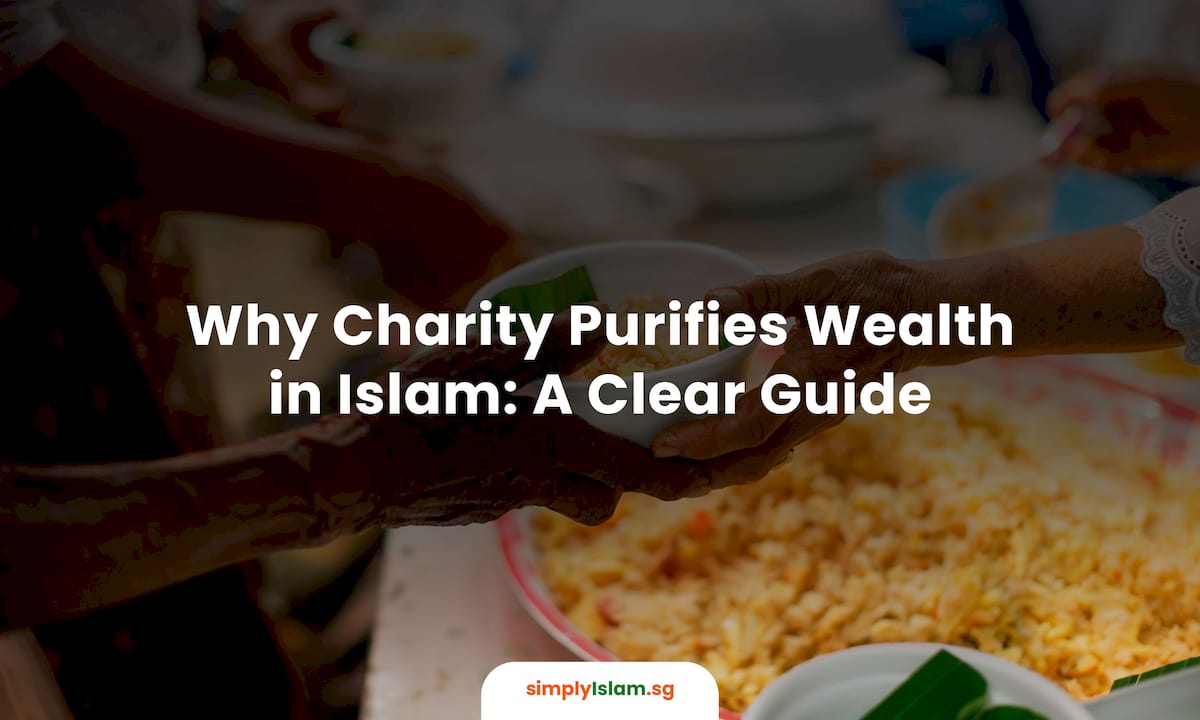
Islamic charity is defined by two foundational forms: Zakat, an obligatory annual levy on qualifying wealth, and Sadaqah, voluntary giving that encompasses every act of generosity beyond legal obligation. Together, these two forms shape the entire framework of Islamic philanthropy, connecting personal spiritual growth to systemic social welfare. Understanding the principles of Islamic philanthropy is not optional for practicing Muslims. It is the foundation of how wealth is purified, communities are sustained, and justice is maintained.
What are the Islamic charity principles explained in the Quran?
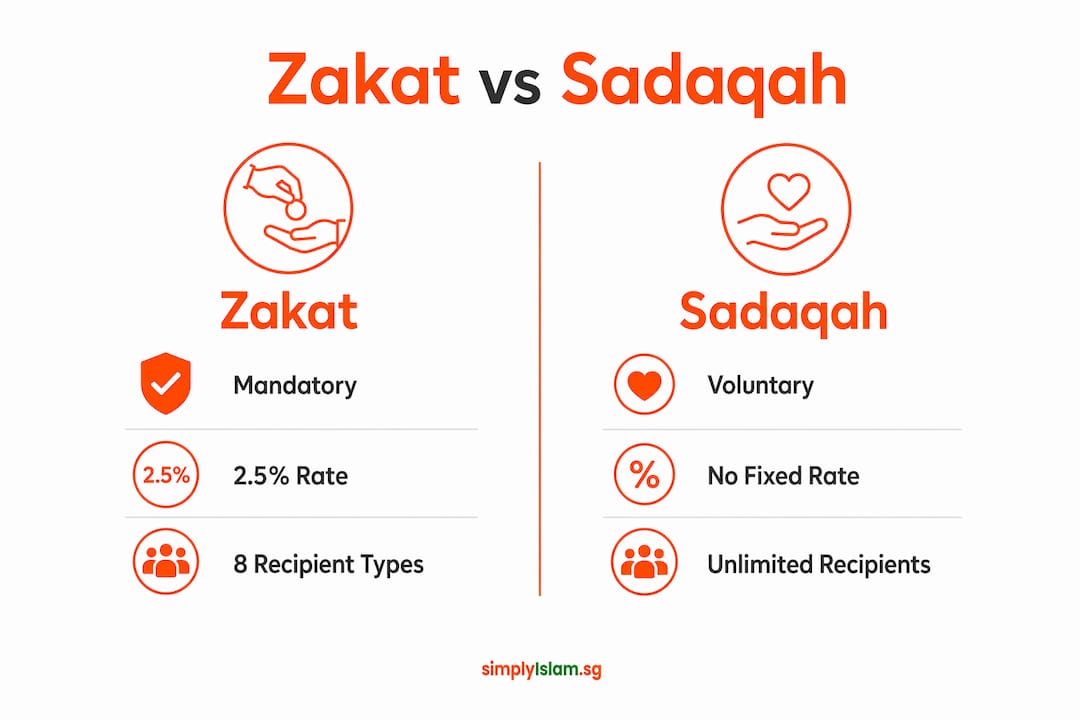
Zakat is obligatory almsgiving calculated at 2.5% of qualifying assets held above the nisab threshold for one full lunar year. The nisab is set at 85 grams of gold or 595 grams of silver. This threshold exists to protect those with modest means while requiring those with surplus wealth to contribute. Quran 9:60 names the eight categories of eligible Zakat recipients, including the poor, the indebted, and those working to collect and distribute Zakat itself.
Sadaqah operates differently. It carries no fixed rate, no minimum threshold, and no deadline. A smile, a kind word, or a meal shared with a neighbor all count as Sadaqah in Islamic teaching. This flexibility makes Sadaqah a daily practice, not a once-a-year obligation. Both forms serve the same ultimate purpose: purifying wealth, strengthening community bonds, and drawing the giver closer to Allah.
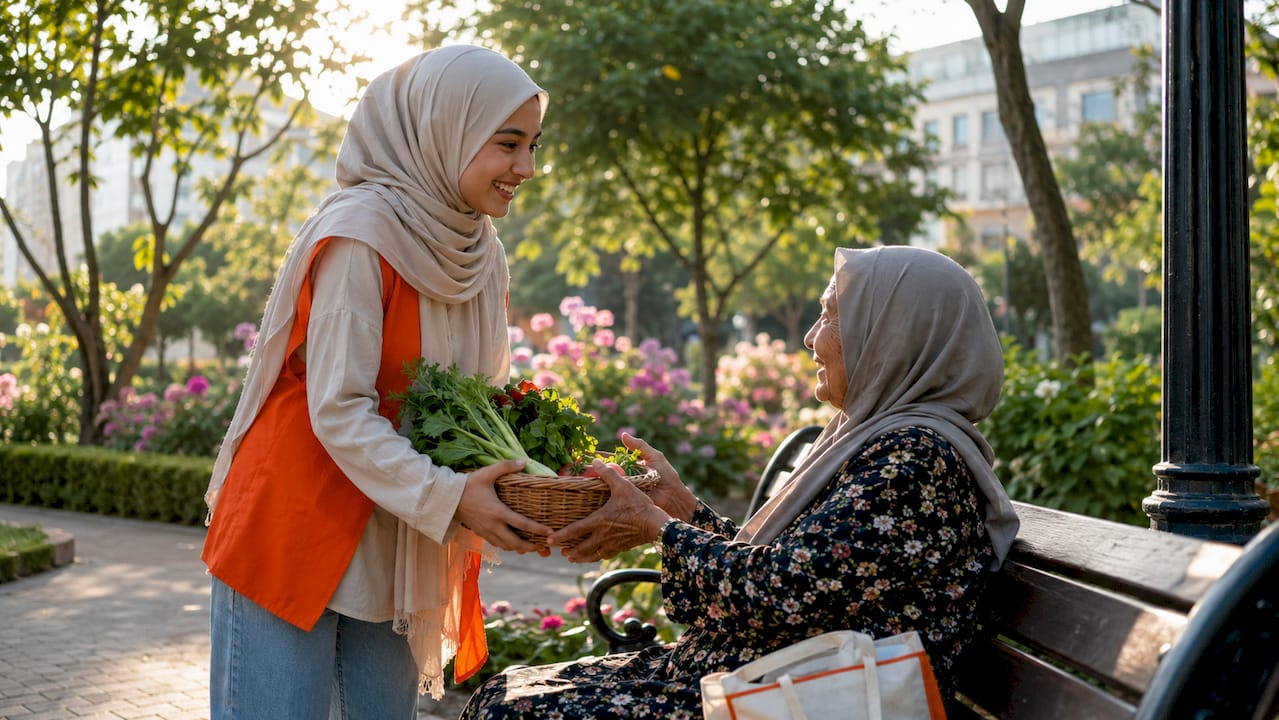
Charity in Islam links personal spirituality directly to systemic social justice. Giving is not framed as generosity alone. It is framed as a duty, a correction of economic imbalance, and a recognition that wealth ultimately belongs to Allah.
What are the key differences between Zakat and Sadaqah?
The clearest distinction is obligation. Zakat is one of the Five Pillars of Islam. Sadaqah is encouraged but never compulsory. That difference shapes everything else, from how each is calculated to who can receive it.
| Feature | Zakat | Sadaqah |
|---|---|---|
| Obligation | Mandatory | Voluntary |
| Rate | 2.5% of qualifying wealth | No fixed amount |
| Nisab threshold | 85g gold or 595g silver | None required |
| Eligible recipients | Eight Quranic categories (Quran 9:60) | Broad, including non-Muslims |
| Timing | Annual, after one lunar year | Any time |
| Spiritual category | Pillar of Islam | Act of worship |
Zakat recipients are strictly limited to eight Quranic categories. Sadaqah recipients face no such restriction. A Muslim can give Sadaqah to a non-Muslim neighbor, a stray animal, or a public cause. This breadth makes Sadaqah the more flexible tool for everyday community support.
Sadaqah Jariyah is a specific and spiritually significant form of voluntary charity. It refers to ongoing charity whose benefits continue after the giver’s death. Examples include funding a water well, building a school, or establishing a Waqf endowment. The Prophet Muhammad (peace be upon him) identified Sadaqah Jariyah as one of three deeds whose rewards persist beyond death.
Pro Tip: When deciding between Zakat and Sadaqah, calculate your Zakat obligation first and fulfill it completely. Then direct additional giving toward Sadaqah Jariyah projects for lasting spiritual reward.
How do Islamic charity principles promote social justice and community welfare?
Islamic social teaching centers on the concept of takaful, which means mutual responsibility. Takaful frames charity not as a personal virtue but as a systemic obligation. Society as a whole bears responsibility for ensuring that no member goes without food, shelter, or basic dignity. Zakat is the mechanism that enforces this responsibility at scale.
“Charity does not decrease wealth. No one forgives another except that Allah increases his honor, and no one humbles himself for the sake of Allah except that Allah raises his status.”
— Prophet Muhammad (peace be upon him), Sahih Muslim
Wealth concentration is one of the central problems Islamic charity addresses. When wealth circulates only among the rich, social cohesion breaks down. Zakat forces redistribution by requiring those above the nisab threshold to transfer a portion of their wealth to those below it. This is not charity in the Western philanthropic sense. It is a legally defined economic correction rooted in divine command.
The principles of amanah and maslahah deepen this framework. Amanah means that wealth is a trust from Allah, not a personal possession. Islamic social responsibility frames stewardship of that wealth as a religious duty, not a marketing strategy. Maslahah refers to public welfare. Decisions about how charity is used must serve the genuine good of the community, not the preferences of donors or the interests of organizations.
Community projects funded through Islamic charity include:
- Clean water infrastructure in underserved regions
- Scholarships and Islamic schools for children without access to education
- Mosque construction and maintenance for communal worship
- Emergency relief for displaced families and disaster survivors
- Microfinance programs that help the poor achieve financial independence
Each of these projects reflects the Islamic understanding that dignified giving protects the recipient’s honor. Charity in Islam is never meant to shame the person receiving it.
What ethical principles guide Islamic fundraising and donation management?
Transparency is the first requirement of ethical Islamic fundraising. Legitimate charities publish annual reports, maintain registration with relevant authorities, and clearly explain how donations are allocated. A charity that cannot answer basic questions about its finances is a charity that has not earned your trust.
The “100% donation policy” claim deserves particular scrutiny. Many charities advertise that every dollar donated goes directly to beneficiaries, with zero administrative costs. This claim is almost always misleading. Admin fees are Islamically permissible and necessary to cover professional expertise, legal compliance, and safe project delivery. A charity with genuinely zero overhead either has a hidden funding source or is cutting corners on accountability.
Ethical Islamic fundraising also protects the dignity of beneficiaries. Exploitative imagery, exaggerated suffering, and manipulative emotional appeals violate the Islamic principle of preserving human honor. Ethical storytelling in Islamic fundraising means presenting truthful narratives that cultivate donor trust without degrading the people being helped.
Fundraising methods that rely on competition or gamification carry their own risks. Community fundraising tactics that pit donors against each other or pressure vulnerable groups, including children, can cause resentment and undermine the sincerity that Islamic giving requires.
Use this checklist when evaluating a charity before donating:
- Confirm the charity is registered with a recognized regulatory body.
- Review the most recent annual report and financial statements.
- Verify that the charity clearly states how funds are distributed.
- Check whether the charity uses ethical storytelling in its campaigns.
- Ask directly about administrative costs and how they are funded.
Pro Tip: Sincerity of intention, or niyyah, is the spiritual core of every donation. Giving to a well-managed charity with proper fees is more aligned with Islamic ethics than giving to a poorly run organization that promises impossible efficiency.
How do ongoing and legacy forms of Islamic charity work in practice?
Sadaqah Jariyah is the most spiritually enduring form of Islamic giving. Ongoing charity projects like water wells, schools, mosques, and Waqf endowments continue generating reward for the donor long after the initial gift. This makes Sadaqah Jariyah a form of legacy planning rooted in faith.
Waqf is the institutional expression of this principle. A Waqf endowment preserves the original capital while directing the generated revenue toward community benefit. A donor might contribute to a Waqf that owns a building. The rental income from that building then funds scholarships, healthcare, or mosque operations indefinitely. Waqf endowments function as a sophisticated institutional charity model that has sustained Muslim communities for centuries.
| Sadaqah Jariyah project | Ongoing benefit |
|---|---|
| Water well | Clean water for a village, potentially for decades |
| Islamic school | Education for generations of students |
| Mosque construction | Communal worship and community programs |
| Waqf endowment | Revenue-generating asset funding perpetual services |
| Quran distribution | Spiritual benefit for every reader |
Donors who want to participate in Sadaqah Jariyah can start small. Contributing to a Muslim charity campaign that funds a water well or a school seat is accessible at almost any income level. The key is choosing projects with verified, ongoing impact rather than one-time relief distributions.
Key Takeaways
Islamic charity is most effective when it combines obligatory Zakat, voluntary Sadaqah, and ethically managed ongoing projects that protect both donor trust and beneficiary dignity.
| Point | Details |
|---|---|
| Zakat is obligatory and precise | Pay 2.5% annually on wealth above the nisab threshold of 85g gold or 595g silver. |
| Sadaqah is flexible and broad | Give any amount, at any time, to any recipient including non-Muslims. |
| Takaful drives social justice | Islamic charity redistributes wealth systemically, not just personally. |
| Transparency is non-negotiable | Verify registration, annual reports, and honest fee disclosures before donating. |
| Sadaqah Jariyah creates lasting reward | Fund water wells, schools, or Waqf endowments for ongoing spiritual and community benefit. |
What I’ve learned about giving with both heart and accountability
Charity in Islam is one of those topics where the theology is clear but the practice gets complicated fast. The Quran and Sunnah leave no ambiguity about the obligation to give. What they require more reflection on is how we give, to whom, and through which channels.
I’ve seen donors give generously to campaigns that turned out to be poorly managed, not because the organizers were dishonest, but because no one asked the right questions. The emotional pull of a compelling story is real. But sincerity of niyyah does not excuse carelessness about where the money actually goes. Accountability is part of the spiritual act.
The concept of amanah changed how I think about this. If wealth is a trust from Allah, then how I steward it matters as much as how much I give. Choosing a well-governed charity is itself an act of worship. Demanding transparency from fundraisers is not cynicism. It is responsible stewardship of what Allah has entrusted to you.
The other thing I’d push back on is the idea that giving more is always better. Sadaqah Jariyah teaches us that giving wisely, toward projects with lasting impact, outweighs giving impulsively to whatever campaign appears in your feed. Take the time to learn about Islamic giving before you give. Your reward, and the community’s benefit, will be greater for it.
— Lily
SimplyIslam’s resources for ethical Islamic giving
SimplyIslam has supported over 22,000 participants and raised more than $1.1 million for charity, building a track record of community trust in Singapore. That experience shapes how SimplyIslam approaches Islamic education, including the principles behind ethical giving and responsible philanthropy.
Whether you are a working adult looking to deepen your understanding of Zakat and Sadaqah, or a parent wanting to teach your children the values behind Islamic charity, SimplyIslam offers practical resources designed for real life. Explore Islamic education for adults to build the knowledge that makes your giving more intentional. You can also browse upcoming Islamic events to connect with a community that takes both faith and philanthropy seriously.
FAQ
What is the difference between Zakat and Sadaqah?
Zakat is a mandatory annual payment of 2.5% on qualifying wealth above the nisab threshold, while Sadaqah is voluntary giving with no fixed amount or timing. Both purify wealth and strengthen community, but Zakat carries a legal obligation under Islamic law.
Who can receive Zakat?
Zakat recipients are limited to eight categories defined in Quran 9:60, including the poor, the indebted, and those working to distribute Zakat. Sadaqah can be given to a broader group, including non-Muslims.
What is Sadaqah Jariyah?
Sadaqah Jariyah is ongoing charity whose rewards continue after the donor’s death, through projects like water wells, schools, mosques, and Waqf endowments. It is considered one of the most spiritually valuable forms of giving in Islam.
Are admin fees allowed in Islamic charity?
Admin fees are Islamically permissible and necessary for professional, compliant charity management. Claims of zero administrative costs are often misleading and should be treated as a reason to ask more questions, not fewer.
How do I choose a trustworthy Islamic charity?
Verify the charity’s registration, review its annual financial reports, and confirm it discloses how donations are allocated. Ethical charities use dignified storytelling and welcome questions about their operations and costs.