
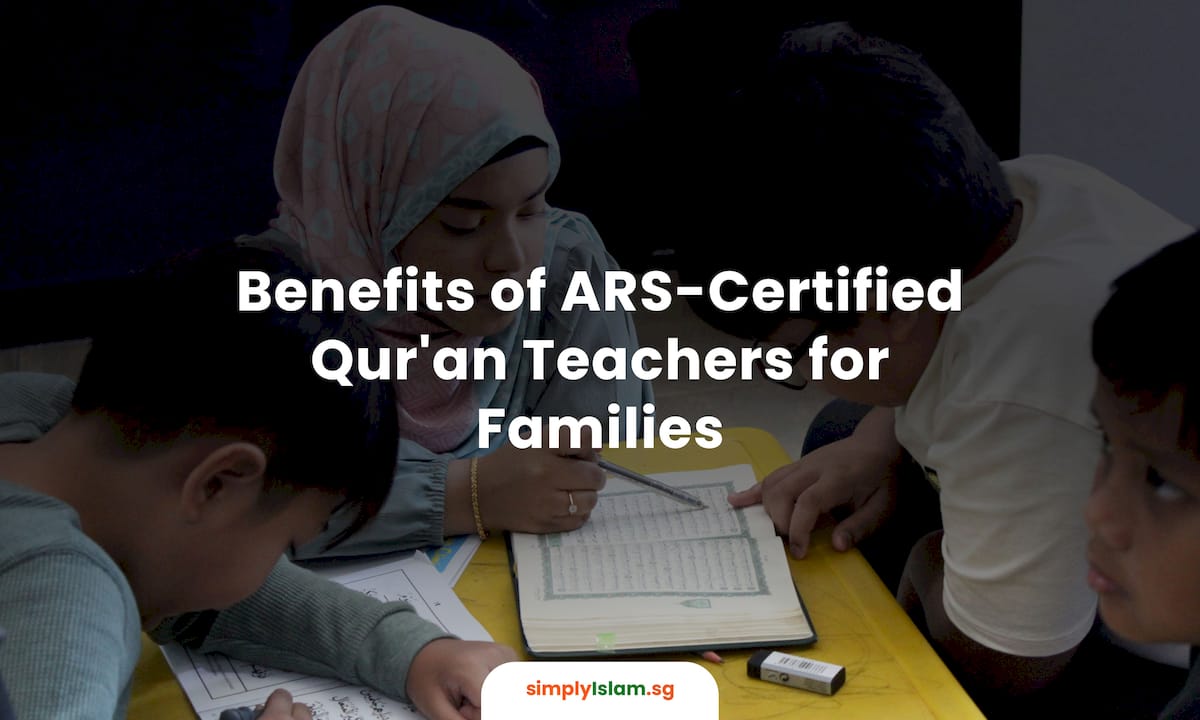
ARS-certified Quran teachers are educators who have met the rigorous standards of Singapore’s Asatizah Recognition Scheme (ARS), a government-backed framework that verifies both scholarly competence and ethical suitability for religious teaching.
The benefits of ARS-certified Quran teachers extend well beyond a credential on paper. Certification guarantees that a teacher holds verified mastery in Tajwid, authentic chains of transmission, and structured pedagogical training.
For parents choosing a Quran teacher for their children, and for adults seeking meaningful Islamic education, this distinction matters deeply. SimplyIslam employs ARS-certified instructors precisely because certification is the clearest signal of quality, authenticity, and trust.
1. Benefits of ARS-certified Quran teachers: accurate Tajwid from day one
Tajwid is the science of correct Quranic recitation, governing the precise articulation of every letter and sound. A teacher without formal training in Tajwid and Makharij (the points of articulation) cannot reliably correct a student’s errors. ARS-certified teachers use specialized pedagogical training for real-time correction, which means wrong habits are caught and fixed before they become permanent. This matters most for young children, whose recitation patterns solidify quickly.
Certified teachers also understand how to sequence Tajwid rules so learners build on each skill progressively. A child who learns the correct pronunciation of the letter “qaf” in the first week will not spend months unlearning a bad habit later. Adults returning to Quran study after years away benefit equally, since certified teachers know how to identify and address ingrained errors with patience and precision. You can explore the full scope of Tajwid mastery and why it forms the backbone of authentic recitation.
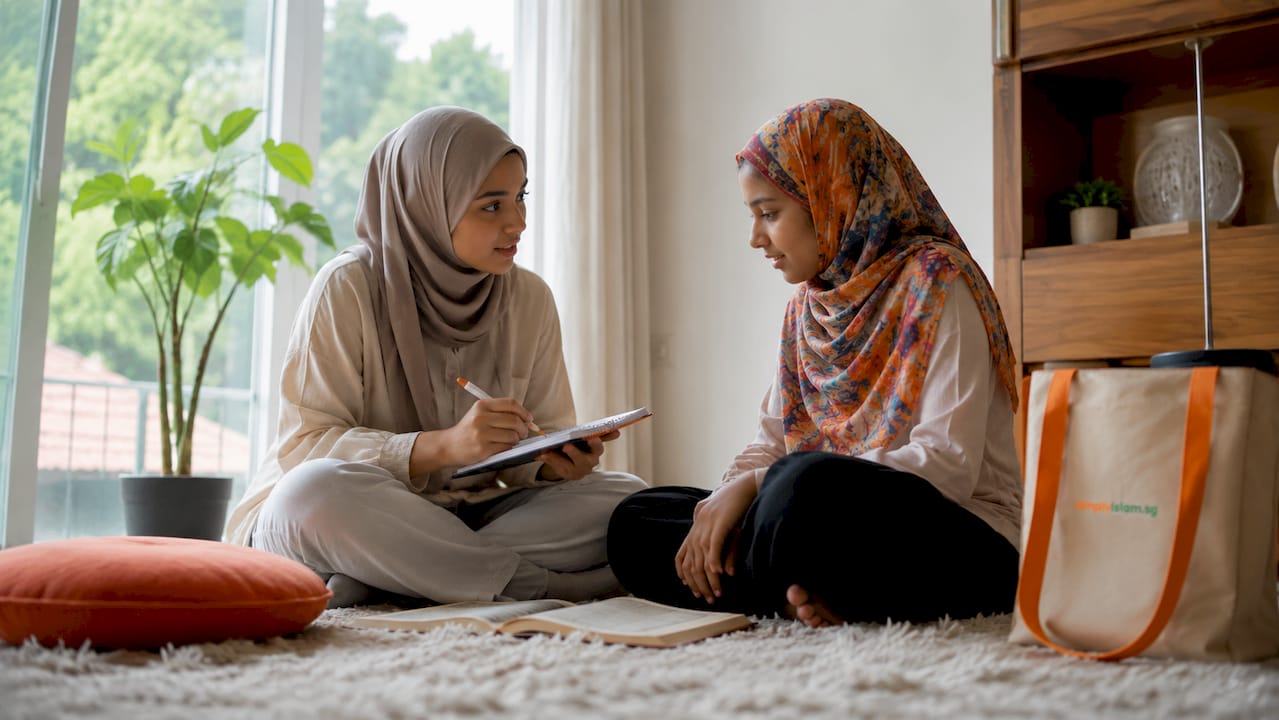
Pro Tip: Ask a prospective teacher to demonstrate a Tajwid correction during a trial lesson. A certified teacher will explain the rule behind the correction, not just repeat the correct sound.
2. Structured learning plans and personalized feedback
Certified teachers follow vetted learning structures rather than improvised lesson plans. This means every session has a clear objective, a measurable outcome, and a logical connection to the next lesson. Structured approaches improve memorization and consistency in Quran study. For children working toward Hifz (Quran memorization), this structure is the difference between gradual, confident progress and frustrating stagnation.
Personalized feedback is the second pillar of certified teaching. A qualified instructor assesses each learner’s pace, strengths, and gaps, then adjusts the lesson accordingly. This is not a luxury. It is a professional standard that ARS certification requires. The practical benefits for families include:
- Regular progress reports that parents can review and discuss with the teacher.
- Targeted revision sessions that address a child’s specific weak points rather than repeating the whole lesson.
- Memorization techniques adapted to the learner’s age and learning style, such as rhythmic repetition for younger children and contextual understanding for adults.
- Motivation strategies that keep learners engaged through milestones and encouragement grounded in Islamic values.
- Clear communication between teacher and family, so parents always know where their child stands.
For adult learners balancing work and family, this kind of personalized structure makes consistent study realistic rather than aspirational.
3. Authenticity of transmission: Ijazah and Sanad explained
Ijazah certification authenticates a teacher’s mastery of Quranic oral transmission, not just academic Islamic knowledge. This is the distinction most parents and adult learners miss. An Islamic studies degree from a university confirms theological knowledge. An Ijazah confirms that the teacher can recite the Quran correctly and has received permission to teach it from a qualified scholar who received the same permission in an unbroken chain back to the Prophet ﷺ.
That chain is called the Sanad. A teacher’s Sanad documentation is the verifiable record of this transmission. Reluctance to produce a Sanad often indicates a lack of authentic certification. This is not a minor administrative detail. It is the scholarly equivalent of a medical license. A reputable Quran teacher with Ijazah openly shares their transmission chain and provides detailed pedagogical explanations for corrections, which clearly distinguishes them from uncertified instructors.
Ijazah documents maintain permanent scholarly records and institutional credibility. They connect every learner, through their teacher, to an unbroken line of transmission stretching back fourteen centuries. This is not ceremonial. It is the mechanism by which the Quran has been preserved with perfect accuracy across generations.
| Feature | ARS-certified teacher | Uncertified teacher |
|---|---|---|
| Tajwid training | Formal, assessed, and verified | Variable and unverified |
| Ijazah | Documented chain of transmission | Often absent |
| Sanad | Available on request | Rarely available |
| Pedagogical training | Structured and standardized | Informal or self-taught |
| Accountability | Regulated by ARS framework | No external oversight |
Pro Tip: Request a teacher’s Ijazah and Sanad before enrolling your child. A confident, qualified teacher will share this information willingly and with pride.
4. A safe, trustworthy, and motivating learning environment
ARS certification validates more than scholarly competence. It also confirms that a teacher meets ethical and character standards suitable for teaching children and adults. This gives parents a meaningful layer of assurance that goes beyond checking a résumé. Certified teachers foster safe and authentic learning environments, encourage parent involvement, and maintain professional communication throughout the learning relationship.
The practical markers of this environment include:
- Open-door communication policies that welcome parent questions at any stage of the learning process.
- Digital progress tracking tools that give families visibility into lesson completion, memorization milestones, and areas needing review.
- Consistent lesson schedules that respect the learner’s time and build a reliable routine, which is especially valuable for children.
- A teaching style that builds confidence rather than shame, grounded in the Prophetic model of gentle correction and encouragement.
For adult learners, this professionalism translates into a learning relationship built on mutual respect. Certified teachers understand that adults bring prior knowledge, personal questions, and time constraints to every session. They adapt accordingly. You can find guidance on hiring a qualified tutor and what professional standards to expect from a certified instructor.
5. Flexibility without compromising quality
Certified tutors combine flexibility with professionalism, supporting varied learner needs online and offline. This flexibility enhances access and learner engagement while maintaining quality standards. For busy families in Singapore, the ability to schedule sessions around school, work, and family commitments removes one of the most common barriers to consistent Quran education.
Online delivery does not reduce the quality of certified teaching. ARS-certified teachers apply the same Tajwid correction methods, the same structured lesson plans, and the same accountability standards in a virtual classroom as they do in person. The certification framework governs the teacher’s competence, not the medium of delivery. Parents seeking online options can review how to find a qualified teacher and what credentials to verify before committing to a program.
6. Correcting a common misconception about Islamic qualifications
Many parents and adult learners mistakenly equate Islamic studies degrees with Quranic teaching certification. Ijazah certification specifically certifies oral recitation mastery, which highlights a widespread industry misunderstanding. A scholar with a doctorate in Islamic jurisprudence may not hold an Ijazah. A Quran teacher with an Ijazah may not hold a university degree. These are separate qualifications serving separate purposes.
ARS certification in Singapore addresses this gap by requiring teachers to meet both scholarly and pedagogical standards within a regulated framework. This dual requirement protects learners from well-intentioned but underqualified teachers. Parents who understand this distinction make better enrollment decisions. Adults seeking Islamic education for themselves benefit from the same clarity. The Al-Mishkat Certificate in Islamic Studies at SimplyIslam illustrates how formal Islamic education and Quranic teaching certification serve different but complementary roles in a learner’s development.
7. Long-term spiritual and educational outcomes
The impact of certified Quran education compounds over time. A child who learns correct Tajwid from a certified teacher in their early years carries that foundation into adulthood. They recite with confidence in prayer, lead family recitations with accuracy, and pass correct habits to their own children. This is the living Sunnah of Quranic transmission, preserved not through books alone but through people.
For adult learners, the spiritual dimension of studying with a certified teacher adds meaning that self-study cannot replicate. Knowing that your teacher holds an Ijazah connecting them to the Prophet ﷺ through an unbroken chain transforms recitation practice into an act of participation in a fourteen-century tradition. That awareness deepens motivation and sustains commitment through the inevitable challenges of adult learning. Parents who want their children to experience this depth of connection can explore quality Quran programs for families and what markers distinguish genuinely certified education from informal alternatives.
Key takeaways
ARS-certified Quran teachers provide verified Tajwid expertise, authentic chains of transmission, and structured pedagogical training that uncertified instructors cannot reliably offer.
| Point | Details |
|---|---|
| Tajwid accuracy | Certified teachers correct errors in real time, preventing wrong habits from forming early. |
| Ijazah and Sanad | These documents verify an unbroken chain of transmission back to the Prophet ﷺ. |
| Structured learning | Certified teachers use vetted lesson plans and personalized feedback to support consistent progress. |
| Safe environment | ARS certification confirms ethical standards, professional communication, and parent transparency. |
| Certification vs. degree | An Islamic studies degree does not replace Ijazah; both serve distinct and separate purposes. |
SimplyIslam and access to certified Islamic studies teachers
SimplyIslam connects learners in Singapore with ARS-certified instructors who meet the full standards of verified Tajwid expertise, Ijazah documentation, and structured pedagogical training.
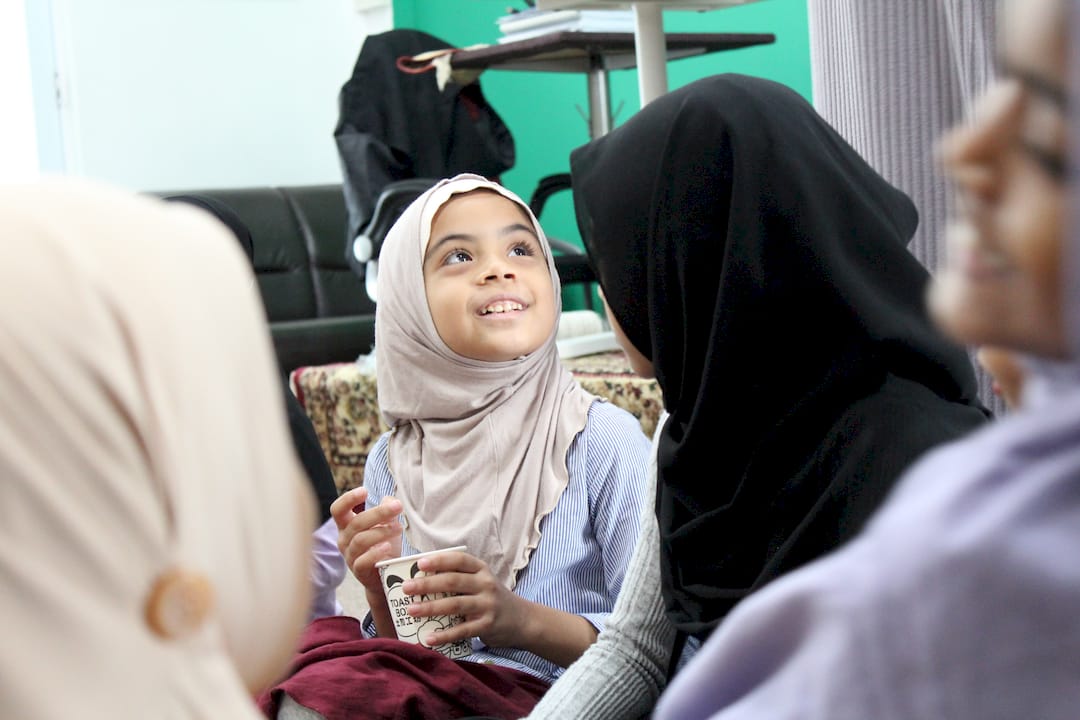
SimplyIslam’s programs are built for real life. Whether you are a parent enrolling a child to a weekend Madrasah, or a working adult fitting Islamic education around a full schedule, the platform offers structured courses taught by qualified educators. Over 22,000 participants have engaged with SimplyIslam’s programs, and the platform’s commitment to certified instruction remains central to every offering. Adults can explore Islamic education for working adults and find programs designed around the demands of professional life. For those seeking broader access to learning tools, free Islamic resources are also available for public use.
FAQ
What is ARS certification for Quran teachers?
ARS stands for Asatizah Recognition Scheme, a Singapore government-backed framework that verifies a religious teacher’s scholarly competence, ethical standards, and suitability to teach. ARS-certified Quran teachers have met regulated requirements that uncertified instructors have not.
What is the difference between Ijazah and an Islamic studies degree?
Ijazah certifies a teacher’s mastery of oral Quranic recitation through a documented chain of transmission back to the Prophet ﷺ. An Islamic studies degree covers theological knowledge but does not certify recitation competence or teaching authority.
How can parents verify a Quran teacher’s certification?
Parents should request the teacher’s Ijazah document and Sanad, which is the written chain of transmission. A qualified teacher will share both willingly. Reluctance to produce these documents is a clear sign of unverified credentials.
Are ARS-certified teachers available for online Quran classes?
Certified teachers apply the same Tajwid correction methods and structured lesson plans in online sessions as they do in person. The ARS framework governs teacher competence regardless of the delivery format.
Why does certification matter more for children than for adults?
Children develop recitation habits quickly, and errors that go uncorrected in early lessons become deeply ingrained. Certified teachers catch and correct Tajwid errors from the first session, which protects children from spending years unlearning incorrect patterns.