



Charity in Ramadan benefits the needy in many ways. It’s not just a financial impact to society, but emotional and spiritual as well. This is one of the greatest acts we can do, especially in the month of Ramadan.
Ramadan, the month of mercy, reflection and giving, is approaching soon, and there is no better way to prepare ourselves than understanding the weight of our acts of worship. Be it salah, reciting the Quran, Salawat, Dhikr, charity, every act of worship is essential.
In this article, you’ll understand the meaning of charity in Islam, why you should give Sadaqah, especially in Ramadan, and the 20 benefits of giving Sadaqah in terms of spirituality, social and emotional wellness.
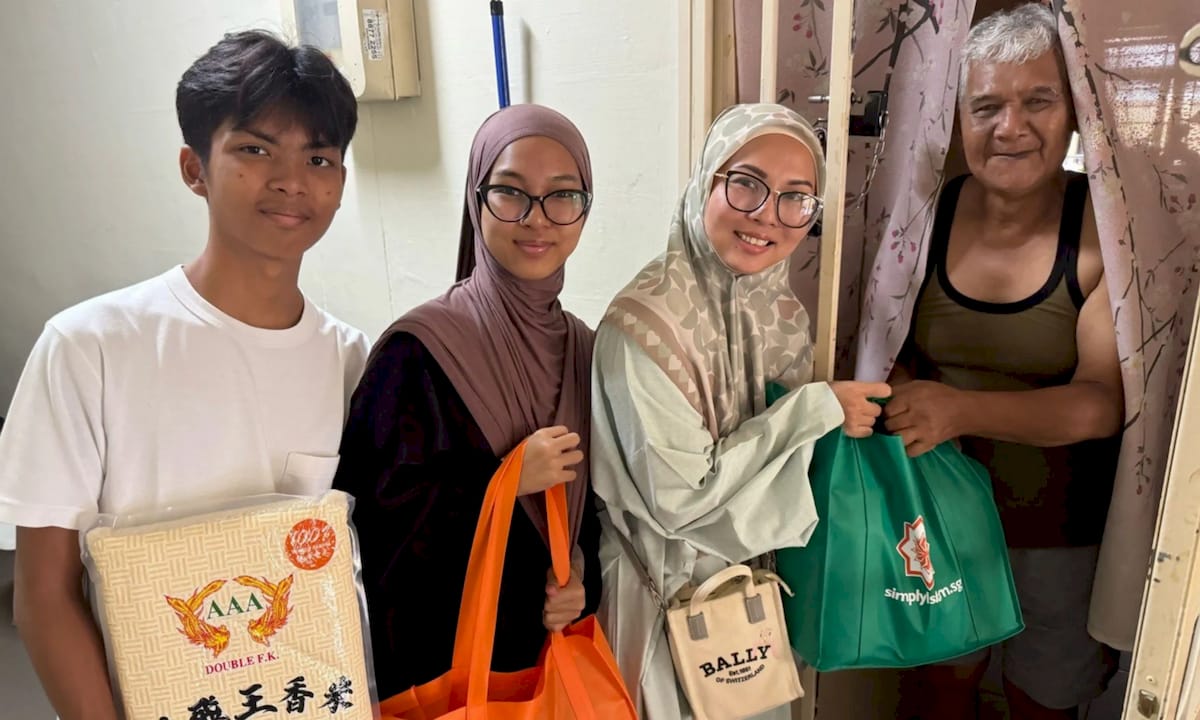
This Ramadan, consider supporting our Ramadan charity basket campaign, where we aim to deliver baskets and financial aid to more than 500 needy families in Singapore. Let’s make a real difference to those in need.
What is Charity in Islam
Charity in Islam is derived from the Arabic terminology called ṣadaqah (صدقة). The literal definition of this means ‘truthfulness’ or ‘sincerity’. It comes from the root ṣ-d-q (صدق), which means to be truthful, genuine, or to prove something as true. In short, the literal meaning of charity in Islam is not merely “donation,” but “a sincere act that proves faith and purifies wealth.”
There’s a common misconception between sadaqah and zakat, in which people easily mix the terms between the two. Let’s look at the definition of zakat.
Zakat is a pillar of Islam, while sadaqah is not. Eligible Muslims must give a fixed portion of their wealth (usually 2.5%) to specific groups such as the poor, the needy, and those in debt. Zakat purifies wealth and reminds us that what we own is an Amanah from Allah Almighty.

Types of Charity in Islam
There are two types of charity in Islam, and not many people are aware of these types. We’re about to see the differences between the two types of charities and their impact.
- Sadaqah (Voluntary charity)
The first type of charity is a voluntary act of sadaqah, which is more broader and flexible in its essence.
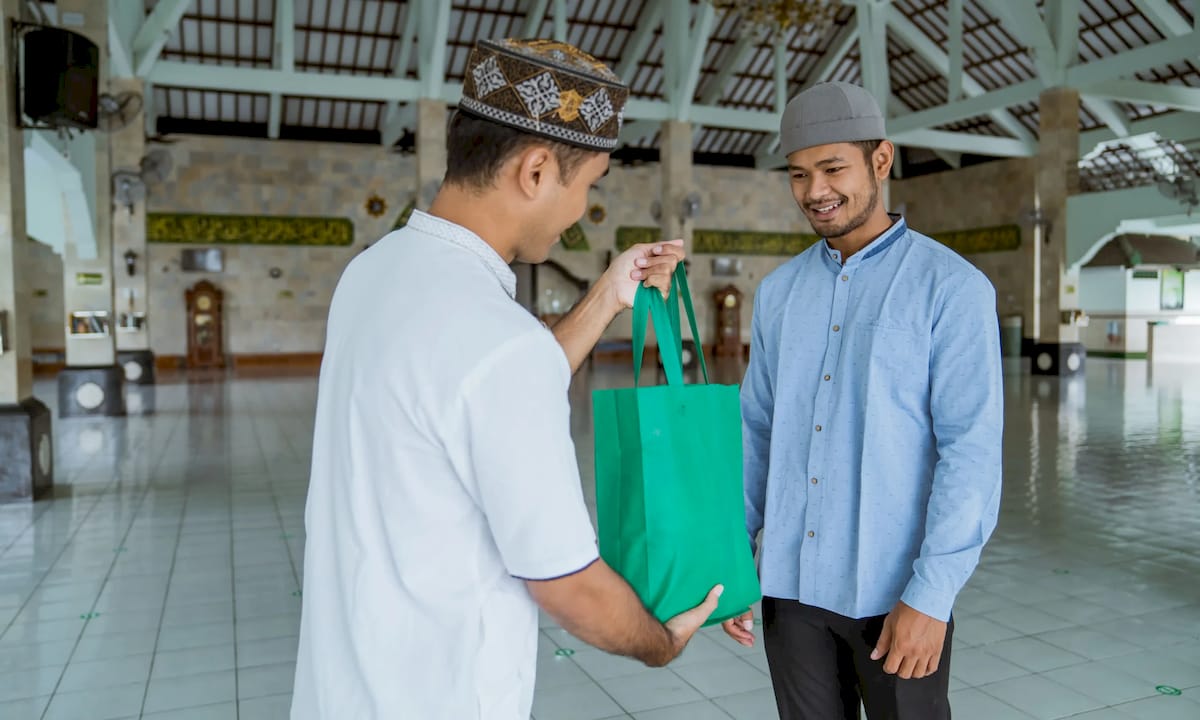
You can give to people in the form of money, food, time, effort, or even emotional support. Yes, emotional support is also a form of charity in itself. The Prophet ﷺ taught that a smile, removing harm from the road, or comforting someone in distress all count as sadaqah.
Abu Dharr narrated that the Messenger of Allah said :
“Your smiling in the face of your brother is charity, commanding good and forbidding evil is charity, your giving directions to a man lost in the land is charity for you. Your seeing for a man with bad sight is a charity for you, your removal of a rock, a thorn or a bone from the road is charity for you. Your pouring what remains from your bucket into the bucket of your brother is charity for you.” [Jami’ At-Tirmidhi]
- Sadaqah Jariyah (Ongoing charity)
The first type of charity is considered one-off, but the second one, Sadaqah Jariyah or ongoing charity, is one that you give that continues to benefit others even after you’ve passed on.
For instance, teaching the Quran every ounce of knowledge earned and practiced by your student for as long as they live. Another example is building a water well so that every person who drinks from it benefits. The reward keeps flowing as long as people benefit from it.
Abu Huraira reported God’s messenger as saying, “Among the actions and good deeds for which a believer will continue to receive reward after his death are knowledge which he taught and spread, a good son whom he left behind, or a copy of the Qur’an which he left as a legacy, or a mosque which he built, or a house which he built for the traveller, or a stream which he caused to flow, or a sadaqa which he gave from his property when he was alive and well, for which he will continue to receive reward after his death.” [Mishkat Al-Masabih]
Why Should You Give Charity in Ramadan

It softens the heart and heals greed
Giving back to society does numbers to one’s spirituality. When you give charity especially to those who need it most, your heart will be softened from the act itself. To see relief in motion as the needy rely on your support or generosity is a fulfilling act.
It also heals greed and gluttony, offering you realisation that wealth should be shared, not hoarded for yourself. The true meaning of wealth is seeing how your money benefits society.
It supports social justice and dignity
Around 831 million are currently living in extreme poverty, surviving on only $3 a day. That is a huge fraction of our global population, and it will soon be even more rampant if we do not fulfil our obligations as Muslims to pay zakat or nurture the act of charity in our lives.
Giving charity in Islam, no matter how small, helps restore social justice and dignity of the needy. It purifies our wealth by tipping the scales into social justice, providing every human being the right to live without worrying for their basic needs.
Sadly, not everyone is afforded the opportunity to live without worry. Hundreds of families, even in Singapore, are struggling to make ends meet due to the high cost of living. Your support, even $1 could help ease their burdens. Help them now, especially in the holy month of Ramadan.
It strengthens mental and emotional wellbeing; both for the giver and receiver
According to the National Library of Medicine, prosocial behaviour like giving charity, joining a volunteer group and more, increases happiness, positive mood, life satisfaction, and this effect is universal across various age groups and cultures.
People reported lower depressive symptoms, higher feeling of self-fulfilment, reduced stress, and some even say the boost prolongs for weeks and months after giving.
In hindsight, giving charity in Islam ticks all of the good boxes and none of the bad ones, which makes the act an excellent way to enhance mental and emotional wellbeing.
It draws a person closer to Allah Almighty and the Prophet ﷺ through compassion and selflessness
When you practice compassion and mercy towards others, you are embodying some of the beautiful qualities of the Prophet Muhammad ﷺ, that also reflects the beauty of Allah’s Divine Mercy and Compassion.
To be closer to your faith, it all begins with virtue and adab, and sincerity. Through giving sadaqah, it opens up your heart to only the most beautiful of feelings for you to cherish in the moment.
Charity in Islam According to the Quran and Sunnah
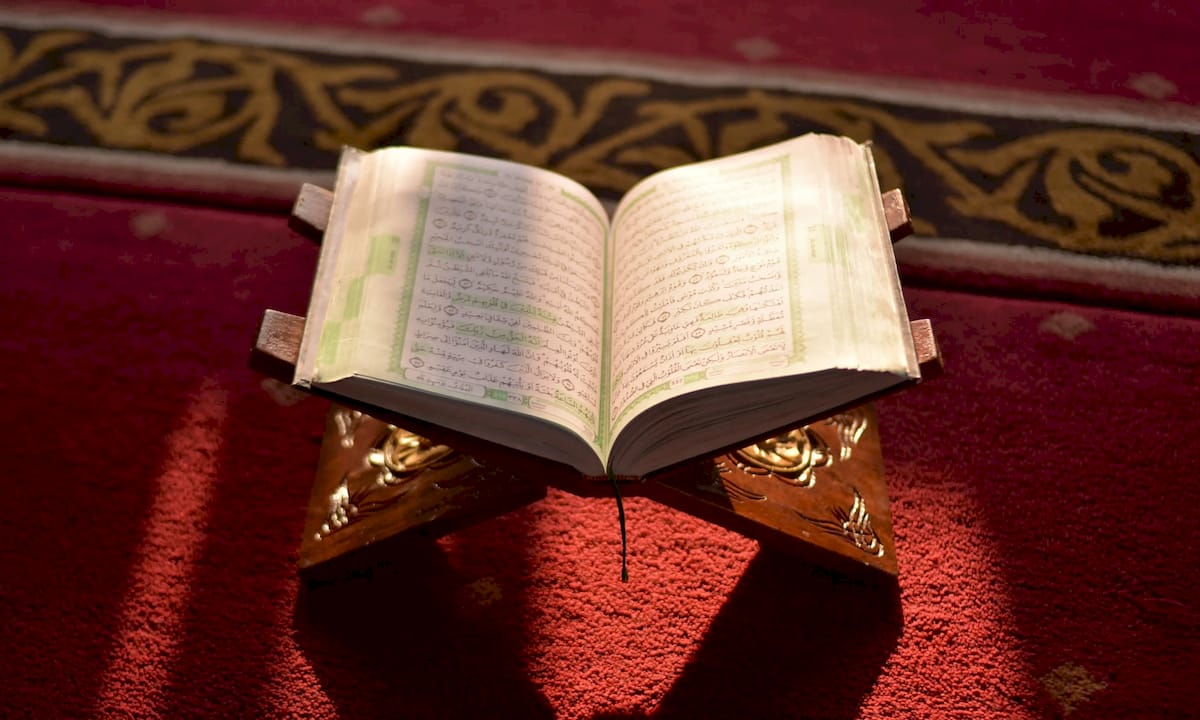
مَّثَلُ ٱلَّذِينَ يُنفِقُونَ أَمْوَٰلَهُمْ فِى سَبِيلِ ٱللَّهِ كَمَثَلِ حَبَّةٍ أَنۢبَتَتْ سَبْعَ سَنَابِلَ فِى كُلِّ سُنۢبُلَةٍۢ مِّا۟ئَةُ حَبَّةٍۢ ۗ وَٱللَّهُ يُضَـٰعِفُ لِمَن يَشَآءُ ۗ وَٱللَّهُ وَٰسِعٌ عَلِيمٌ ٢٦١
Those who spend their wealth in God’s cause are like grains of corn that produce seven ears, each bearing a hundred grains. God gives multiple increase to whoever He wishes: He is limitless and all knowing. (2:261)
ٱلَّذِينَ يُنفِقُونَ أَمْوَٰلَهُم بِٱلَّيْلِ وَٱلنَّهَارِ سِرًّۭا وَعَلَانِيَةًۭ فَلَهُمْ أَجْرُهُمْ عِندَ رَبِّهِمْ وَلَا خَوْفٌ عَلَيْهِمْ وَلَا هُمْ يَحْزَنُونَ ٢٧٤
Those who give, out of their own possessions, by night and by day, in private and in public, will have their reward with their Lord: no fear for them, nor will they grieve. (2:274)
إِنَّ ٱلْمُصَّدِّقِينَ وَٱلْمُصَّدِّقَـٰتِ وَأَقْرَضُوا۟ ٱللَّهَ قَرْضًا حَسَنًۭا يُضَـٰعَفُ لَهُمْ وَلَهُمْ أَجْرٌۭ كَرِيمٌۭ ١٨
Charitable men and women who make a good loan to God will have it doubled and have a generous reward. (57:18)
Abu Hurairah (May Allah be pleased with him) reported:
Messenger of Allah (ﷺ) said, “On every joint of man, there is charity, on everyday when the sun rises: doing justice between two men is charity, and assisting a man to ride an animal or to load his luggage on it is charity; and a good word is charity, every step which one takes towards (the mosque for) Salat is charity, and removing harmful things from the way is charity”. [Al-Bukhari and Muslim]
It was narrated from Salman bin ‘Amir that the Prophet said:
“Giving charity to a poor person is charity, and (giving) to a relative is two things, charity and upholding the ties of kinship.” [Sunan An-Nasa’i]
Jabir (Allah be pleased with him) reported Allah’s Messenger (ﷺ) as saying:
Never does a Muslim plants a tree except that he has the reward of charity for him, for what is eaten out of that is charity; what is stolen out of that, what the beasts eat out of that, what the birds eat out of that is charity for him. (In short) none incurs a loss to him but it becomes a charity on his part. [Sahih Muslim]
Etiquette in Giving Charity in Islam
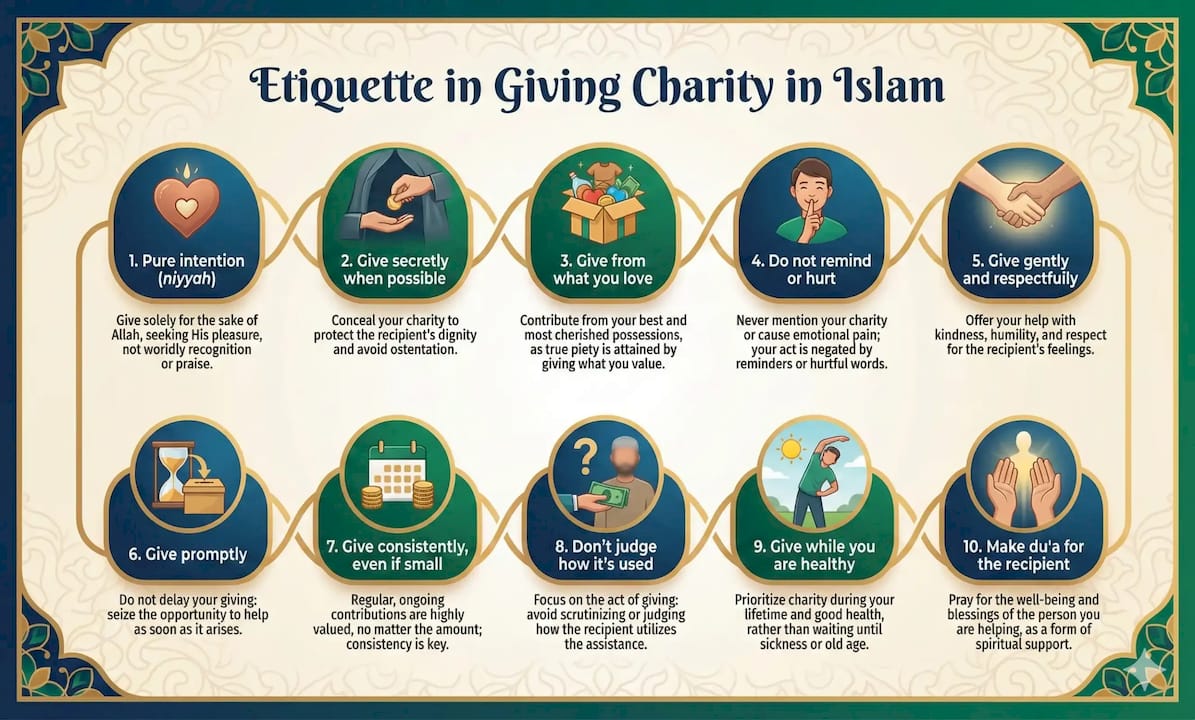
1. Pure intention
Give for Allah Almighty and His Beloved Messenger ﷺ. Eradicate all negative and misleading intentions that could stray you away from the path of goodness and righteousness.
Avoid feelings of guilt-relief, and more dangerously, boasting or showing off so that people recognise you as one of the pious.
وَمَآ أُمِرُوٓا۟ إِلَّا لِيَعْبُدُوا۟ ٱللَّهَ مُخْلِصِينَ لَهُ ٱلدِّينَ حُنَفَآءَ وَيُقِيمُوا۟ ٱلصَّلَوٰةَ وَيُؤْتُوا۟ ٱلزَّكَوٰةَ ۚ وَذَٰلِكَ دِينُ ٱلْقَيِّمَةِ ٥
though all they are ordered to do is worship God alone, sincerely devoting their religion to Him as people of true faith, keep up the prayer, and pay the prescribed alms, for that is the true religion. (98:5)
2. Give secretly when possible
There is no harm in giving publicly, but giving secretly helps prevent from any lurking feeling of arrogance and pride. It is one of the ways to minimize the risk of negative intentions. It also helps protect the dignity of the recipient.
إِن تُبْدُوا۟ ٱلصَّدَقَـٰتِ فَنِعِمَّا هِىَ ۖ وَإِن تُخْفُوهَا وَتُؤْتُوهَا ٱلْفُقَرَآءَ فَهُوَ خَيْرٌۭ لَّكُمْ ۚ وَيُكَفِّرُ عَنكُم مِّن سَيِّـَٔاتِكُمْ ۗ وَٱللَّهُ بِمَا تَعْمَلُونَ خَبِيرٌۭ ٢٧١
If you give charity openly, it is good, but if you keep it secret and give to the needy in private, that is better for you, and it will atone for some of your bad deeds: God is well aware of all that you do. (2:271)
3. Give from what you love
This is often the most difficult for some. To give something you love to someone else is not an easy feat, especially if your possession has sentimental or monetary value.
Remember, even in your hesitance to give something you love to other people, there is incredible reward that awaits. It is part of your internal fight against yourself to release something of value to you in the care of other people.
Allah Almighty knows the weight of your act, and Allah Almighty will grant you His Divine Blessings and Mercy for it, Insha’Allah.
4. Do not remind or hurt
When your mind goes ‘Remember when I helped you…’, it is best to silence the voice and focus on coping with your emotions in a regulated way. Remember, helping with sincerity should be given without expecting anything in return.
That means even when people don’t treat you the way you want to be treated, or have not lent you help when you need it most, it is not a free card to remind them of those times when you helped them out.
يَـٰٓأَيُّهَا ٱلَّذِينَ ءَامَنُوا۟ لَا تُبْطِلُوا۟ صَدَقَـٰتِكُم بِٱلْمَنِّ وَٱلْأَذَىٰ كَٱلَّذِى يُنفِقُ مَالَهُۥ رِئَآءَ ٱلنَّاسِ وَلَا يُؤْمِنُ بِٱللَّهِ وَٱلْيَوْمِ ٱلْـَٔاخِرِ ۖ فَمَثَلُهُۥ كَمَثَلِ صَفْوَانٍ عَلَيْهِ تُرَابٌۭ فَأَصَابَهُۥ وَابِلٌۭ فَتَرَكَهُۥ صَلْدًۭا ۖ لَّا يَقْدِرُونَ عَلَىٰ شَىْءٍۢ مِّمَّا كَسَبُوا۟ ۗ وَٱللَّهُ لَا يَهْدِى ٱلْقَوْمَ ٱلْكَـٰفِرِينَ ٢٦٤
You who believe, do not cancel out your charitable deeds with reminders and hurtful words, like someone who spends his wealth only to be seen by people, not believing in God and the Last Day. Such a person is like a rock with earth on it: heavy rain falls and leaves it completely bare. Such people get no rewards for their works: God does not guide the disbelievers. (2:264)
5. Give gently and respectfully
Adab is everything in Islam. Without adab, it doesn’t matter how long you’ve devoted your life into acts of worship. Being respectful and understanding etiquette and adab is the golden standard of every Muslim.
So when you want to give charity, give it with kindness, not harshness.
۞ قَوْلٌۭ مَّعْرُوفٌۭ وَمَغْفِرَةٌ خَيْرٌۭ مِّن صَدَقَةٍۢ يَتْبَعُهَآ أَذًۭى ۗ وَٱللَّهُ غَنِىٌّ حَلِيمٌۭ ٢٦٣
A kind word and forgiveness is better than a charitable deed followed by hurtful [words]: God is self-sufficient, forbearing. (2:263)
6. Give promptly
A beggar comes to you for money. You have a few moments to give before the opportunity slips away. Do not second guess your actions, nor procrastinate in giving.
Some are afflicted with social anxiety to give in public or when an immediate scenario arises. So, pause a moment, take a deep breath and give without worry.
The Prophet ﷺ was known to give immediately, as if generosity had a heartbeat.
7. Give consistently, even if small
Consistency is key to success, and that includes giving sadaqah. Do not underestimate your consistent $1 donation, because that $1 indeed holds an immense weight in the sight of Allah the All-Knowing.
“The most beloved deeds to Allah are those done consistently, even if small.” (Bukhari & Muslim)
8. Don’t judge how it’s used
You might think, “Why did she use the money to buy a blind box!?”. Remember, once you’ve given charity, that money no longer belongs to you and is completely under the authority and decision of the recipient.
Allah Almighty rewards you for the giving, regardless whatever the outcome may be. We can only hope and pray that the money will be put to good use.
9. Give while you are healthy
Charity doesn’t wait until you are rich. It doesn’t wait until you are older and wiser. The Prophet ﷺ said the best charity is given while you still love wealth and fear poverty.
10. Make du‘a for the recipient
When you give, make sincere du’a for the recipient that will benefit them in the world and Hereafter. A comprehensive du’a you can practice is:
“May Allah Almighty Grant you His Divine Blessings, Mercy, Protection and Favour, and may He increase you in sustenance, knowledge, health and sufficiency in all good things, Amin.”
20 Benefits of Giving Charity in Islam
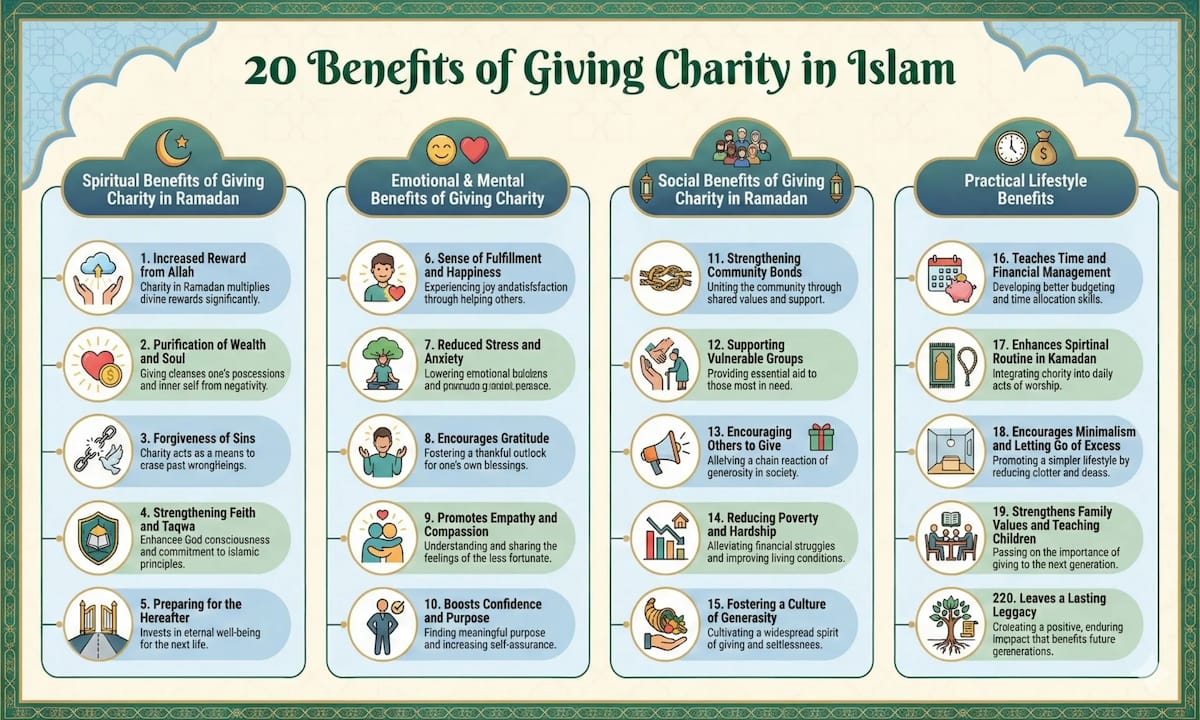
Now, let’s look at the crux of giving charity in Islam, highlighting 20 benefits of Sadaqah that consist of spiritual, emotional, social and even lifestyle benefits.
Spiritual Benefits of Giving Charity in Ramadan
1. Increased Reward from Allah Almighty
The rewards of giving sadaqah in Islam are immense. Allah Almighty even gives an analogy for the abundance in reward:
Those who spend their wealth in God’s cause are like grains of corn that produce seven ears, each bearing a hundred grains. God gives multiple increase to whoever He wishes: He is limitless and all knowing. (2:261)
2. Purification of Wealth and Soul
Acts of charity purifies your wealth and helps restore balance in wealth throughout society. Giving sadaqah in Islam is also known to purify the soul, enhancing connection to Allah Almighty and His Beloved Messenger ﷺ.
3. Forgiveness of Sins
One of the ways to expiate your sins is through giving charity. With every dollar given, your minor sins will be cleansed. Your heart will be purified from all things tainted.
4. Strengthening Faith and Taqwa
Giving charity in Islam intentionally increases your mindfulness and awareness of Allah Almighty. In a way, you are strengthening your Ihsan, to help others relieve their burdens.
5. Preparing for the Hereafter
Acts of sadaqah are investments in the Hereafter. If you’re looking for an opportunity to help, consider supporting a family in Singapore this Ramadan. Our charity baskets provide financial aid, food and essentials for those in need.
Emotional & Mental Benefits of Giving Charity
6. Sense of Fulfillment and Happiness
Many studies have shown the positive impact of prosocial behaviour like giving charity on one’s mental health. It gives you a sense of fulfillment and a calm sense of happiness.
7. Reduced Stress and Anxiety
Studies have also shown that giving charity can reduce one’s stress and anxiety, shifting focus from their personal worries to help alleviate the worries of others.
8. Encourages Gratitude
This is one of the most underrated feelings when you decide to open your heart and give sadaqah to others. When you realise how big it means for them to receive something from you, it evokes something in you.
Perhaps, you’ve been taking things for granted. Perhaps, you haven’t been as thankful as you should be. Hence, a valuable experience like this will encourage gratitude.
9. Promotes Empathy and Compassion
When you open your heart and soul to listen– truly listen to the stories of needy people, or when you decide to join a volunteer group and witness the reality for yourself, the experience sharpens your emotional intelligence and connection.
10. Boosts Confidence and Purpose
Having a sense of purpose is considered luxury these days. Everyday, some of us are wired in mundane routines that diminishes the spirit, so contributing meaningfully gives a sense of personal impact.
Social Benefits of Giving Charity in Ramadan
11. Strengthening Community Bonds
When all come as one to help one another through charity, this strengthens community bonds. None are being left behind, wealth is shared equally and provisionally, ensuring no soul is denied basic needs to survive.
12. Supporting Vulnerable Groups
When you give charity, you’re not just giving to one individual, because every individual has a story. You are giving to someone who perhaps can finally provide food on the table so that his children can eat. You are sharing your wealth with the elderly, families and children alike.
13. Encouraging Others to Give
When you give charity, especially publicly, you may inspire a ripple effect in the community. People will see it as an example they would likely follow. That is why kindness always spreads.
14. Reducing Poverty and Hardship
Charity in Islam has a direct and immediate impact on people struggling to meet basic needs. Whether it provides food, shelter, medical care, or emergency relief, donations help ease daily hardships and restore dignity.
15. Fostering a Culture of Generosity
Sadaqah nurtures a mindset of giving that extends beyond Ramadan. When generosity becomes habitual, communities grow stronger, more caring, and more resilient. Islam encourages consistent acts of charity so that compassion isn’t seasonal, but a lifelong practice.
Practical Lifestyle Benefits
16. Teaches Time and Financial Management
Allocating a portion of one’s income or time for charity encourages mindful spending and intentional living. It trains individuals to budget responsibly, prioritize needs over wants, and plan ahead.
17. Enhances Spiritual Routine in Ramadan
Incorporating charity into daily acts of worship such as giving after prayer or at iftar, strengthens spiritual consistency. It transforms Ramadan into a holistic experience where fasting, prayer, reflection, and giving work together to deepen faith.
18. Encourages Minimalism and Letting Go of Excess
Charity helps break emotional attachment to material possessions. By giving away what we don’t need, we learn contentment and simplicity. This shift reduces consumerism and refocuses the heart on what truly matters: purpose, gratitude, and generosity.
19. Strengthens Family Values and Teaching Children
Giving as a family creates meaningful conversations around empathy, gratitude, and social responsibility. When children participate in acts of charity, they learn compassion early and understand that wealth is a trust meant to be shared, not hoarded.
20. Leaves a Lasting Legacy
Sadaqah jariyah continues to benefit others long after one’s lifetime. Supporting education, healthcare, or sustainable aid projects ensures ongoing reward and impact. It is a legacy that outlives wealth and serves as a form of worship that never truly ends.
Conclusion
In hindsight, charity in Ramadan benefits holistically; the spirit, mind and community. It is important that we remember the weight of this act of worship and its impact so that we nurture it and bring change to our society.
This Ramadan, your small act of giving can transform lives. Join our Ramadan Charity Basket campaign and make an immediate difference for families in need.