






A quality Quran class is defined by structured curriculum, measurable progress, and qualified instruction, not by price or popularity.
The signs quality Quran class seekers should look for include documented lesson plans, Tajwid mastery, regular assessments, and a teacher who gives individualized feedback.
These indicators separate authentic learning environments from classes that simply fill time. Whether you are enrolling a child or continuing your own Quran education, knowing what to look for protects your investment and honors the Amanah of learning Allah’s words correctly.
1. What are the clearest signs of a quality Quran class?
A quality Quran class is built on structured curriculum design rather than informal, session-by-session teaching. The clearest signs are a documented lesson sequence, qualified instructors with Tajwid credentials, regular progress reports, and a class environment where students feel confident enough to ask questions.
These four pillars appear consistently in high-performing Quran programs across Singapore and beyond. If a class cannot show you its curriculum or explain how it measures student progress, that absence is itself a warning sign.
2. Structured curriculum starting from the foundations
A documented, step-by-step curriculum is the strongest single quality indicator in any Quran class. Effective programs begin with proper articulation points, known as Makharij Al-Huruf, before advancing to Tajweed rules and full recitation practice.
This sequencing is not arbitrary. It mirrors the way the Prophet Muhammad (ﷺ) taught the Companions: foundational clarity first, then depth.
Classes without a documented curriculum tend to drift. A teacher might revisit the same Surah for weeks without a clear reason, or skip Tajwid rules because a student seems to be “doing fine.” That inconsistency compounds over time and produces learners who can recite but cannot explain why they are pronouncing letters the way they do.
-
Lesson plans are written and shareable. You should be able to ask for a syllabus and receive one.
-
Tajweed rules are taught in sequence, not introduced randomly when errors appear.
-
Each session builds on the previous one, with a clear connection between lessons.
-
Milestones are defined, such as completing Juz Amma before moving to longer chapters.
Pro Tip: Ask the teacher to show you the first three lesson plans before enrolling. A confident, quality instructor will share them without hesitation.
3. Qualified instructors with proven Tajweed expertise
Teacher qualifications are critical to authentic and effective Quran instruction. A qualified Quran teacher holds formal Islamic education, has a recognized certification or Ijazah, and can demonstrate a track record of student improvement.
These credentials are not just paperwork. They signal that the teacher has been trained to identify and correct specific recitation errors, not just model correct pronunciation.
Teaching style matters as much as credentials. A skilled instructor adjusts explanations based on the student’s age, learning pace, and confidence level. They do not simply repeat the same correction louder. They rephrase, demonstrate, and encourage until the student understands the rule behind the sound.
-
Formal Islamic education from a recognized institution or scholar.
-
Tajweed Ijazah or equivalent certification, showing a chain of transmission back to the Prophet (peace be upon him).
-
Experience with your learner’s age group, whether children, teens, or adults.
-
Individualized feedback, not generic praise or blanket corrections.
SimplyIslam employs ARS-certified instructors who combine formal Tajweed training with interactive teaching methods. That combination produces students who understand their recitation, not just repeat it. You can explore their Quran for beginners for ladies program to see how qualified instruction is structured from the first lesson.
4. How does progress tracking reveal quality in Quran classes?

Top Quran classes track five core metrics: attendance, recitation fluency, Tajweed error count, practice frequency, and parent satisfaction. Tracking trends over time for these metrics offers deeper insight than any single isolated score. A student who scores a 3 on fluency in week one and a 4 in week six is improving. A student who stays at 3 for three months needs a curriculum adjustment, not more of the same.
Fluency is typically measured on a 1–5 scale. A score of 1 represents heavily hesitant recitation, while a score of 5 represents smooth, confident recitation. That scale gives both teacher and parent a shared language for discussing progress without ambiguity.
“Simple but consistent dashboards using a few core metrics outperform complex systems for progress tracking.” — Quran Educator Metrics: Dashboard Guide
| Metric | What it measures | Why it matters |
|---|---|---|
| Recitation fluency (1–5 scale) | Smoothness and confidence of recitation | Shows overall reading development over time |
| Tajweed error count by rule group | Specific rule violations per session | Pinpoints which rules need targeted practice |
| Attendance rate | Consistency of participation | Predicts long-term retention and progress |
| Practice frequency | How often the student recites outside class | Reflects home reinforcement and motivation |
| Parent satisfaction score | Parent perception of communication and progress | Indicates transparency and trust in the program |
Pro Tip: Ask for a sample progress report before enrolling. If the class cannot produce one, it is not tracking what matters.
Retention metrics through delayed recitation checks evaluate long-term learning beyond immediate class performance. A student who recites a passage correctly in class but cannot recall it two weeks later has not truly retained it. Quality classes build in these checks as a standard part of their assessment cycle.
5. What environmental factors separate good Quran classes from average ones?
A supportive learning environment is a direct sign of effective Quran teaching. Confident learners who volunteer recitation and ask questions show that the teacher has created a space where mistakes are treated as learning opportunities, not sources of shame. That emotional safety is not a soft benefit. It directly affects how quickly students improve and how long they stay enrolled.
Class size plays a significant role. Smaller groups allow the teacher to notice when a student is hesitant, confused, or disengaged. A class of 20 students with one teacher cannot provide the same level of attention as a group of 5 or 6. When evaluating a class, ask directly how many students share each session.
-
Students volunteer to recite without being pressured or called on repeatedly.
-
Questions are welcomed, not dismissed as interruptions.
-
The teacher notices hesitation and adjusts pace or explanation accordingly.
-
Parents receive regular updates, not just end-of-term reports.
Parental involvement and transparent communication correlate with higher student motivation and consistent attendance. When parents understand what their child is working on and why, they can reinforce learning at home. That home-class connection is one of the most underrated quality indicators in Quran education.
6. How do fees and trial classes help you evaluate quality?
Price alone is not a reliable quality indicator in Quran education. Some high-priced classes lack structured teaching, while affordable programs deliver genuine quality through disciplined curriculum design and experienced instructors. The fee structure should be transparent and tied to specific deliverables: session length, class size, instructor credentials, and included materials.
| Class type | Typical fee range | What to check |
|---|---|---|
| Group class, basic level | Lower cost per session | Curriculum documentation, class size |
| Group class, advanced Tajweed | Moderate cost | Instructor Ijazah, assessment frequency |
| One-on-one private session | Higher cost per session | Individualized feedback, progress reports |
| Trial or introductory session | Often free or reduced | Teaching style, curriculum fit, interaction quality |
Trial classes reduce the risk of committing resources to poor-quality instruction. A single trial session reveals more than any marketing description. Pay attention to how the teacher handles a mistake, whether the lesson follows a visible plan, and whether the student leaves feeling encouraged or deflated. Those observations are worth more than a fee comparison.
7. Retention and long-term learning as the final quality test
The ultimate measure of a quality Quran class is whether students retain what they learn. Tracking tajweed errors by rule group and watching error counts drop over time gives precise insight into teaching effectiveness. A class where students make the same Tajweed mistakes month after month is not delivering quality instruction, regardless of how polished the marketing looks.
Long-term retention is tested through delayed recitation checks, where students are asked to recite passages they learned weeks or months earlier without recent review. Quality programs build these checks into their regular assessment cycle. They treat retention as a core outcome, not an afterthought. If a class you are evaluating cannot explain how it tests long-term retention, that is a meaningful gap in its quality framework.
Key takeaways
A quality Quran class is defined by structured curriculum, qualified instructors, and consistent progress tracking — not by price or reputation alone.
| Point | Details |
|---|---|
| Curriculum structure is the top indicator | Look for documented lesson plans starting with Makharij Al-Huruf and sequenced Tajweed rules. |
| Instructor credentials matter deeply | Qualified teachers hold Tajweed certification or Ijazah and provide individualized, constructive feedback. |
| Progress tracking must be systematic | Quality classes measure fluency on a 1–5 scale and track Tajweed error trends over time. |
| Trial classes reveal what marketing hides | One session shows teaching style, curriculum fit, and how mistakes are handled. |
| Parental communication sustains motivation | Regular progress reports and transparent updates keep students engaged and parents informed. |
Start your Quran learning journey with SimplyIslam
SimplyIslam offers structured Quran programs in Singapore built around the quality indicators covered in this article: documented curricula, ARS-certified instructors, and regular progress assessments. Whether you are looking for a Quran class for all levels or a specialized camp experience for your child through the Al-Furqan Camp: Qur’an for Kids, SimplyIslam provides learning environments where students genuinely improve. You can also browse free Islamic resources and upcoming Islamic courses to support your family’s learning between sessions.
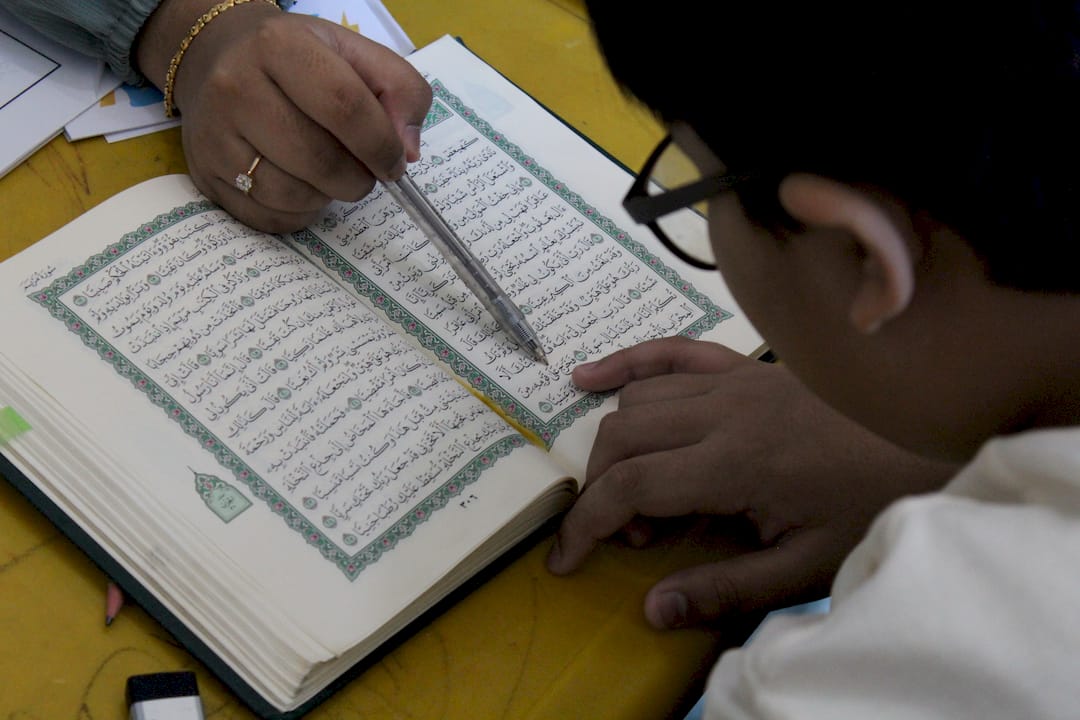
With over 22,000 participants served and a teaching methodology that prioritizes understanding over rote repetition, SimplyIslam is a trusted starting point for families who want authentic, measurable Quran education.
FAQ
What is the most important sign of a quality Quran class?
A documented, step-by-step curriculum starting with Makharij Al-Huruf is the strongest single quality indicator. Structured curriculum design consistently outperforms cost or reputation as a predictor of genuine learning outcomes.
How should a quality Quran class measure student progress?
Quality classes track recitation fluency on a 1–5 scale, Tajweed error counts by rule group, attendance, and practice frequency. Trend lines across these metrics over multiple sessions reveal more than any single score.
Are expensive Quran classes always better?
No. Price alone is not a reliable quality indicator. Some affordable classes deliver strong outcomes through structured teaching, while some high-priced programs lack depth or consistent assessment practices.
What should I look for in a trial Quran class?
Observe how the teacher handles a recitation mistake, whether the lesson follows a visible plan, and whether the student leaves feeling encouraged. Those three observations reveal teaching quality more accurately than any fee or marketing claim.
How does parental involvement affect Quran learning quality?
Parents who receive clear, regular progress reports sustain higher student motivation and more consistent attendance. Transparent communication between teacher and parent is a direct quality indicator, not just a courtesy.