



Charity in Ramadan is defined as one of the most spiritually potent acts a Muslim can perform, multiplying rewards in ways no other month offers.
The role of charity Ramadan significance carries extends far beyond financial giving. Zakat and Sadaqah together form a complete system of spiritual purification, social welfare, and communal solidarity.
Prophet Muhammad ﷺ was described as being “more generous than the blowing wind” during Ramadan, and that prophetic model remains the gold standard for every believer today. Whether you are a longtime giver or just beginning to understand the importance of charity in Ramadan, this guide is for you.
What is the spiritual significance of charity in Ramadan?
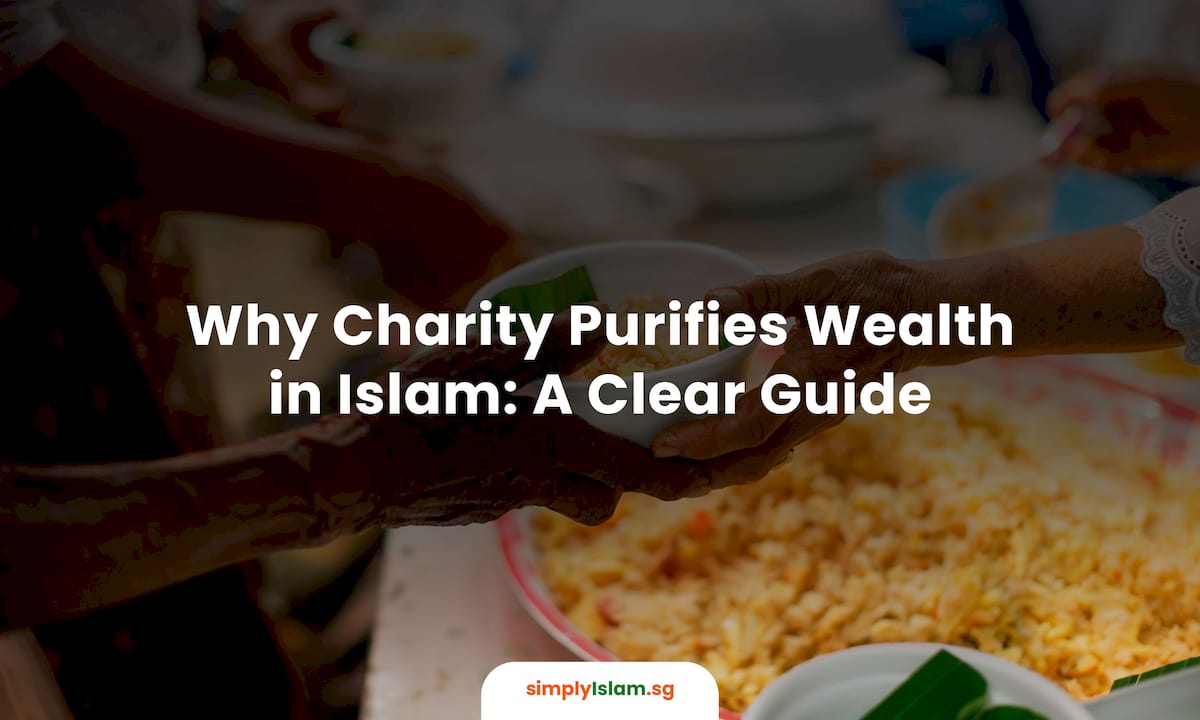
Charitable giving during Ramadan purifies both wealth and the soul. The Quran describes Zakat as a cleansing act, removing spiritual impurities that accumulate through attachment to material possessions. When a believer gives sincerely, the act trains the heart to loosen its grip on the world and turn toward Allah.
Prophet Muhammad ﷺ’s generosity during Ramadan was not occasional. It was a daily, deliberate practice that intensified with each passing night. Scholars at Islamonweb note that generosity in Ramadan is a spiritual state, not merely an economic act.
It reflects the believer’s openness of heart and detachment from materialism. That distinction matters deeply. You can give a large sum with a closed heart and receive little reward. You can give a small amount with full sincerity and receive immeasurably more.
The spiritual aspects of charity in Ramadan also extend well beyond money. The Prophet ﷺ taught that charity includes non-monetary acts such as:
- Sharing knowledge and teaching others
- Offering sincere advice (nasihah)
- Forgiving those who have wronged you
- Making du’a for your fellow Muslims
- Giving your time to serve the community
Pro Tip: If your finances are tight this Ramadan, commit to one non-monetary act of charity each day. Teaching a child a verse of the Quran or visiting a lonely neighbor carries genuine reward.
The link between charity, mercy, and forgiveness in Ramadan is direct. The month is described in hadith as a time when the gates of mercy are open and the gates of punishment are closed. Giving generously in this window is one of the clearest ways to draw closer to that mercy.
How does charity during Ramadan impact community and social justice?
Ramadan charity transforms individual wealth into shared resources that support vulnerable populations. This is not a secondary benefit. It is the core design of Islamic social welfare. Ramadan charity embodies solidarity and collective responsibility, turning personal piety into community protection.
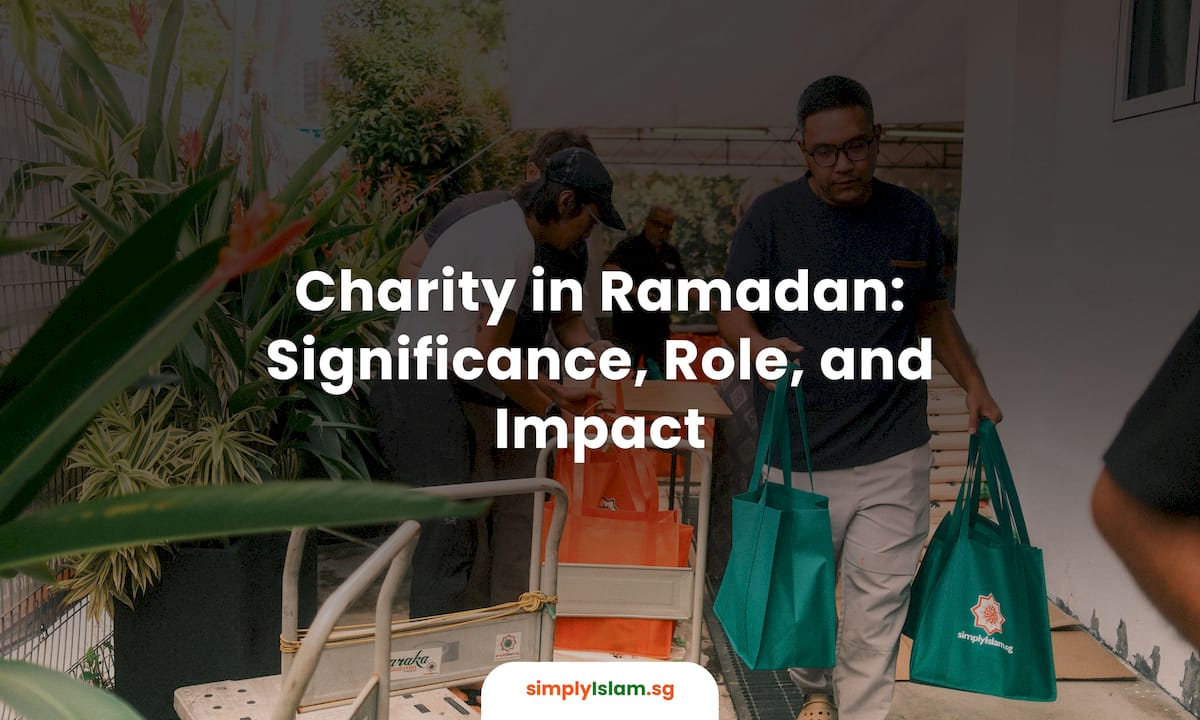
The impact of charity in Ramadan is visible in concrete, measurable ways. Consider what organized giving during this month actually funds:
- Daily iftar meals for the poor and homeless
- Food parcels for orphans and widows
- Emergency relief for displaced families
- School fees and educational supplies for children in need
- Clean water projects in underserved communities
Over 50% of annual donations for many Islamic charities are generated during Ramadan alone. That concentration of giving reflects how deeply Muslims connect this month with generosity. It also means that organizations serving the poor depend on Ramadan campaigns to fund their entire year of operations.
Zakat functions as mandated social welfare. It is not optional generosity. It is a structured redistribution of wealth that Quran 9:60 designates for eight specific categories of recipients, including the poor, the indebted, and travelers in need. Feeding the fasting poor carries special reward because it directly meets the physical need of someone honoring Allah through their fast. The act connects giver and receiver in a shared act of worship.
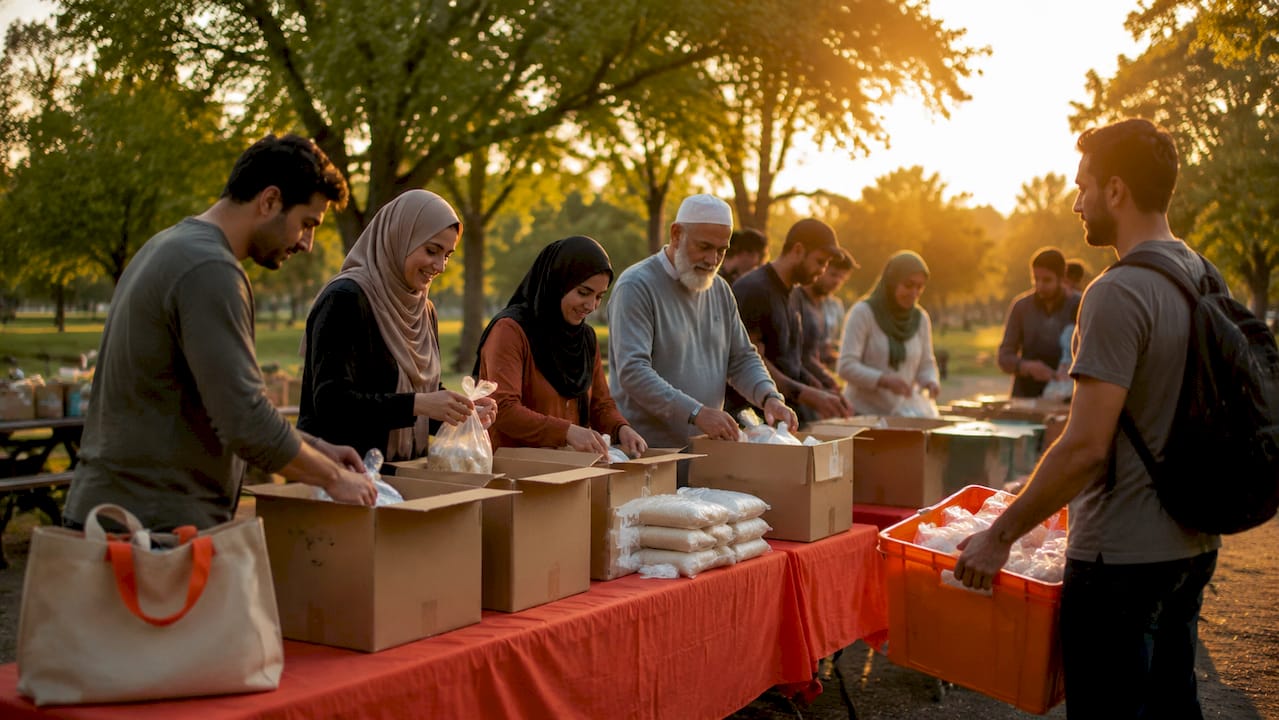
Community fundraising campaigns during Ramadan also build social cohesion. When a masjid organizes a collective iftar or a neighborhood pools resources for a local family, the bonds formed outlast the month itself.
What are the key types of charity in Ramadan and their differences?
Three distinct forms of charity operate during Ramadan, each with its own rules, timing, and purpose. Understanding the differences helps you give correctly and maximize your reward.
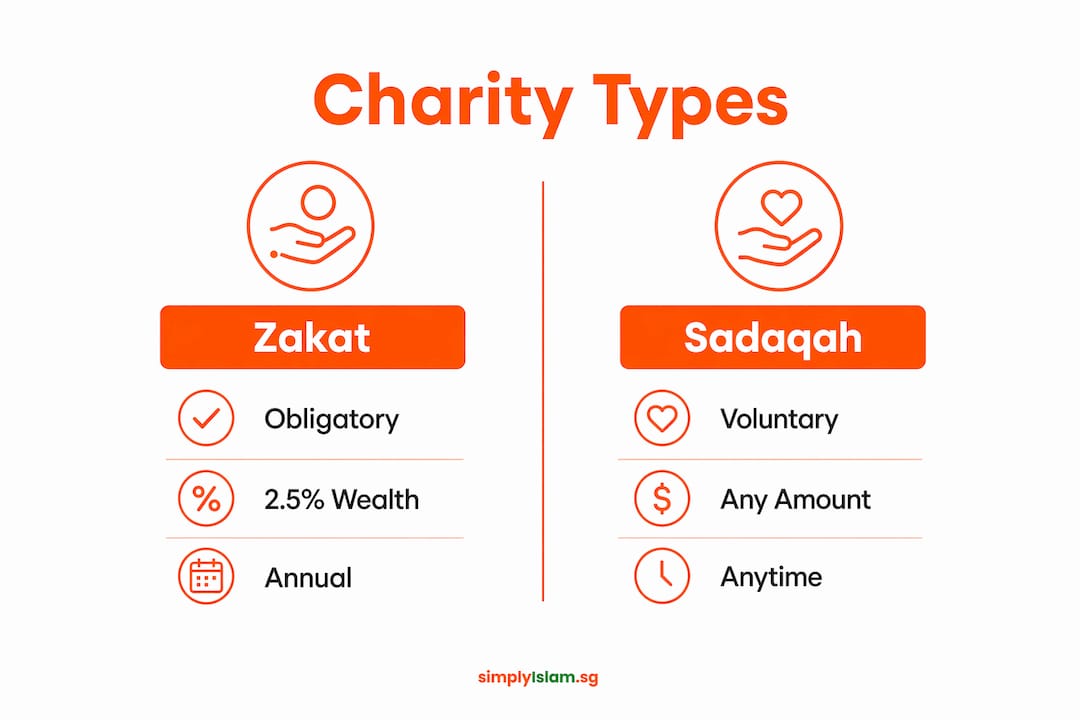
Zakat carries a 2.5% obligation on qualifying wealth held above the nisab threshold for one lunar year. Many Muslims choose to calculate and pay their Zakat during Ramadan to benefit from the multiplied rewards of the month. Mistakes in Zakat calculation can invalidate the reward, so consulting a knowledgeable scholar or using a verified Zakat calculator is strongly advised.
| Type | Obligation | Timing | Purpose |
|---|---|---|---|
| Zakat | Obligatory (2.5% of qualifying wealth) | Annually, often paid in Ramadan | Purification of wealth; social welfare |
| Zakat al-Fitr | Obligatory for every Muslim | Before Eid prayer | Communal blessing; feeding the poor for Eid |
| Sadaqah | Voluntary | Any time, especially Ramadan | Spiritual growth; flexible community support |
Zakat al-Fitr is a separate, smaller obligation paid before the Eid al-Fitr prayer. It is due on behalf of every Muslim in a household, including children. Its purpose is to ensure that even the poorest members of the community can celebrate Eid with dignity and a full meal.
Sadaqah is voluntary charity with no fixed amount. It is the most flexible form of giving and can include the non-monetary acts described earlier. Many scholars encourage spreading Sadaqah across all 30 nights of Ramadan rather than concentrating it in one large gift.
Pro Tip: Calculate your Zakat before Ramadan begins so you can distribute it thoughtfully across the month rather than rushing at the end. SimplyIslam’s free Islamic resources include guidance on Zakat calculation for Singapore-based Muslims.
When and how should Muslims plan their charitable giving in Ramadan?
Rushed last-minute giving leads to errors, forgotten organizations, and missed opportunities for impact. Planning your Ramadan charity in advance is not just practical. It is a spiritual act in itself, reflecting intentionality and sincerity.
Here is a practical framework for planning your giving:
- Calculate your Zakat before Ramadan starts. Know your nisab, assess your qualifying assets, and determine the exact amount you owe. This removes uncertainty and lets you focus on worship during the month.
- Divide your giving across the full 30 nights. Daily giving, even in small amounts, builds the habit of generosity and avoids charity fatigue. It also ensures ongoing support for organizations that need consistent funding.
- Prioritize the last 10 nights. Acts performed on Laylatul Qadr carry rewards greater than 1,000 months of worship, equivalent to more than 83 years. Reserve a portion of your giving specifically for these nights. Learn more about maximizing these nights through the Sunnahs of Laylatul Qadr.
- Set your intention (niyyah) before every act of giving. Sincerity and intention directly affect the multiplied reward of charity during Ramadan. A clear niyyah transforms a financial transaction into an act of worship.
- Consider a Donor Advised Fund (DAF). DAFs allow donors to set aside funds and distribute them over time with tax benefits. They are underutilized in Islamic philanthropy but offer real strategic and record-keeping advantages for larger givers.
Spreading giving throughout Ramadan also prevents the burnout that comes from concentrating all donations in the final days. Organizations serving daily needs, like soup kitchens and food banks, benefit far more from consistent support than from a single large donation at the month’s end.
What are some inspiring charity projects Muslims can support?
The significance of Ramadan charity becomes most visible when you see where the money goes. These are the categories of projects that consistently deliver the deepest impact:
- Food distribution programs: Daily iftar meals and food parcels for families in poverty. Prophet Muhammad ﷺ specifically emphasized the reward of feeding fasting people, making this one of the most recommended forms of Ramadan giving.
- Educational scholarships: Zakat-funded school fees and learning materials for children from low-income families. Education is a form of Sadaqah Jariyah, ongoing charity whose reward continues after the giver passes.
- Emergency relief: Funds directed to displaced communities, refugees, and disaster-affected families. These campaigns often peak during Ramadan because donors are spiritually primed to give.
- Community-driven initiatives: Local masjid projects, neighborhood iftars, and collective giving campaigns that build bonds within the Muslim community in Singapore and beyond.
SimplyIslam has helped raise over $1.1 million for charity through community-driven campaigns, demonstrating what organized, intentional giving can achieve. Explore meaningful Ramadan projects to find causes aligned with your values and capacity.
Coordinated campaigns also amplify individual contributions. When a community gives together toward a single goal, the collective impact far exceeds what any one donor could achieve alone. This is the social architecture that Ramadan charity is designed to build.
Key Takeaways
Charity in Ramadan is most effective when it combines sincere intention, strategic planning, and consistent giving spread across the entire month, especially the final 10 nights.
| Point | Details |
|---|---|
| Charity purifies wealth and soul | Zakat and Sadaqah cleanse both assets and the heart, fulfilling a core Islamic obligation. |
| Three distinct charity types exist | Zakat, Zakat al-Fitr, and Sadaqah each serve different purposes and carry different rules. |
| Laylatul Qadr multiplies rewards | Giving on the Night of Power equals more than 83 years of worship in reward. |
| Plan giving before Ramadan starts | Calculating Zakat early and spreading donations avoids errors and supports ongoing needs. |
| Community impact is measurable | Over 50% of many Islamic charities’ annual donations are raised during Ramadan alone. |
Deepen your Ramadan giving with SimplyIslam
SimplyIslam offers practical resources to help you give with knowledge, intention, and community support this Ramadan. Whether you want to understand the rules of Zakat, find verified charity campaigns, or connect with other Muslims committed to meaningful giving, SimplyIslam has what you need.
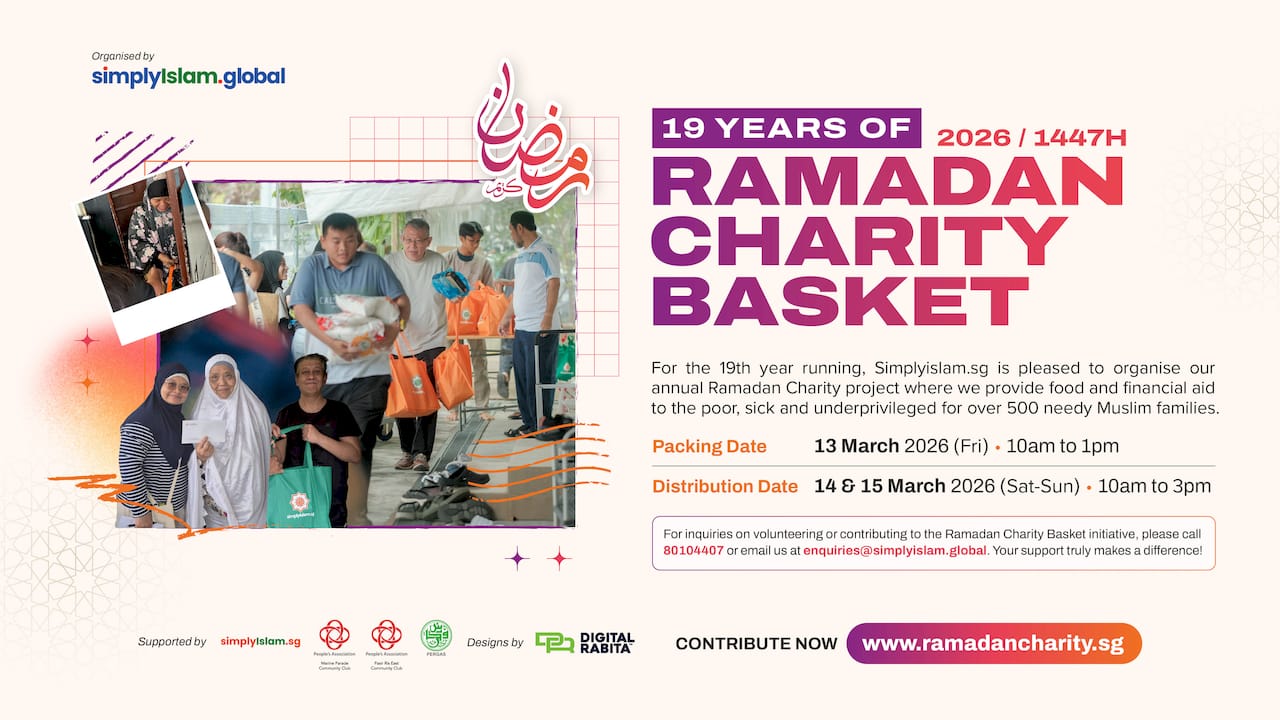
With over 22,000 participants and more than $1.1 million raised for charity, SimplyIslam has built a trusted platform for Muslims in Singapore who want their faith to translate into real-world impact. Explore upcoming Islamic events, join initiatives like the Ramadan charity basket, and community engagement. You can also browse charity campaigns for 2026 to find projects that align with your values and giving capacity. Your generosity, guided by knowledge, is one of the most powerful acts you can offer this Ramadan.
FAQ
Why is charity especially important during Ramadan?
Charity during Ramadan carries multiplied spiritual rewards because the month is designated in Islamic teaching as a time of heightened mercy and forgiveness. Every good deed, including giving, is amplified in ways not available in other months.
What is the difference between Zakat and Sadaqah in Ramadan?
Zakat is an obligatory 2.5% contribution on qualifying wealth distributed to specific recipients defined in Quran 9:60, while Sadaqah is voluntary giving with no fixed amount or designated recipients. Both are encouraged during Ramadan, but Zakat carries a legal obligation.
When is the best time to give charity during Ramadan?
The last 10 nights of Ramadan, particularly Laylatul Qadr, carry the greatest reward. Acts performed on Laylatul Qadr surpass the reward of more than 1,000 months of worship, making it the single most valuable window for charitable giving in the Islamic calendar.
What is Zakat al-Fitr and when must it be paid?
Zakat al-Fitr is an obligatory charity paid on behalf of every Muslim in a household before the Eid al-Fitr prayer. Its purpose is to purify the fast and ensure that the poor can celebrate Eid with dignity.
Can charity in Ramadan include non-financial acts?
Yes. Islamic scholarship confirms that charity in Ramadan includes teaching, giving sincere advice, forgiving others, making du’a for fellow Muslims, and volunteering time. These acts carry genuine reward and are especially encouraged for those with limited financial capacity.