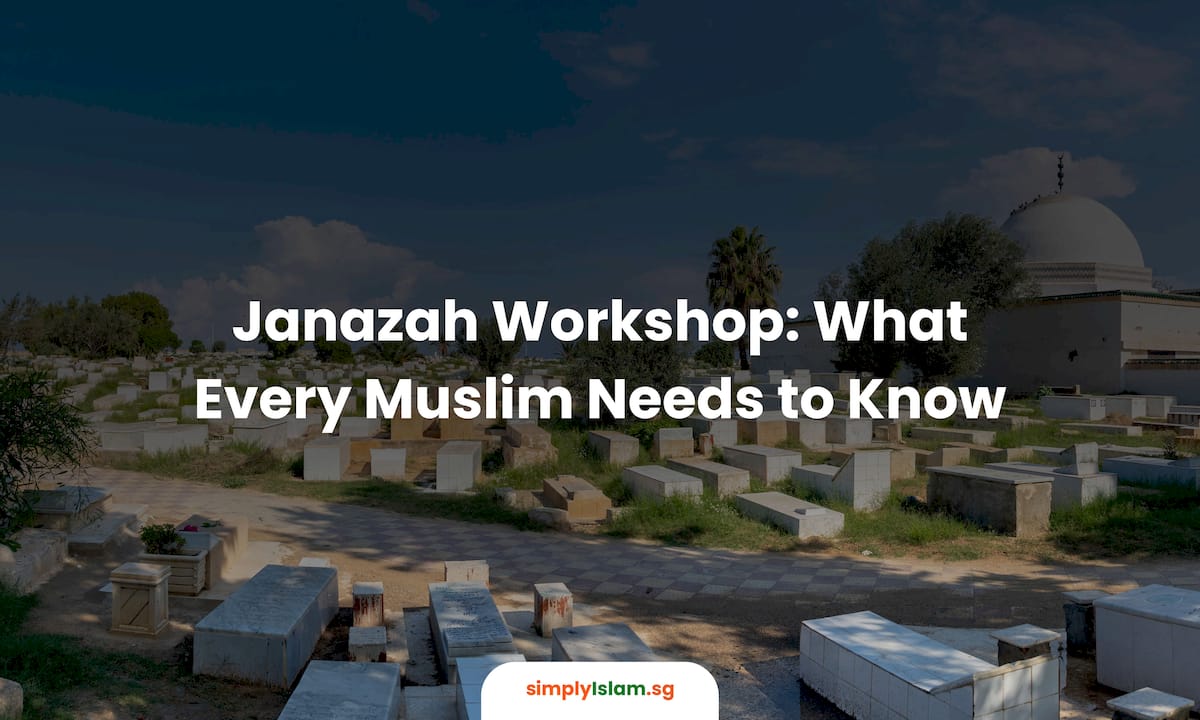
A janazah workshop is a structured training program that teaches Muslims the proper Islamic funeral rites, covering washing (ghusl), shrouding (kafan), funeral prayer (Salat al-Janazah), burial, and grief support. These programs typically last between 2 to 4 hours and combine religious theory with hands-on demonstrations. Attending a janazah workshop is one of the most practical acts of community care a Muslim can take. It prepares you to fulfill a fard kifayah, a communal obligation, with knowledge, dignity, and confidence.
1. What does a janazah workshop actually teach?
A well-structured funeral preparation course covers six essential pillars: burial permits, ghusl, kafan, Salat al-Janazah, burial etiquette, and bereavement support. Each pillar corresponds to a specific religious obligation rooted in the Sunnah. Missing any one of them can leave a family unprepared at the most difficult moment of their lives.
The theoretical portion explains the Islamic rulings behind each step. Participants learn why ghusl must be performed in a specific sequence, how the kafan differs for men and women, and what makes Salat al-Janazah valid. This grounding in religious law gives participants the confidence to act correctly, not just mechanically.
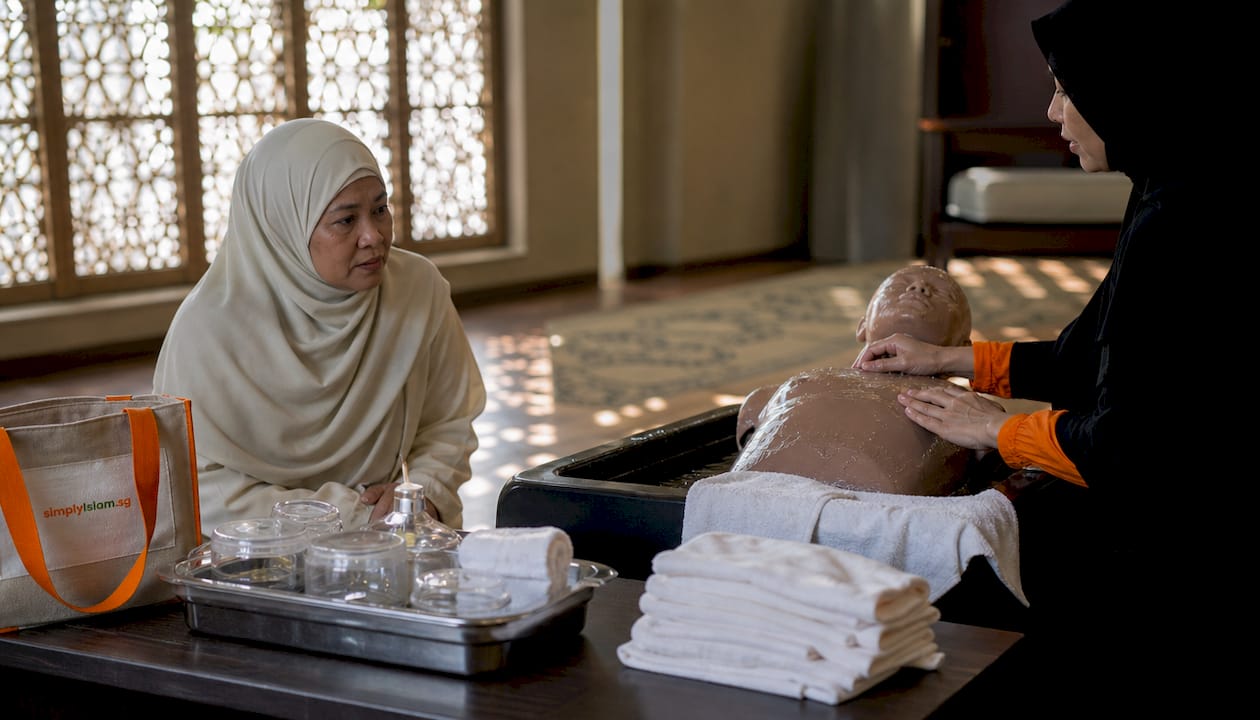
The practical portion brings those rulings to life. Instructors demonstrate each step using mannequins or guided role-play, so participants can observe and practice before they face a real situation. This combination of knowledge and skill is what separates a proper burial rites training from a simple lecture.
Pro Tip: Bring a notebook to your first session. The sequence of steps in ghusl and kafan involves precise details that are easy to forget without written notes.
2. How are ghusl and kafan taught in practice?
Hands-on demonstrations using mannequins help participants overcome natural hesitation and learn proper body preparation etiquette. Many Muslims feel uncomfortable around death, and that discomfort can paralyze them when a family member passes. Practical simulation removes that barrier before it becomes a crisis.
During ghusl demonstrations, instructors walk participants through the correct washing sequence, the use of sidr (lote tree leaves), and the rules of modesty that govern who may wash the deceased. Participants learn that ghusl follows a specific order: the right side before the left, and an odd number of washings. These details matter religiously and practically.
Kafan instruction covers the number of shrouding cloths, how to fold and secure them, and the supplications recited during the process. Participants who practice with a mannequin report far greater confidence than those who only read about the process. The physical experience of wrapping and securing the kafan makes the knowledge stick.
“Practical simulation uniquely clarifies janazah prayer logistics and body preparation etiquette in ways that reading alone cannot achieve. Participants who engage with hands-on training leave with both knowledge and the emotional readiness to serve their community.”
3. What are the core components of a janazah workshop?
The six pillars of an end-of-life planning seminar each carry distinct religious and practical weight. Understanding how they connect gives participants a complete picture of the janazah process.
-
Burial permits: Participants learn which documents are required, which government offices to contact, and how to complete the process quickly after a death occurs.
-
Ghusl: The ritual washing of the deceased, performed according to Sunnah protocols, with attention to gender-specific rules and the sequence of washing.
-
Kafan: Proper shrouding using white cloth, with specific folding techniques and the correct number of layers for men and women.
-
Salat al-Janazah: The funeral prayer, including its four takbirs, the supplications recited in each, and the rules governing who leads and who attends.
-
Burial etiquette: Correct positioning of the body in the grave, the recitations made at burial, and the conduct expected from those present.
-
Grief support: Guidance on comforting the bereaved, the Islamic etiquette of condolences (ta’ziyah), and how to support a family in the days following a death.
Protocols standardized to Sunnah practices ensure that every participant leaves with a consistent, religiously sound understanding. This standardization matters especially in diaspora communities where local customs can sometimes drift from authentic practice.
4. How do workshops address logistics and legal steps?
Workshops train attendees to liaise with funeral committees and understand the legal requirements for burial permits. This is the part of janazah management that most Muslims overlook until they are standing in a hospital corridor, unsure of what to do next. Knowing the administrative process in advance removes one layer of stress from an already painful situation.
Participants learn how to contact the relevant cemetery authority, what paperwork is required, and how to coordinate timing between the hospital, mosque, and burial site. In Singapore, this involves working with specific government agencies and Muslim burial boards. Understanding these channels before a death occurs saves critical hours.
Pro Tip: Save the contact numbers for your local mosque’s janazah committee and the relevant burial authority in your phone now. Having them ready removes one obstacle when time is short.
Scheduling Salat al-Janazah with a mosque requires coordination too. Workshops cover how to communicate with mosque administrators, what information they need, and how to arrange transportation for the body. These logistical skills are as much a part of Islamic funeral administration as the religious rites themselves.
5. How do workshops train participants in grief and bereavement support?
Training volunteers to manage the emotional impact on grieving families is a core social and religious objective of every serious janazah program. The physical rites are only part of the obligation. The community’s duty to the bereaved extends well beyond the burial.
A grief support workshop component typically covers:
-
How to offer ta’ziyah (condolences) in a way that is both Islamically correct and emotionally sensitive
-
What to say and what to avoid saying to a grieving family
-
How to organize practical support such as meals, childcare, and household help in the days following a death
-
When to refer a grieving person to professional bereavement counseling
-
How to support children who are experiencing loss for the first time
The psychological burden on families is significantly eased when trained community members step in with both competence and compassion. A volunteer who knows what to do and how to speak to the bereaved becomes a genuine source of comfort. That combination of skill and sensitivity is what the grief support component of a burial rites training aims to build. You can find additional guidance on funeral etiquette and grief through SimplyIslam’s dedicated resource.
6. What should you expect regarding access, duration, and cost?
Most mosque-based sessions are free or low cost and require pre-registration. This makes funeral preparation courses accessible to the widest possible community. Professional certification programs carry higher fees and are designed for those who want to serve formally as janazah volunteers or coordinators.
| Format | Duration | Cost | Registration |
|---|---|---|---|
| Mosque community session | 2–4 hours | Free or nominal fee | Pre-registration required |
| Community organization program | Half day | Low cost or donation-based | Open registration |
| Professional certification course | Multi-session | Varies, publicly listed | Formal enrollment |
| Online burial rites training | Self-paced | Varies | Platform registration |
The 2–4 hour format is the most common and the most accessible. It fits within a single morning or afternoon and does not require participants to take time off work. Community sponsorship from mosques and Islamic organizations keeps costs low, which reflects the communal nature of the fard kifayah obligation itself.
Community engagement sustains the quality of janazah services over time. When more community members attend training, the pool of capable volunteers grows, and no single family is left without support. For broader context on how community funeral services operate, Bravo Family Mortuary’s blog offers useful perspectives on end-of-life care and bereavement support from a professional standpoint.
7. What is the community impact of janazah training?
Community youth involvement in janazah management workshops strengthens social responsibility and teamwork. Post-workshop studies show improvements in both motivation and practical skills. That shift in attitude is significant because it means workshops do more than teach a skill. They change how participants relate to death and to their community.
Volunteer efforts are essential in coordinating burial arrangements, preparing graves, and supporting families practically and emotionally. A community with a trained volunteer base handles loss with far greater dignity than one that scrambles to find help at the last moment. The workshop is the mechanism that builds that base.
Workshops also cultivate emotional resilience through sensitive rituals guided by strict adherence to modesty and religious law. This is what distinguishes Islamic funeral training from general funeral education. The spiritual dimension is inseparable from the practical one. Participants leave not only more capable but more grounded in their faith.
Key takeaways
A janazah workshop is the most direct way for Muslims to fulfill their communal funeral obligation with religious accuracy, practical skill, and genuine compassion for the bereaved.
| Point | Details |
|---|---|
| Six core pillars | Every workshop covers burial permits, ghusl, kafan, Salat al-Janazah, burial etiquette, and grief support. |
| Practical training matters | Mannequin-based demonstrations build confidence that reading alone cannot provide. |
| Legal knowledge is overlooked | Understanding burial permits and administrative steps is as critical as the religious rites. |
| Grief support is part of the obligation | Bereavement training equips volunteers to ease families’ psychological burden after loss. |
| Access is wide | Most mosque sessions run 2–4 hours and are free or low cost with pre-registration. |
SimplyIslam’s janazah education resources
SimplyIslam offers structured learning for Muslims in Singapore who want to build real competence in janazah management. The platform’s courses are taught by ARS-certified instructors and designed for working adults who need flexible, practical Islamic education.
The Janazah Management Course at SimplyIslam covers the full scope of funeral rites, from religious rulings to administrative logistics, in a format built for busy schedules. For those who want to go further, SimplyIslam’s Islamic education for working adults guide maps out a complete learning path across key areas of Islamic practice. With over 22,000 participants served and more than $1.1 million raised for charity, SimplyIslam has earned its place as a trusted resource for the Singapore Muslim community. Check the upcoming Islamic events calendar to find the next available session.
FAQ
What is a janazah workshop?
A janazah workshop is a structured religious training program that teaches Muslims how to perform Islamic funeral rites, including ghusl, kafan, Salat al-Janazah, and burial. Most sessions run 2–4 hours and combine theory with practical demonstrations.
Who should attend a janazah workshop?
Any Muslim who wants to fulfill the communal obligation of caring for the deceased should attend. Youth, adults, and community volunteers all benefit from the practical and spiritual preparation these programs provide.
How much does a janazah workshop cost?
Most mosque-based sessions are free or charge a nominal fee and require pre-registration. Professional certification courses vary in price and are not publicly standardized.
What is the difference between ghusl and kafan?
Ghusl is the ritual washing of the deceased body, performed in a specific sequence according to Sunnah. Kafan is the shrouding of the washed body in white cloth, with the number of layers differing for men and women.
How do I find a janazah workshop near me?
Contact your local mosque’s janazah committee or check Islamic community organization event listings. SimplyIslam’s Islamic events calendar also lists upcoming janazah and funeral management training sessions in Singapore.