



The Sha’ban month is known as the neglected month, as people tend to overlook its position between Rajab and Ramadan.
Most are so occupied with preparing themselves for the blessed month of Ramadan, that they’ve forgotten that Sha’ban too possesses its own powerful virtues. One of its virtues is that it acts as a spiritual runway or bridge to Ramadan.
Abu Bakr Al-Warraaq Al-Balkhi (may Allah have mercy on him) said: The month of Rajab is a month for sowing, the month of Sha`ban is a month for irrigating the crop, and Ramadan is a month for harvesting the crop.
The mention of Sha’ban itself highlights the importance of this blessed month, so it’s essential that we equip ourselves with knowledge to appreciate this month and to better prepare ourselves for the months to come, especially Ramadan.
In this article, you’ll discover the meaning of Sha’ban, the timing of Sha’ban month in 2026, the virtues of Sha’ban, the misconceptions of Sha’ban, virtues of the Nisfu Sha’ban as well as 20 Sunnah you can do on the month of Sha’ban.
What Is Sha‘ban?
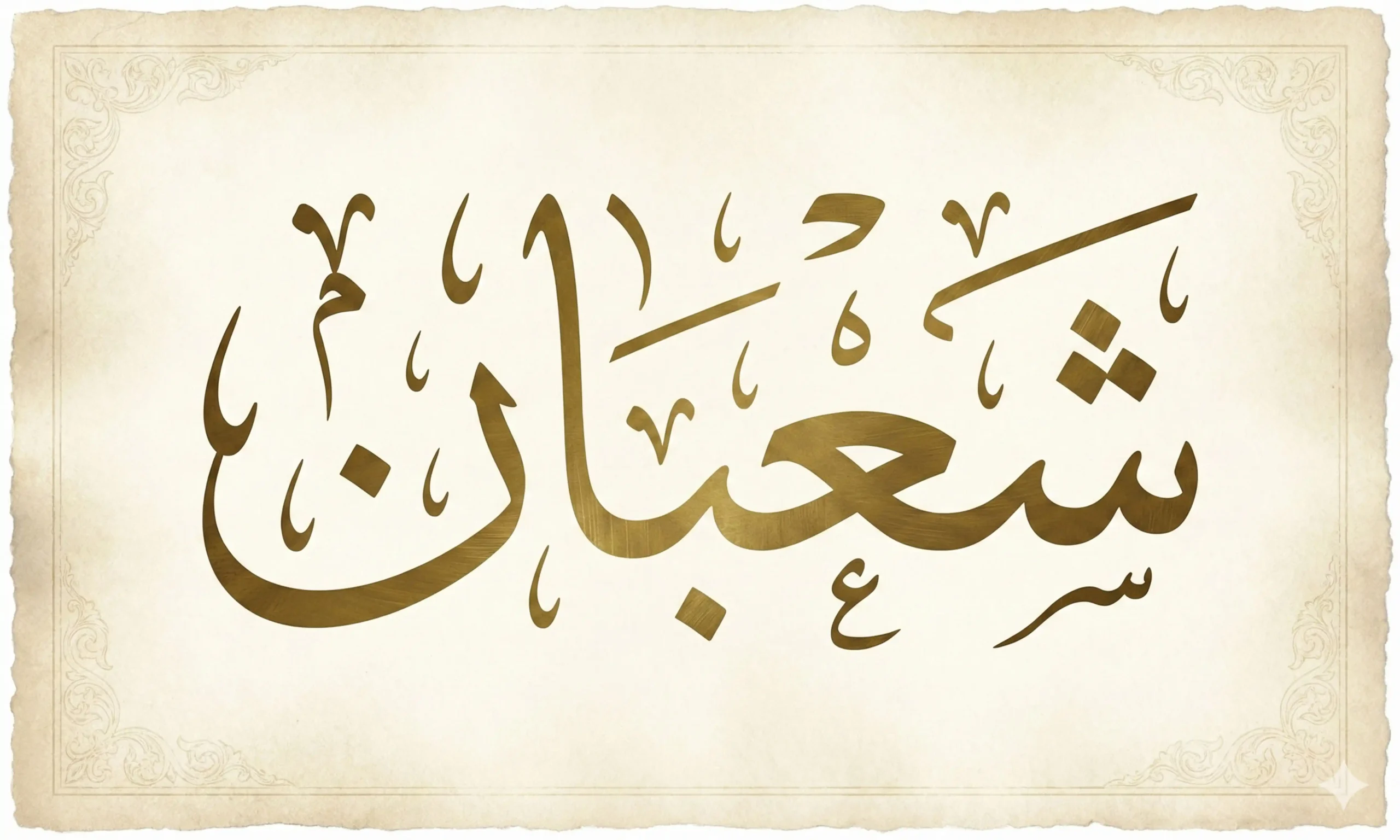
Sha‘ban (شَعْبَان) is the eighth month of the Islamic lunar calendar, positioning itself between Rajab and Ramadan. It is a month of spiritual preparation, increased worship, and renewed intention, often overlooked because it sits quietly before the intensity of Ramadan.
Linguistically, the word Sha‘ban comes from the root sha‘aba, which means to branch out or disperse. Scholars explain that it was named this way because people would traditionally spread out in search of water after the sacred month of Rajab or because acts of worship and good deeds “branch out” and increase during this time.
In Islam, Sha‘ban holds special significance due to the practice of the Prophet Muhammad ﷺ, who devoted himself to worship in this month more than in most other months outside of Ramadan. Although Sha‘ban is not explicitly mentioned in the Qur’an by name, its importance is firmly established in the Sunnah, particularly through the Prophet’s ﷺ increased fasting and devotion.

When Is Sha‘ban in 2026?
Sha’ban in 2026 is expected to start around Tuesday, January 20, 2026, and end on February 18, with the beginning of Ramadan following soon after, around February 19, 2026, though exact dates depend on moon sightings. The significant Nisfu Sha’ban will be around February 3, 2026.

Sha‘ban as a Bridge Between Rajab and Ramadan
Understanding the sequence of all these three blessed months can help us understand how to strategise our spiritual plan better just in time for Ramadan.
Rajab is known as the sacred awakening; a month where we purify our intentions, seek forgiveness from Allah Almighty, increase in remembrance and more.
Sha’ban month on the other hand is the month of spiritual preparation and consistency.
This is the month where we should not only ready ourselves intentionally but to start sprinkling some acts of worship to further solidify our routines. Acts like voluntary fasting, Quran recitation, and charity are all a great start to prepare for Ramadan. Habits formed in this month will determine our Ramadan quality.
Ramadan is where the examination truly begins. It is the month where you’re on a 30-day time limit to make the most of the blessed month; where rewards, blessings and mercy are multiplied.
The Importance & Virtues of Sha‘ban
Now, let’s dive deeper into the importance of Sha’ban. Why is it important that Muslims know the virtues of this sacred month? How is it sacred in any way?
Why the Prophet Places Great Emphasis on the Sha’ban Month
The Prophet treated the month of Sha’ban with great emphasis just like any other blessed month. In fact, he performed more voluntary fasting in Sha’ban more than in any other month except for Ramadan.
When Usamah ibn Zayd (ra) asked the Prophet ﷺ why he fasted so much in Sha‘ban, he replied: “That is a month people neglect, between Rajab and Ramadan.” (Sunan al-Nasa’i)
The takeaway is this: The Prophet ﷺ paid more attention to moments that we often overlook. Sha‘ban, quietly placed between two significant months, becomes a test of sincerity; worship performed not for visibility or excitement, but purely for Allah.
The Concept of Deeds Being Raised to Allah Almighty
It is the time when all of our yearly actions are presented to Allah Almighty. In the same narration, the Prophet ﷺ continued:
“It is a month in which deeds are raised to the Lord of the worlds, and I love that my deeds be raised while I am fasting.”
While deeds are recorded daily and weekly, Sha‘ban carries a yearly dimension; a moment of spiritual accounting.
Why Neglecting Sha‘ban Is Spiritually Costly
Allah Almighty understands our true nature, and that quality transformation takes time. It is a gradual process of practice, patience and discipline. The best way to reach transformation in the month of Ramadan is by going through that gradual process in Sha’ban.
Those who remain spiritually idle in Sha‘ban often find themselves struggling to “suddenly” transform in Ramadan. Worship becomes overwhelming, drastic, and unrealistic instead of natural.
Sha‘ban trains the soul in adapting with consistency before intensity, intention before action and preparation before performance.
Neglecting it means entering Ramadan unprepared, rushed, and spiritually disoriented, relying on motivation rather than discipline.
Sha‘ban in the Qur’an and Sunnah
Now, let’s look at the mentions of Sha’ban in the Sunnah. It’s important to know that although Allah Almighty has never mentioned Sha’ban in the Qur’an, it doesn’t mean it is any less significant than other blessed months mentioned.
It was narrated that Sayyidatina Aishah (Ra) said:
“The Messenger of Allah did not fast in any month of the year more than he did in Shaban. He used to fast all of Shaban.” [Sunan An-Nasa’i]
It was narrated that Umm Salamah (ra) said:
“The Messenger of Allah used to join Shaban to Ramadan.” [Sunan An-Nasa’i]
It is important to note that although Sha’ban is not mentioned in the Qur’an, it doesn’t diminish the significance of this blessed month being positioned between the two sacred months; Rajab and Ramadan.

Nisfu Sha‘ban: Authentic Narrations & Scholarly Views
Many of us have heard of Nisfu Sha‘ban, but what does it really mean? Nisfu Sha’ban means the night preceding the 15th day of Sha‘ban. This year specifically, Nisfu Sha’ban falls on the evening of February 3rd, 2026.
On this blessed night that only happens once a year, it marks Allah’s Divine Mercy, Forgiveness and also reflection for us to come prepared for the month of Ramadan.
Now, what do authentic narrations say about the Nisfu Sha’ban?
Sayyidatina ‘A’isha (ra) reported the Prophet ﷺ as saying, “Do you know what happens this night?” meaning the middle night of Sha‘ban. She asked, “What happens in it, Messenger of God?” He replied, “In it record is made of every human being who will be born and of every human being who will die this year; in it their actions are taken up to heaven and in it their provisions are sent down.” She asked, “Does one enter paradise only by the mercy of God most high?” He replied three times, “No one enters paradise but by the mercy of God most high.” She asked, “Not even you, Messenger of God?” He put his hand on the crown of his head and said, “Not even I, unless God enfolds me in His mercy,” saying it three times. [Mishkat al-Masabih]
This hadith indicates the night about Allah’s Divine Mercy and Forgiveness and that all of our deeds are to be written, accounted for and raised to heaven.
Fasting in Sha‘ban: The Practice of the Prophet ﷺ
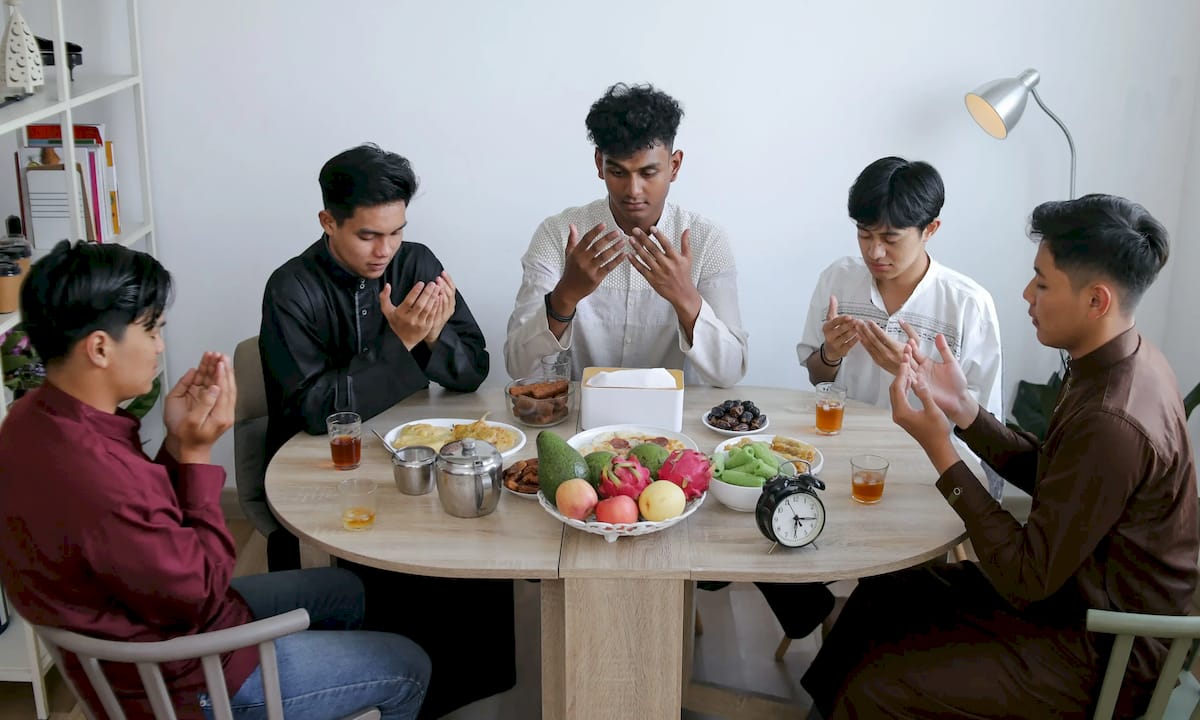
Fasting in the month of Sha’ban is highly encouraged as it was practiced by the Prophet Muhammad ﷺ in many narrations.
It was narrated that Sayyidatina Aishah (Ra) said:
“The Messenger of Allah did not fast in any month of the year more than he did in Shaban. He used to fast all of Shaban.” [Sunan An-Nasa’i]
He ﷺ used to fast everyday in the month of Sha’ban and would conjoin it with the month of Ramadan. This highlights that the month of Sha’ban portrays itself as a warm up; a training ground for the blessed month of Ramadan when it finally arrives.
If you aren’t able to commit to fasting every single day for that month, you may start off with only voluntary Sunnah fasts on Mondays and Thursdays, as well as the white days.
Instead of jumping straight into 30 days of fasting, this transition that happens in the month of Sha’ban will ease your progress and facilitate you to increase your worship in both quality and quantity.

Common Misconceptions About Sha‘ban
- “Sha‘ban is mentioned in the Qur’an”
Reality:
Sha‘ban is actually not mentioned in the Qur’an, but it doesn’t mean it is any less important than the other blessed months throughout the Islamic calendar.
Its virtues are known through the Sunnah, particularly the Prophet ﷺ’s increased fasting in this month.
- “Specific prayers or rituals are prescribed for Nisfu Sha‘ban”
Reality:
There is no authentic hadith prescribing a fixed prayer, number of rak‘ahs, or special congregational worship for this night.
However, there are du’as you can recite on this blessed night; du’as of forgiveness and attaining Allah’s Divine Mercy.
- “Sha‘ban is less important than other months”
Reality:
The Prophet ﷺ described Sha‘ban as a neglected month between Rajab and Ramadan.
Its value lies precisely in its quiet subtleties; spiritual preparation, consistency, and inner repair. Neglecting it often makes Ramadan feel abrupt to the soul that needs gradual tending.
- “If I don’t feel anything special, I’m doing it wrong”
Reality:
If you don’t feel the spiritual transformation during Sha’ban, it is not the end of the world. The main purpose of this blessed month is to practice, to begin something anew, even in small quantities.
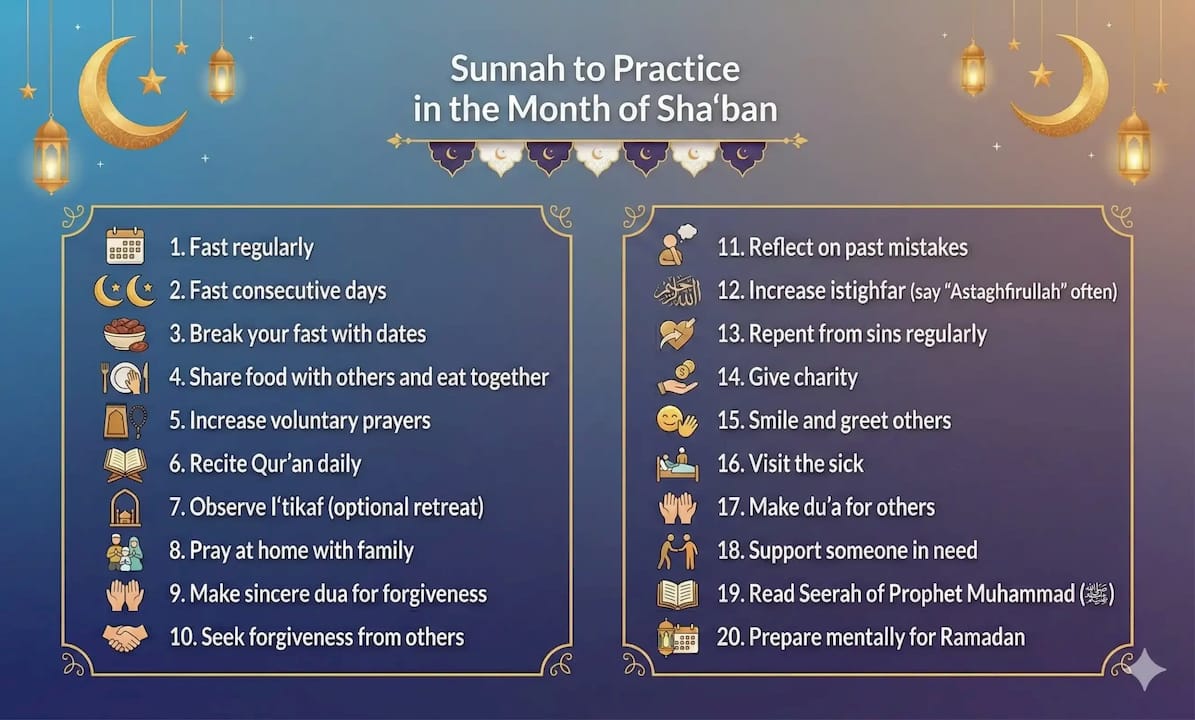
20 Sunnah to Practice in the Month of Sha‘ban
Fasting & Food
- Fast regularly:
- The Prophet ﷺ fasted often in Sha‘ban, sometimes the entire month of Sha’ban itself.
- Fast selectively
- Especially Mondays and Thursdays, as well as the white days.
- Fast consecutive days
- Optional, like a spiritual “warm-up” for Ramadan.
- Break your fast with dates
- One of the most practiced Sunnah as soon as fast is broken.
- Share food with others and eat together
- Increases reward, barakah and builds community.
Prayer & Worship
- Increase voluntary prayers
- Night prayers are highly recommended. You can perform tahajjud prayer, taubah prayer, hajat prayer and so much more.
- Recite Qur’an daily
- Reciting the Qur’an is highly encouraged everyday. Don’t just focus on the recitation, but reflection and tafsir as well. This helps you to understand, reflect and improve your spirituality.
- Recite short dhikr throughout the day
- Recite dhikr like SubhanAllah, Alhamdulillah, Allahu Akbar, La ilaha ilallah, and the 99 Beautiful Names of Allah Almighty.
- Observe I‘tikaf (optional retreat)
- At the mosque, perform i’tiqaf even a few hours, as the Prophet ﷺ did.
- Pray at home with family
- Nothing increases the bond and barakah more than engaging in acts of spirituality together, and that includes praying in congregation.
Repentance & Forgiveness
- Make sincere dua for forgiveness
- There are many du’as you can recite on the blessed night of Nisfu Sha’ban, but here’s a few:
Dua for Forgiveness (Istighfar):
أَسْتَغْفِرُ الله وَأَتُوْبُ إِلَيْهِ
Astaghifrullah wa atubu ilaih.
“I seek forgiveness from Allah, the Most Great, and I repent to Him.”
اللَّهُمَّ إِنَّكَ عَفُوٌّ تُحِبُّ الْعَفْوَ فَاعْفُ عَنِّي
Allahumma innaka afuwwun tuhibbul afwa fa’fu anni.
“O Allah, You are Forgiving and love forgiveness, so forgive me” [Sunan Ibn Majah]
رَبَّنَا لاَ تُؤَاخِذْنَا إِن نَّسِينَا أَوْ أَخْطَأْنَا
Rabbanā lā tuākhidh’nā in nasīnā aw akh ta’na.
“Our Lord, do not impose blame upon us if we have forgotten or erred.” [Qur’an 2:286].
Dua for Blessings and Goodness:
اَللّهُمَّ بَارِكْ لَنَا فِى رَجَبَ وَ شَعْبَانَ وَ بَلِّغْنَا رَمَضَان
Allahumma baarik lana fi rajaba wa Sha’baana wa ballighna Ramadan.
“O Allah, bless us in Rajab and Sha’baan, and let us reach Ramadan”
- Seek forgiveness from others
- Preparing yourself for spiritual transformation isn’t just about the acts of worship, but to mend relationships with those around you. Nurture bonds, forgive and forget, be the person to anchor others.
- Reflect on past mistakes
- A night of reflection is better than a thousand years of worship alone. Because when the mind and heart connect, that is when intentions become pure. That is when presence awakens. That is where your soul illuminates, preparing for Ramadan.
- Increase istighfar (say “Astaghfirullah” often)
- Istighfar cleanses heart and soul, because you are directly asking for forgiveness from the one who Forgives. He Forgives even the worst of sinners, so do not lose hope in His Divine Mercy.
- Repent from sins regularly
- Istighfar is not just a recitation where you touch-and-go. Consistent recitation, remembering His Divine Mercy should be regular so that you may see the effect taking place not just in the way you feel, but in the way your soul transforms.
Charity & Kindness
- Give charity
- Charity is relieving other’s financial burden, so if you have the means to help sincerely, share your wealth with those in need. Help us feed 500 needy families in Singapore this year, so they can experience the joy just in time for Eid.
- Smile and greet others
- Abu Dharr narrated that the Messenger of Allah said :
“Your smiling in the face of your brother is charity, commanding good and forbidding evil is charity, your giving directions to a man lost in the land is charity for you. Your seeing for a man with bad sight is a charity for you, your removal of a rock, a thorn or a bone from the road is charity for you. Your pouring what remains from your bucket into the bucket of your brother is charity for you.” [Jami’ At-Tirmidhi]
- Visit the sick
- Visiting the sick during Sha’ban is a form of community bonding that’s overlooked in our society nowadays. At most, we would sometimes just wish them speedy recovery if we aren’t able to meet them. If you can, spare some time visiting the sick to encourage compassion and social care.
- Make du‘a for others
- Nothing says care like making du’a for others. Just as the month of Sha’ban brings subtle virtues, we should also express our care and concern for others by keeping them in our prayers.
- Support someone in need
- Another form of charity you can do on the blessed month of Sha’ban is through supporting the needy; whether in food, guidance, or emotional support.
How to Spiritually Prepare for Ramadan Through Sha‘ban
In retrospect, Sha’ban is indeed a virtuous month that many Muslims tend to overlook. Without this blessed month, we would be struggling to ease our transition in time for the month of Ramadan. Without this month, we wouldn’t be able to implement small changes in our lives to prepare for the month that actually matters.
By understanding the definition of Sha’ban, its significance, the common misconceptions as well as Sunnahs you can do in this month, you’ll maximise the time given by Allah Almighty to improve your spiritual transformation.
FAQs
What is the month of Sha‘ban in Islam?
Sha‘ban is the eighth month of the Islamic lunar calendar, falling between Rajab and Ramadan. It is known as a month of spiritual preparation, where Muslims increase voluntary worship, fasting, and repentance in readiness for Ramadan.
Why is Sha‘ban called the “neglected month”?
Sha‘ban is described as a neglected month because it falls between two highly significant months, Rajab and Ramadan. The Prophet Muhammad ﷺ explained that people often overlook Sha‘ban, yet it is a time when deeds are raised to Allah, making it a powerful opportunity for sincere worship (Sunan al-Nasa’i).
When does Sha‘ban begin and end in 2026?
In 2026, Sha‘ban is expected to begin around January 20 and end on February 18, with Ramadan anticipated to start around February 19, subject to moon sightings. Nisfu Sha‘ban is expected to fall on the evening of February 3, 2026.
Is Sha‘ban mentioned in the Qur’an?
No, Sha‘ban is not mentioned by name in the Qur’an. However, its significance is firmly established through authentic hadith in which the Prophet ﷺ increased fasting and worship during this month, making its virtue clear through the Sunnah.
What did the Prophet ﷺ do during the month of Sha‘ban?
The Prophet Muhammad ﷺ fasted more in Sha‘ban than in any other month except Ramadan. Sayyidatina Aishah (ra) reported that he fasted most, sometimes all, of Sha‘ban, often joining it directly with Ramadan (Sunan An-Nasa’i).
What is Nisfu Sha‘ban and why is it important?
Nisfu Sha‘ban refers to the night preceding the 15th day of Sha‘ban. Authentic narrations indicate it is a night associated with Allah’s mercy, forgiveness, and the annual raising of deeds. While it is a virtuous night for du‘a and reflection, no specific obligatory prayers are prescribed.
Is fasting in Sha‘ban Sunnah?
Yes, fasting in Sha‘ban is highly recommended Sunnah. The Prophet ﷺ fasted frequently during this month. Muslims may fast Mondays and Thursdays, the white days (13th–15th), or increase fasting gradually as a spiritual warm-up for Ramadan.