What does the Quran teach about women?
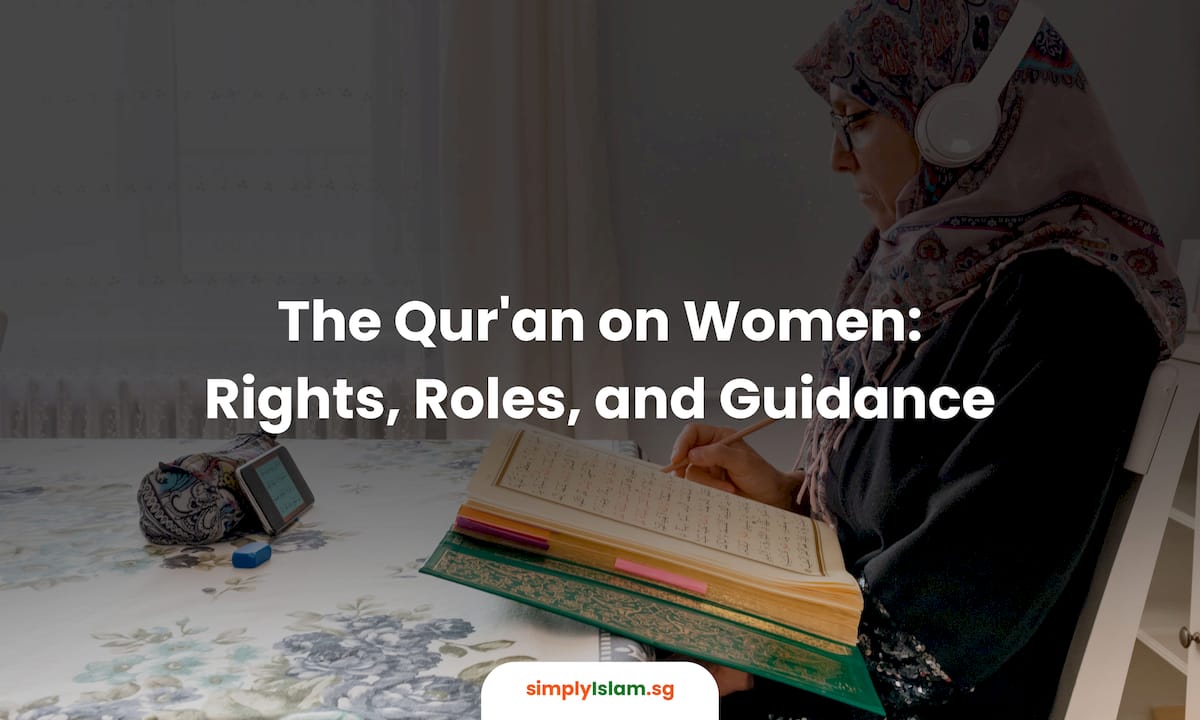
The Quran addresses women with clarity, dignity, and depth. Far from being peripheral, women are central to Quranic revelation.
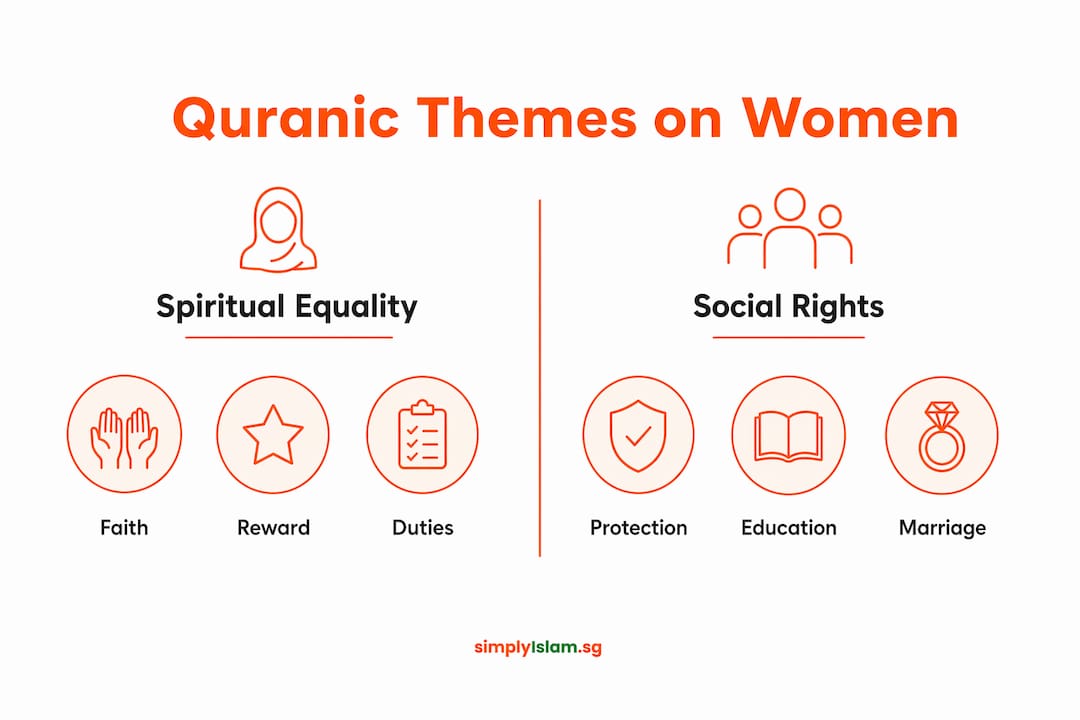
The scripture establishes their spiritual equality with men, grants them concrete legal rights, and honours them through named narratives and direct address. For anyone beginning a serious women’s Quran study, these are the core themes that shape everything else.
The Quran’s guidance on women organizes around several interlocking principles:
إِنَّ ٱلْمُسْلِمِينَ وَٱلْمُسْلِمَـٰتِ وَٱلْمُؤْمِنِينَ وَٱلْمُؤْمِنَـٰتِ وَٱلْقَـٰنِتِينَ وَٱلْقَـٰنِتَـٰتِ وَٱلصَّـٰدِقِينَ وَٱلصَّـٰدِقَـٰتِ وَٱلصَّـٰبِرِينَ وَٱلصَّـٰبِرَٰتِ وَٱلْخَـٰشِعِينَ وَٱلْخَـٰشِعَـٰتِ وَٱلْمُتَصَدِّقِينَ وَٱلْمُتَصَدِّقَـٰتِ وَٱلصَّـٰٓئِمِينَ وَٱلصَّـٰٓئِمَـٰتِ وَٱلْحَـٰفِظِينَ فُرُوجَهُمْ وَٱلْحَـٰفِظَـٰتِ وَٱلذَّٰكِرِينَ ٱللَّهَ كَثِيرًۭا وَٱلذَّٰكِرَٰتِ أَعَدَّ ٱللَّهُ لَهُم مَّغْفِرَةًۭ وَأَجْرًا عَظِيمًۭا ٣٥
“For men and women who are devoted to God- believing men and women, obedient men and women, truthful men and women, steadfast men and women, humble men and women, charitable men and women, fasting men and women, chaste men and women, men and women who remember God often- God has prepared forgiveness and a rich reward.” (Qur’an 33:35)
-
Spiritual equality before Allah Almighty: Surah Al-Ahzab (33:35) lists believing men and believing women side by side across ten moral qualities, from patience to charity, and promises each the same divine reward. There is no spiritual hierarchy by gender.
يَـٰٓأَيُّهَا ٱلنَّاسُ ٱتَّقُوا۟ رَبَّكُمُ ٱلَّذِى خَلَقَكُم مِّن نَّفْسٍۢ وَٰحِدَةٍۢ وَخَلَقَ مِنْهَا زَوْجَهَا وَبَثَّ مِنْهُمَا رِجَالًۭا كَثِيرًۭا وَنِسَآءًۭ ۚ وَٱتَّقُوا۟ ٱللَّهَ ٱلَّذِى تَسَآءَلُونَ بِهِۦ وَٱلْأَرْحَامَ ۚ إِنَّ ٱللَّهَ كَانَ عَلَيْكُمْ رَقِيبًۭا ١
"People, be mindful of your Lord, who created you from a single soul, and from it created its mate, and from the pair of them spread countless men and women far and wide; be mindful of God, in whose name you make requests of one another. Beware of severing the ties of kinship: God is always watching over you. " (Qur’an 4:1)
-
Shared origin and human dignity: Surah An-Nisa (4:1) opens by reminding all people that they were created from a single soul, establishing a common humanity that precedes any social distinction.
لِّلرِّجَالِ نَصِيبٌۭ مِّمَّا تَرَكَ ٱلْوَٰلِدَانِ وَٱلْأَقْرَبُونَ وَلِلنِّسَآءِ نَصِيبٌۭ مِّمَّا تَرَكَ ٱلْوَٰلِدَانِ وَٱلْأَقْرَبُونَ مِمَّا قَلَّ مِنْهُ أَوْ كَثُرَ ۚ نَصِيبًۭا مَّفْرُوضًۭا ٧
“Men shall have a share in what their parents and closest relatives leave, and women shall have a share in what their parents and closest relatives leave, whether the legacy be small or large: this is ordained by God.” (Qur’an 4:7)
- Right to inheritance: Surah An-Nisa (4:7) explicitly grants women a share of what parents and relatives leave behind, a ruling that was revolutionary in 7th-century Arabia.
يَـٰٓأَيُّهَا ٱلَّذِينَ ءَامَنُوا۟ لَا يَحِلُّ لَكُمْ أَن تَرِثُوا۟ ٱلنِّسَآءَ كَرْهًۭا ۖ وَلَا تَعْضُلُوهُنَّ لِتَذْهَبُوا۟ بِبَعْضِ مَآ ءَاتَيْتُمُوهُنَّ إِلَّآ أَن يَأْتِينَ بِفَـٰحِشَةٍۢ مُّبَيِّنَةٍۢ ۚ وَعَاشِرُوهُنَّ بِٱلْمَعْرُوفِ ۚ فَإِن كَرِهْتُمُوهُنَّ فَعَسَىٰٓ أَن تَكْرَهُوا۟ شَيْـًۭٔا وَيَجْعَلَ ٱللَّهُ فِيهِ خَيْرًۭا كَثِيرًۭا ١٩
You who believe, it is not lawful for you to inherit women against their will, nor should you treat your wives harshly, hoping to take back some of the bride-gift you gave them, unless they are guilty of something clearly outrageous. Live with them in accordance with what is fair and kind: if you dislike them, it may well be that you dislike something in which God has put much good. (Qur’an 4:19)
- Protections in marriage: Surah An-Nisa (4:19) forbids men from inheriting women against their will or treating them with harshness, framing marriage as a covenant of respect.
وَٱلْمُؤْمِنُونَ وَٱلْمُؤْمِنَـٰتُ بَعْضُهُمْ أَوْلِيَآءُ بَعْضٍۢ ۚ يَأْمُرُونَ بِٱلْمَعْرُوفِ وَيَنْهَوْنَ عَنِ ٱلْمُنكَرِ وَيُقِيمُونَ ٱلصَّلَوٰةَ وَيُؤْتُونَ ٱلزَّكَوٰةَ وَيُطِيعُونَ ٱللَّهَ وَرَسُولَهُۥٓ ۚ أُو۟لَـٰٓئِكَ سَيَرْحَمُهُمُ ٱللَّهُ ۗ إِنَّ ٱللَّهَ عَزِيزٌ حَكِيمٌۭ ٧١
The believers, both men and women, support each other; they order what is right and forbid what is wrong; they keep up the prayer and pay the prescribed alms; they obey God and His Messenger. God will give His mercy to such people: God is almighty and wise. (Qur’an 9:71)
- Moral agency and accountability: Surah At-Tawbah (9:71) describes believing men and women as allies who “enjoin what is right and forbid what is wrong,” assigning women the same moral responsibility as men.
قَدْ سَمِعَ ٱللَّهُ قَوْلَ ٱلَّتِى تُجَـٰدِلُكَ فِى زَوْجِهَا وَتَشْتَكِىٓ إِلَى ٱللَّهِ وَٱللَّهُ يَسْمَعُ تَحَاوُرَكُمَآ ۚ إِنَّ ٱللَّهَ سَمِيعٌۢ بَصِيرٌ ١
God has heard the words of the woman who disputed with you [Prophet] about her husband and complained to God: God has heard what you both had to say. He is all hearing, all seeing." (Qur’an 58:1)
- Right to speak and be heard: Surah Al-Mujadila (58:1) opens by honoring a woman who argued her case directly to the Prophet (peace be upon him), and Allah responded with revelation.
Abul Ala Maududi, whose Tafhim al-Qur’an remains one of the most widely read Urdu-language Quranic commentaries, emphasized that the Quran’s address to women was not incidental.
He noted that verses like An-Nisa 4:1 establish a foundational anthropology: men and women share the same origin, the same moral nature, and the same accountability before God.
Where Maududi drew distinctions, he located them in social function rather than spiritual worth, a position that later female Quran scholars have both engaged with and, in many cases, challenged through their own readings.
The Quran’s guidance is not a single chapter or a handful of rulings. It runs through the entire scripture, woven into stories, legal passages, and direct divine address. Understanding it fully requires reading across the text, not cherry-picking isolated verses.
Key Quranic verses about women and what scholars say
The Quranic verses about women span creation, family life, social justice, and spiritual devotion. Organizing them thematically reveals a coherent framework rather than a scattered set of rulings.
| Theme | Verse | Core Teaching | Scholarly Note |
|---|---|---|---|
| Common origin | An-Nisa 4:1 | All humanity created from one soul | Maududi: establishes shared human dignity as the baseline for all gender relations |
| Spiritual equality | Al-Ahzab 33:35 | Equal reward for equal faith and deeds | Ibn Kathir: the verse was revealed in response to women asking why they were not mentioned explicitly |
| Inheritance rights | An-Nisa 4:7, 4:11 | Women receive a defined share of estates | A legal ruling that overturned pre-Islamic Arabian custom entirely |
| Marriage covenant | An-Nisa 4:19 | Husbands forbidden from harshness or coercion | Maududi: the word “ma’ruf” (kindness) sets the standard for the entire marital relationship |
| Moral partnership | At-Tawbah 9:71 | Men and women are allies in commanding good | Reflects active, not passive, social role for women |
| Right to petition | Al-Mujadila 58:1 | Allah hears the woman who argues her case | Demonstrates that women’s voices reach divine attention directly |
| Dress and modesty | An-Nur 24:31 | Women instructed on modest conduct and dress | Scholars note the verse addresses behavior and social context, not only clothing |
| Mary’s station | Al-Imran 3:42 | Maryam chosen and purified above all women | The only woman named in the Quran, given an entire chapter (Surah Maryam) |
The verse that generated the most sustained scholarly debate is An-Nisa 4:34, which addresses the concept of qiwamah (guardianship or authority) in marriage. Maududi interpreted this verse as assigning men a leadership role within the family unit, grounded in financial responsibility.
Contemporary female Quran scholars, including those associated with musawah.org, have argued that qiwamah is conditional and contextual, tied to the husband’s fulfillment of financial duties rather than a blanket male authority over women.
This verse is among the clearest statements in the Quran that spiritual reward is gender-neutral. The Arabic uses both the masculine and feminine forms explicitly, leaving no ambiguity. Ibn Kathir, in his Tafsir, noted that this verse was among those that established the principle of equal divine recompense for equal faith and action.
The historical context of many verses is equally important. Surah An-Nisa was revealed in the aftermath of the Battle of Uhud, when the Muslim community was dealing with widows, orphans, and questions of inheritance. The legal rulings in that chapter were not abstract theology. They were direct responses to real injustices women were experiencing, and they corrected those injustices through divine command.
What rights and protections does the Quran give women?
The Quran’s rights for women are specific, enforceable, and grounded in divine authority. They cover the full arc of a woman’s life, from birth to death.
Financial and inheritance rights:
-
Women receive a defined share of parental and spousal estates (An-Nisa 4:7, 4:11, 4:12). The share is calculated, not discretionary.
-
A woman’s mahr (dower) belongs to her alone. Surah An-Nisa (4:4) commands that it be given “as a free gift,” not as a transaction between families.
-
A woman retains full ownership of her property after marriage. Her husband has no claim over it.
Rights in marriage and divorce:
-
Marriage requires the woman’s consent. The Sunnah is explicit on this, and scholars ground it in the Quran’s framing of marriage as a covenant (mithaq ghaliz), described in An-Nisa 4:21.
-
Women have the right to initiate divorce through khul’, returning the mahr in exchange for dissolution. This is established in Surah Al-Baqarah (2:229).
-
Surah At-Talaq (65:6) requires that divorced women be housed and supported during their waiting period (iddah) with no harm or pressure.
Protection from injustice:
-
Surah An-Nisa (4:19) explicitly forbids inheriting women against their will, a direct prohibition of the pre-Islamic practice of treating widows as property.
-
Surah An-Nur (24:4) sets a strict evidentiary standard for accusations of sexual misconduct, requiring four witnesses. False accusers face legal punishment, a protection that shields women from slander.
-
Surah Al-Mumtahanah (60:10) addresses the rights of women who migrate for faith, requiring fair treatment and compensation.
Scholars read this verse carefully. The “degree” (darajah) referenced is widely understood as referring to the husband’s additional financial responsibility, not a blanket superiority. Maududi’s commentary on this verse clarified that the degree is functional, tied to the role of provider, and does not negate the spiritual or moral equality established elsewhere in the Quran.
Right to education and spiritual development:
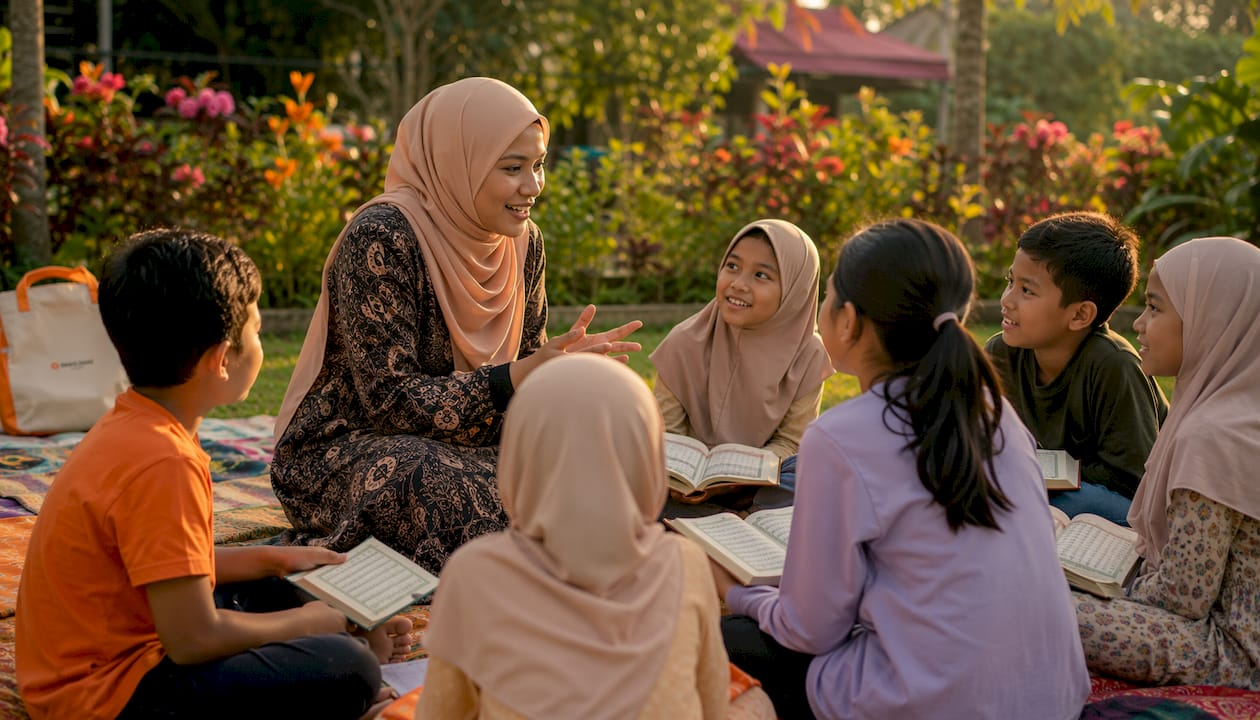
The Quran commands knowledge-seeking without restricting it by gender. Surah Az-Zumar (39:9) asks, “Are those who know equal to those who do not know?” with no qualifier on who may seek knowledge. The Prophet’s (peace be upon him) hadith that seeking knowledge is an obligation on every Muslim is understood by scholars to include women without exception. For women who want to deepen their understanding through structured learning, ARS-certified Quran teachers offer a reliable path to grounded, qualified instruction.
Common questions about women’s roles and permissions in Islam
Does the Quran require women to obey their husbands unconditionally?
No. The Quran describes marriage as a relationship of mawaddah (love) and rahmah (mercy), as stated in Surah Ar-Rum (30:21). The concept of qiwamah in An-Nisa 4:34 is conditional on the husband fulfilling his financial duties. Scholars at musawah.org have documented how classical jurists themselves placed limits on this authority, and how the verse cannot be read as requiring unconditional obedience in all matters.
What does the Quran actually say about women’s dress?
Surah An-Nur (24:31) instructs women to guard their modesty and draw their khimar (head covering) over their chests. Surah Al-Ahzab (33:59) instructs believing women to draw their outer garments close. Scholars differ on the precise scope of these instructions. A careful reading of the Quranic dress code shows that the Quran emphasizes modesty as a principle, with the specific application shaped by scholarly interpretation and cultural context. What is clear is that the Quran frames modesty as a protection and a dignity, not a punishment.
Are women spiritually equal to men in the Quran?
Unambiguously yes. Al-Ahzab 33:35 lists ten qualities of faith and states that Allah has prepared forgiveness and a great reward for both men and women who embody them. An-Nahl 16:97 promises a good life and full reward to any believer, male or female, who acts righteously. There is no verse in the Quran that assigns women a lower spiritual station.
Can women lead prayer or hold religious authority?
The Quran does not explicitly prohibit women from leading prayer. The question is addressed primarily through hadith and jurisprudential tradition. Scholarly opinion varies: the majority of classical scholars restricted women’s leadership to all-female congregations, while a minority permitted broader leadership. The Women’s Mosque of America operates on the basis that women may lead all-female congregations, a position supported by a reading of the Sunnah that some scholars at mathabah.org have documented in detail.
Does the Quran address women’s right to education?
The Quran’s repeated commands to read, reflect, and seek knowledge apply to all believers. Surah Al-Alaq (96:1), the first revelation, commands “Read!” with no gender restriction. Islamic history records women as hadith transmitters, jurists, and teachers from the earliest generations. The Prophet’s wife Aisha (may Allah be pleased with her) is among the most cited sources of hadith in the entire tradition, a fact that itself reflects the Quran’s vision of women as active participants in religious knowledge.
Key points on women’s religious authority in Islamic tradition:
-
Aisha (may Allah be pleased with her) transmitted thousands of hadith and taught male companions directly.
-
Female Quran scholars have existed in every century of Islamic history, though their contributions have often been underdocumented.
-
The Quran’s command to “enjoin good and forbid wrong” (At-Tawbah 9:71) applies to women explicitly, implying active moral and social engagement.
-
Women’s Islamic education for working adults is increasingly accessible through structured programs that fit around professional and family commitments.
How modern digital tools support women’s Quran education in the Singapore
The gap between what the Quran teaches about women and what women can actually access in terms of Quranic education has been real and persistent.
Apps built around women’s realities:
Traditional Quran apps often default to male users, creating accessibility gaps that women-centric platforms now address directly. Two apps worth knowing:
-
Safa uses the Quran Foundation’s authenticated API to deliver verified Quran text, audio recitations by Mishary Rashid Al-Afasy, and tafsir by Ibn Kathir. It also implements scholarly consensus allowing digital Quran reading during menstruation (haid), since touching a physical Mushaf requires ritual purity but reading on screen does not, according to the position most scholars hold. This removes a recurring barrier to consistent study.
-
Nisaa takes a different approach, using an emotional-state navigation system that lets women find Quran verses matched to how they feel in the moment. States like anxiety, gratitude, and seeking comfort each map to relevant passages, making the Quran feel immediately relevant rather than academically distant.
Both apps include cycle-sensitive modes, sometimes called Cycle Mode or Haya Mode, that adjust the experience during menstruation without making women feel excluded from their own spiritual practice. Subscription plans for premium coaching features start at about $24.99/year, making consistent access affordable.
Community-based learning programs:
The Women of Tadabbur program takes a different path entirely. Rather than an app, it is a structured study community built around tadabbur, the Quranic practice of deep contemplation and reflection. The program includes monthly guidebooks, virtual hangouts, and sisterhood accountability circles, creating a structure that holds women to consistent engagement without pressure or intimidation. The goal is transformation, not just information.
The Qur’an Literacy Program by the Women’s Mosque of America offers structured online discussion circles focused on spiritual growth and direct engagement with the text. It explicitly welcomes non-Arabic speakers and beginners, recognizing that the intimidation of classical Arabic has kept many women at arm’s length from the Quran they want to understand.
Pro Tip: If you are new to structured Quran study, start with a program that emphasizes reflection over recitation speed. Tadabbur-based programs consistently report deeper retention and more meaningful personal application than memorization-first approaches.
Key features to look for in women-focused Quran education:
-
Cycle-sensitive design that allows uninterrupted study throughout the month
-
Female teachers or coaches who understand women’s specific questions and contexts
-
Tafsir access from reliable scholars like Ibn Kathir alongside contemporary female Quran scholars
-
Community accountability structures, whether virtual or in-person
-
Beginner-friendly entry points that do not require prior Arabic literacy
-
Emotional or thematic navigation so the Quran connects to real life, not just curriculum
SimplyIslam’s approach, built on ARS-certified instructors and interactive learning rather than rote memorization, reflects the same philosophy driving the best women-focused digital programs. The emphasis on understanding over repetition is what makes Quranic knowledge stick.
Women in Quranic narratives: stories that shaped Islamic understanding
The Quran names only one woman directly: Maryam (Mary), mother of Isa (Jesus), peace be upon them both. She has an entire chapter named after her, Surah Maryam, and is described in Al-Imran 3:42 as chosen, purified, and preferred above all women of the world. Her story is not a supporting role. It is a central theological statement about faith, trust in Allah, and the dignity of a woman who stood alone in the most difficult circumstances.
Other women appear unnamed but unmistakably significant. The wife of Pharaoh, Asiya, is held up in At-Tahrim 66:11 as a model of faith for all believers, male and female, because she chose Allah over the most powerful man on earth. The Queen of Sheba, Bilqis, appears in Surah An-Naml (27:22–44) as a ruler of extraordinary wisdom who, upon encountering the truth, submits to Allah with full agency and conviction. Her story is remarkable: the Quran presents a woman in political authority, exercising independent judgment, and reaching the right conclusion.
The wife of Imran, mother of Maryam, makes a vow in Al-Imran 3:35 to dedicate her unborn child to Allah’s service. Allah accepts her vow and honors it, even though the child turned out to be a girl rather than the boy she had expected. The Quran records Allah’s response as a gentle affirmation: “And Allah was knowing of what she delivered.” The narrative quietly dismantles any notion that daughters are lesser offerings.
These stories are not decorative. They function as uswa (examples) in the Quranic framework, models of faith that transcend gender. When the Quran holds up Maryam, Asiya, and Bilqis as exemplars, it is making a claim about what spiritual excellence looks like, and it looks the same in a woman as in a man.
Women’s spiritual and social duties as the Quran describes them
The Quran assigns women the same core spiritual duties as men. Salah (prayer), Sawm (fasting), Zakat (charity), and Hajj (pilgrimage) are obligatory for believing women, with specific accommodations for menstruation and postpartum periods that reflect mercy rather than exclusion. A woman who misses fasting during Ramadan due to menstruation makes up those days later. She is not penalized; she is accommodated.
Socially, the Quran describes women’s duties in terms of amanah (trust) and ma’ruf (goodness). Surah At-Tawbah (9:71) frames believing women as active partners in the moral fabric of the community, not passive recipients of male guidance. They “enjoin what is right and forbid what is wrong,” which classical scholars understood as applying to women’s sphere of influence, whether in the home, the community, or beyond.
The role of mother carries particular weight in Islamic teaching, though the Quran frames it through the lens of honor rather than obligation alone. Surah Luqman (31:14) commands children to honor their parents, specifying that the mother “carried him in weakness upon weakness,” a recognition of physical and emotional sacrifice that grounds the child’s duty in gratitude. This is not a command to women to be mothers. It is a command to children to recognize what their mothers gave.
Women’s social duties in the Quran also include participation in the bay’ah (pledge of allegiance) to the Prophet (peace be upon him). Surah Al-Mumtahanah (60:12) records women taking this pledge directly, on specific moral conditions, with the Prophet accepting it. This is a public, formal act of religious and civic commitment, and the Quran records women performing it as a matter of course.
The balance the Quran strikes is consistent: women carry real responsibilities, receive real protections, and hold real spiritual standing. None of these dimensions cancels the others.
Where Quranic teaching and cultural practice diverge
One of the most persistent challenges in understanding Islamic teachings for women is separating what the Quran actually says from what specific cultures have added, subtracted, or distorted over centuries. The gap is real, and it runs in both directions.
Some cultural practices restrict women far beyond what the Quran requires. Preventing women from driving, barring them from mosques entirely, or requiring male permission for basic daily activities have no Quranic basis. The Quran records women traveling, trading, and speaking in public without any such restrictions. Khadijah (may Allah be pleased with her), the Prophet’s first wife, was a successful merchant who employed him before their marriage. The Quran does not contradict her example.
Other cultural practices claim Quranic authority while actually contradicting it. Forced marriage violates the consent principle that scholars derive from the Quran and Sunnah. Female genital mutilation has no Quranic basis whatsoever and is condemned by Islamic scholars across traditions. Denying women inheritance shares that the Quran explicitly assigns them is a direct violation of An-Nisa 4:7, regardless of how common it may be in certain communities.
The distinction matters practically. When a woman encounters a restriction and asks “Is this Islam or is this culture?”, the Quran itself is the first reference point. If the restriction has no Quranic basis and contradicts the Quran’s explicit grants of rights and dignity, it is cultural, not divine. Scholars at organizations like musawah.org have done extensive work documenting this distinction, particularly around family law, and their research is grounded in classical Islamic jurisprudence rather than secular critique.
The Quran’s own internal standard is useful here. It repeatedly commands ma’ruf, often translated as “kindness” or “what is recognized as good.” When a practice is not recognized as good by any reasonable standard, and has no Quranic grounding, the Quran’s own language provides the grounds to question it.
How Quranic teachings shape contemporary issues for Muslim women
The Quran’s guidance on women is not a historical artifact. It actively shapes debates in Muslim communities across the United States and globally, from mosque governance to family law to women’s religious leadership.
Mosque access and leadership: The question of whether women can pray in the main hall of a mosque, lead Friday prayers, or serve on mosque boards is contested in many communities. The Quran does not restrict mosque access by gender. The Prophet’s mosque in Medina included women in congregational prayer. Contemporary advocates for women’s mosque access, including the Women’s Mosque of America, ground their position in this Quranic and prophetic precedent.
Family law reform: In Muslim-majority countries, family law often diverges from Quranic standards in ways that disadvantage women, particularly around divorce and inheritance. Reform movements in countries like Morocco and Tunisia have used Quranic arguments to expand women’s legal rights, demonstrating that the scripture supports rather than resists reform when read carefully. The work of musawah.org specifically uses Islamic legal frameworks to advocate for equality in Muslim family law.
Women’s religious scholarship: The emergence of female Quran scholars in the contemporary period, including scholars who teach tafsir, hadith, and Islamic jurisprudence, reflects a return to a tradition that existed from the earliest generations of Islam. Aisha (may Allah be pleased with her) was a jurist. Fatima al-Fihri founded the University of al-Qarawiyyin in Fez in 859 CE, the oldest continuously operating university in the world. The current generation of female scholars is not innovating. They are recovering.
Mental health and spiritual wellbeing: The Quran’s emphasis on rahmah (mercy) and sabr (patience) has been applied by Muslim counselors and educators to address anxiety, grief, and identity struggles that Muslim women in the West often face. The emotional-state navigation in apps like Nisaa reflects this: the Quran is not only a legal text but a source of comfort, and women deserve access to it in that register too.
For women who want to engage with these questions seriously, structured Quran education provides the foundation. Programs that combine Quranic text with scholarly commentary, community discussion, and practical application, whether through platforms like SimplyIslam’s Quran course for ladies or community-based programs, give women the tools to engage with these debates from a position of knowledge rather than uncertainty.
Key Takeaways
The Quran addresses women with spiritual equality, concrete legal rights, and active moral agency, making it the primary reference point for any serious discussion of women’s roles in Islam.
| Point | Details |
|---|---|
| Spiritual equality is explicit | Al-Ahzab 33:35 and An-Nahl 16:97 promise equal divine reward to men and women for equal faith and deeds. |
| Legal rights are specific | Women’s inheritance shares, mahr ownership, and divorce rights are defined in An-Nisa and Al-Baqarah, not left to custom. |
| Culture and Quran often diverge | Restrictions with no Quranic basis, such as forced marriage or barring mosque access, contradict the scripture’s own grants of dignity and rights. |
| Women’s narratives carry theological weight | Maryam, Asiya, and Bilqis are presented as models of faith for all believers, not only for women. |
| Modern education closes the access gap | Women-focused Quran apps and programs, including cycle-sensitive tools and tadabbur-based communities, make consistent study practical for women at every stage. |