
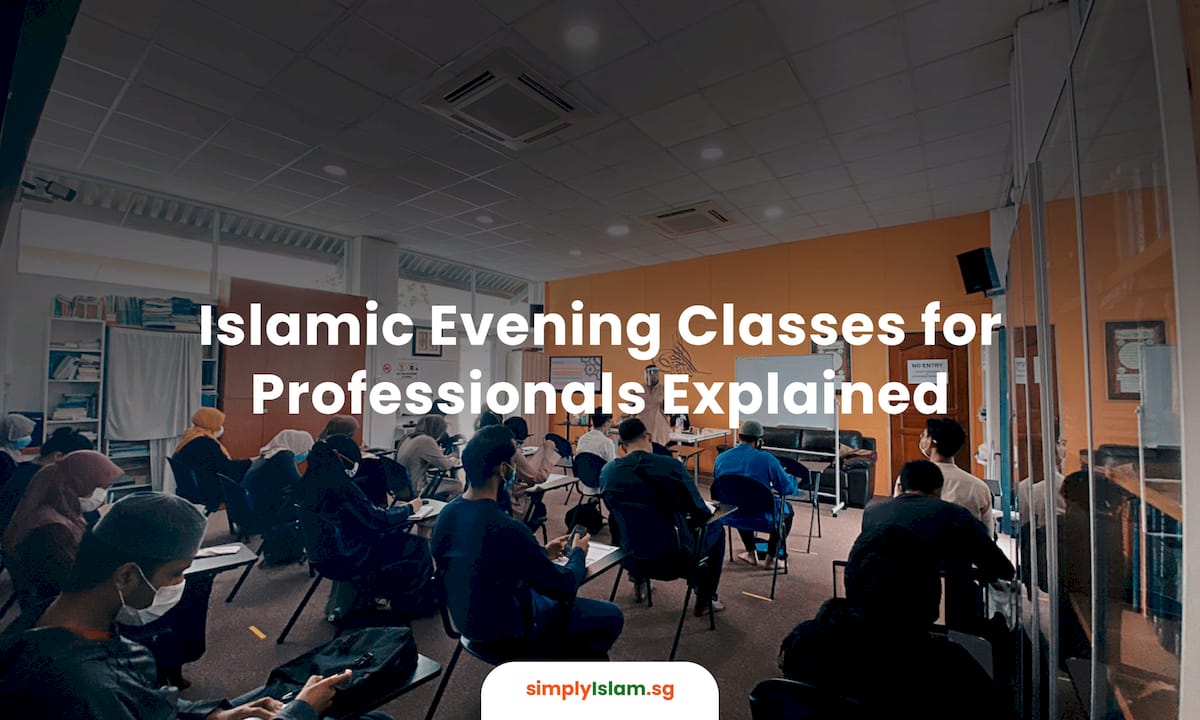

Islamic evening classes for professionals are structured, mentor-led educational programs designed to fit around full-time work schedules, typically running between 7 PM and 10 PM on weekday evenings. These programs cover core Islamic disciplines, from Quranic recitation and Fiqh to Aqidah and Seerah, without requiring you to leave your career or compromise your family time. Providers like Darul Yasin, Momineen Quran Center, and IQRA have built models specifically for working adults, recognizing that the traditional full-time seminary path is not realistic for most professionals. Understanding Islamic evening classes means recognizing that they are not a compromise. They are a purpose-built format for people who take both their faith and their career seriously.
What are islamic evening classes for professionals?
Islamic evening classes for professionals explained simply: they are part-time, structured Islamic education programs scheduled after work hours, designed for adults who cannot commit to full-time religious study. The term “professional Islamic courses” is the more recognized industry phrase, but both describe the same growing category of adult Islamic education.
These programs differ from weekend workshops or one-off lectures. They follow a cumulative curriculum, meaning each session builds on the last. Subjects typically include Arabic language, Tafsir (Quranic interpretation), Hadith sciences, Fiqh (Islamic jurisprudence), and Seerah (the life of the Prophet). The goal is not surface-level familiarity. It is grounded, practical knowledge that shapes how you live and work.
The format also reflects a shift in how Islamic institutions think about adult learners. Providers now recognize that professionals need more than content. They need structure, accountability, and a learning environment that respects their existing responsibilities.
What are the typical formats and schedules?
Professional-focused Islamic studies programs for working adults typically require a weekly time commitment of 2–6 hours. That range is deliberate. It keeps progress steady while preventing the burnout that causes most adult learners to drop out within the first three months.
Standard evening sessions last 45–60 minutes, with peak scheduling between 7 PM and 10 PM local time. That window works because it falls after dinner and before most professionals wind down for sleep, making it sustainable over months and years rather than weeks.
Here is how the most common formats break down:
| Format | Session Length | Weekly Frequency | Best For |
|---|---|---|---|
| One-on-one tutoring | 45–60 minutes | 2–3 times per week | Personalized pace, specific subjects |
| Small group class | 60 minutes | 1–2 times per week | Community learning, discussion-based |
| Two-year foundation course | 90 minutes | 2–3 times per week | Full curriculum, structured progression |
| Single-subject module | 45 minutes | Once per week | Targeted learning, minimal commitment |
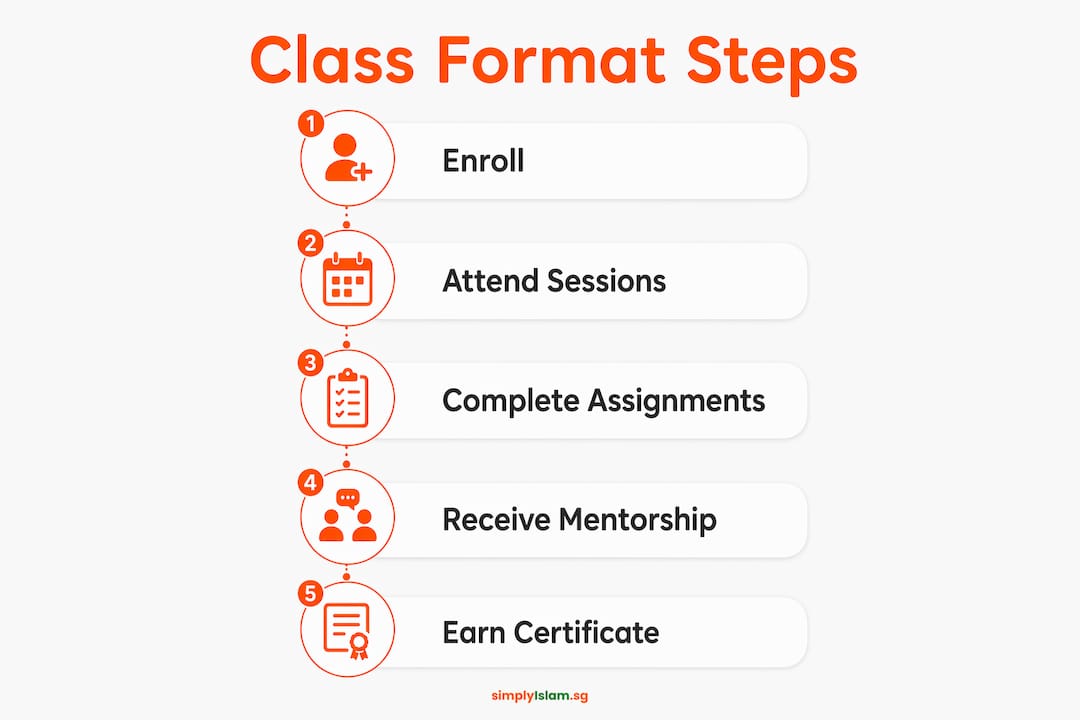
Darul Yasin’s Sanatayn Course is a strong example of the foundation model. It is a two-year part-time program covering Arabic, Fiqh, Hadith, Aqidah, Seerah, Tafsir, and Quranic recitation. It is designed specifically for working adults who want a complete Islamic education without leaving their careers.
Time zone coverage is another practical strength of modern evening Islamic education. Programs now accommodate professionals globally, spanning EST, PST, GMT, CET, AEST, and Gulf Standard Time. A professional in Singapore, London, or New York can join the same program without schedule conflicts.
Before committing to any program, most reputable providers offer a free 45-minute trial that includes a level assessment and a customized learning plan. This removes the guesswork about where to start and what pace suits you.
Pro Tip: Book your trial session at the same time slot you plan to attend regularly. This tests whether that time genuinely works in your schedule before you commit financially.
How does mentorship shape the learning experience?
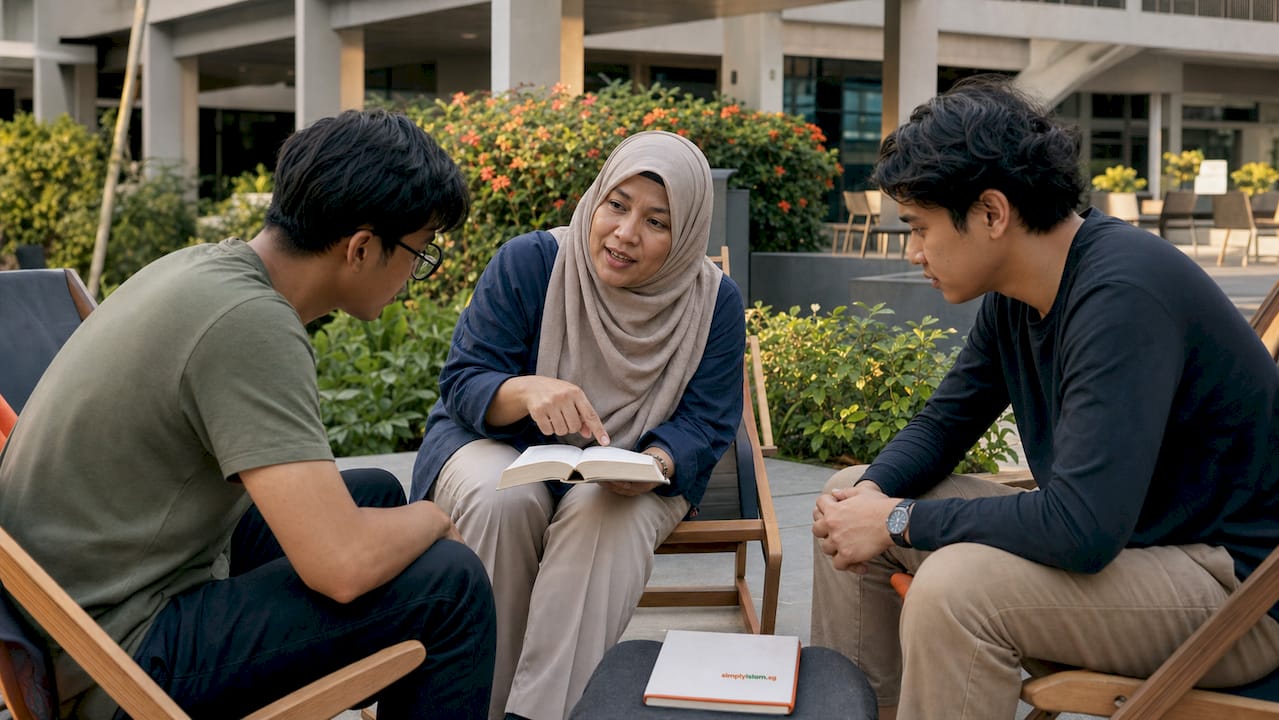
The most significant shift in Islamic education for professionals is the move from teacher-centered instruction to the Murabbi model. A Murabbi is not simply a teacher who delivers content. A Murabbi is a mentor who shapes character, adab (conduct and etiquette), and Islamic identity alongside knowledge.
The Murabbi model emphasizes character development, adab, and identity formation alongside traditional teaching methods. This matters for professionals because knowledge without character formation produces graduates who know Islamic rulings but struggle to apply them under workplace pressure, family stress, or ethical dilemmas.
Practical elements of the Murabbi approach include:
- Halaqahs: Small group reflection circles where students discuss how Islamic principles apply to real situations in their professional and personal lives.
- Reflective journaling: Students track how their learning changes their behavior, not just their understanding.
- Mentorship check-ins: Regular one-on-one conversations with the instructor about spiritual progress, not just academic performance.
- Peer accountability: Study partners who hold each other to consistent attendance and application.
“Professional Islamic development is evolving into mentorship models that cultivate Murabbis who shape faith identity and character, not just knowledge holders.” — IQRA, 2026
For professionals, this model is especially valuable. You are not just accumulating religious facts. You are developing an Islamic worldview that integrates with your work ethic, your leadership style, and your relationships. The shift from teacher to mentor is what separates programs that produce lasting change from those that produce temporary enthusiasm.
What specialized courses and certifications are available?
Professional Islamic courses now extend well beyond foundational religious literacy. A growing number of programs align Islamic education directly with career-relevant disciplines, particularly in finance, governance, and leadership.
Here is a look at the main categories of specialized professional Islamic education:
-
Islamic Banking, Governance, Risk, and Shariah Compliance: Programs like those offered by GRC Academy UK integrate Shariah governance with international standards from AAOIFI (Accounting and Auditing Organization for Islamic Financial Institutions) and IFSB (Islamic Financial Services Board). These are designed for finance professionals who need both religious grounding and regulatory fluency.
-
Executive Capacity-Building Programs: These link religious studies with compliance and governance frameworks relevant to senior professionals. They typically run as intensive modules rather than semester-long courses.
-
Certificate Programs in Islamic Studies: The Al-Mishkat Certificate in Islamic Studies offered by SimplyIslam is a structured program that gives working adults a recognized credential in Islamic knowledge. It covers Tawhid, Fiqh, and Islamic ethics in a format designed for busy schedules.
-
Arabic Language Courses: Professionals who want to engage directly with Quranic text and classical scholarship often pursue standalone Arabic programs. SimplyIslam’s conversational Arabic course is one option built specifically for adult learners.
-
Topical Workshops and Events: Single-session programs on subjects like Islamic ethics in the workplace, family law, or contemporary Muslim identity offer targeted knowledge without a long-term commitment.
| Course Type | Duration | Career Relevance |
|---|---|---|
| Shariah Compliance Training | 3–5 days intensive | Finance, banking, legal |
| Al-Mishkat Certificate | Semester-based | General Islamic literacy |
| Two-Year Foundation Course | 24 months part-time | Comprehensive religious education |
| Arabic Language Module | 3–6 months | Quranic study, scholarship access |
Pro Tip: If you work in finance or governance, prioritize programs accredited against AAOIFI or IFSB standards. These credentials carry weight in Islamic finance hiring decisions.
What practical tools help professionals stay consistent?
Consistency is the single biggest challenge for professionals in evening Islamic education. The content is rarely the problem. Life is. A late meeting, a sick child, or a deadline can derail a week of study and, without the right systems, that one missed week becomes a month.
Long-term success in professional Islamic studies depends on automated scheduling tools with timezone-aware calendar invites and clear rescheduling policies. Programs that send automatic reminders and allow 24-hour rescheduling without penalty see significantly lower dropout rates than those that treat missed sessions as forfeitures.
Practical strategies that work:
- Treat class like a work meeting. Block the time in your calendar before the week begins. Do not leave it as a mental intention.
- Use the 24-hour rescheduling window. Most reputable providers allow you to move a session if you give notice a day in advance. Use this rather than skipping entirely.
- Prioritize consistency over catch-up. Attending one session per week every week produces better retention than attending three sessions in one week after missing two.
- Pair study with a fixed routine. Many professionals find that studying immediately after Isha prayer creates a natural rhythm that requires less willpower over time.
- Communicate with your instructor. A good Murabbi-style instructor will adjust pacing during high-pressure work periods rather than letting you fall behind silently.
Pro Tip: Set a recurring calendar block labeled with your class subject and instructor name. Named commitments are harder to cancel than unnamed time blocks.
Key takeaways
Islamic evening classes for professionals succeed when they combine flexible scheduling, mentor-led instruction, and clear administrative systems that reduce friction for busy adult learners.
| Point | Details |
|---|---|
| Weekly commitment is manageable | Most programs require only 2–6 hours per week, making consistent study realistic. |
| Sessions fit after-work hours | Standard classes run 45–60 minutes between 7 PM and 10 PM across global time zones. |
| Mentorship drives lasting change | The Murabbi model develops character and adab alongside Islamic knowledge. |
| Certifications align with careers | Programs like the Al-Mishkat Certificate and Shariah compliance courses serve professional goals. |
| Scheduling tools reduce dropout | Automated reminders and 24-hour rescheduling policies are the practical backbone of sustained attendance. |
Why the murabbi model changed how i think about adult islamic education
I spent years watching professionals sign up for Islamic courses with genuine intention, only to quietly disappear by month three. The content was solid. The instructors were qualified. But something was missing.
What I have come to understand is that knowledge transfer alone does not hold adult learners. What holds them is relationship. The Murabbi model gets this right in a way that traditional lecture-based Islamic education does not. When your instructor knows your name, your profession, your struggles, and your goals, the class becomes something you do not want to miss. It becomes a space where your faith is taken seriously as a living practice, not an academic subject.
The other thing I find genuinely encouraging is the rise of career-aligned Islamic education. For years, professionals felt they had to choose between deepening their faith and advancing their careers. Programs that integrate Shariah governance with AAOIFI standards, or that offer the Al-Mishkat Certificate as a recognized credential, dissolve that false choice. Your Islamic education can serve your professional identity, not compete with it.
My honest advice: do not wait for the perfect schedule. Start with a trial session. Find an instructor who functions as a Murabbi, not just a lecturer. And treat your evening class with the same seriousness you give a professional development course. Because that is exactly what it is.
— Lily
Discover SimplyIslam’s evening classes for professionals
SimplyIslam has served over 22,000 participants in Singapore with ARS-certified instructors and a practical, interactive approach to Islamic education. For working professionals, the platform offers structured evening programs that fit around demanding schedules without sacrificing depth or quality.
Whether you are looking for a foundational certificate, a topical workshop, or a community event that deepens your understanding of Islam, SimplyIslam has a format designed for you. Explore the upcoming Islamic events to find evening sessions and workshops scheduled around professional life. You can also browse the full range of online Islamic courses to find the program that matches your level and goals. If you are ready to take the first step, register your interest and a member of the team will guide you to the right program.
FAQ
What are islamic evening classes for professionals?
Islamic evening classes for professionals are structured, part-time religious education programs scheduled between 7 PM and 10 PM to accommodate working adults. They cover subjects like Fiqh, Tafsir, Aqidah, and Arabic in manageable weekly sessions.
How many hours per week do professional islamic courses require?
Most programs require a weekly commitment of 2–6 hours, spread across two or three sessions. This range is designed to maintain steady progress without overwhelming busy professionals.
Can i get a recognized certificate from islamic evening classes?
Yes. Programs like the Al-Mishkat Certificate in Islamic Studies and Shariah compliance courses from providers like GRC Academy UK offer recognized credentials relevant to both religious literacy and professional careers.
What is the murabbi model in islamic education?
The Murabbi model is a mentorship approach that develops character, adab, and Islamic identity alongside traditional knowledge. It replaces the lecture-only format with reflective practice, halaqahs, and personal mentorship.
Do islamic evening classes accommodate different time zones?
Yes. Most online providers schedule across global time zones, including EST, GMT, Gulf Standard Time, and AEST, so professionals in Singapore, the UK, or North America can all find suitable slots.