
What is Mawlid and why do Muslims celebrate it?
Mawlid, formally known as Mawlid al-Nabi, is the Islamic observance commemorating the birth of the Prophet Muhammad, peace be upon him. The word itself comes from the Arabic root w-l-d, meaning “to give birth” or “to be born,” so Mawlid literally translates as “birth” or “birthday.” For the hundreds of millions of Muslims who observe it, this occasion is not simply a birthday party. It is an opportunity to renew love for the Prophet, reflect on his character, and recommit to his Sunnah.
The observance typically falls in the month of Rabi’ al-Awwal, the third month of the Islamic lunar calendar, though the exact date of the Prophet’s birth has been a matter of scholarly discussion for centuries. Because the Islamic calendar is lunar, the Gregorian date shifts each year by roughly eleven days.
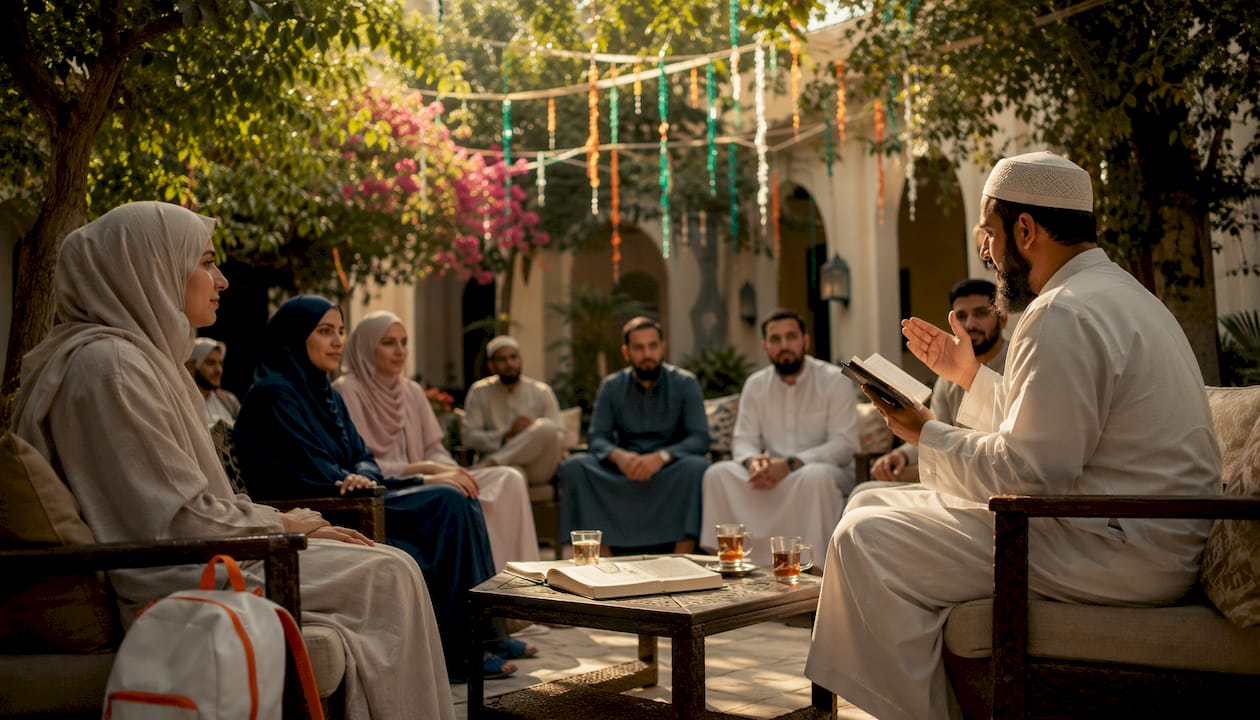
Typical Mawlid observances include:
- Communal gatherings at mosques and Islamic centers
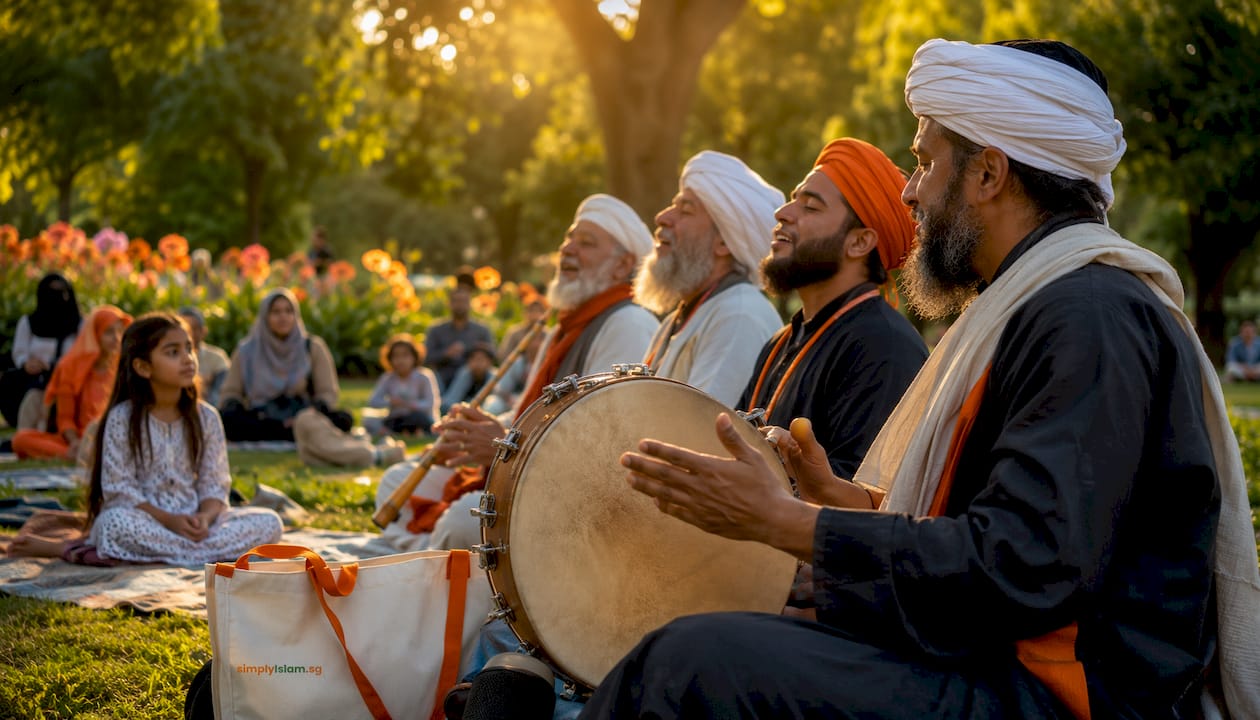
- Recitation of poetry praising the Prophet, known as Na’at or qasidas
- Reading of structured Mawlid texts such as Mawlid al-Dayba’i
- Charitable giving and community feasts
- Educational talks on the Prophet’s life and character
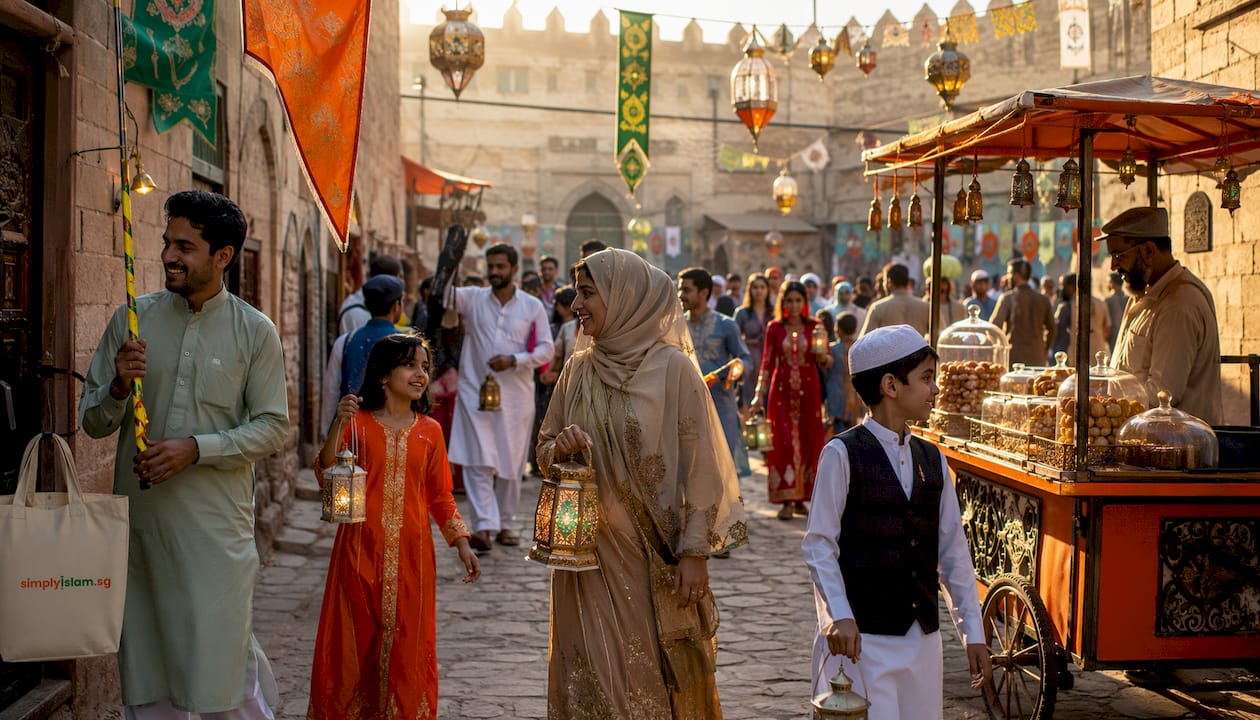
- Public processions and decorative lighting in many countries
- Sending blessings upon the Prophet (salawat)
Not every Muslim community observes Mawlid, and the theological debate around it is real and ongoing. Most Sunni schools, including the Hanafi, Maliki, and Shafi’i madhabs, as well as Shia traditions, generally regard the celebration as a permissible act of reverence. Others, particularly within Salafi and Deobandi circles, consider it an unlawful innovation. That tension is part of what makes Mawlid one of the most discussed observances in contemporary Islamic life.
Table of Contents
- How did Mawlid develop through Islamic history?
- What do Islamic scholars say about celebrating Mawlid?
- How is Mawlid celebrated around the world?
- How is Mawlid observed in the United States and globally?
- What does the word “Mawlid” actually mean?
- Key Takeaways
- Deepen your understanding of the Prophet’s life and legacy
How did Mawlid develop through Islamic history?
The history of Mawlid stretches back more than a thousand years, shaped by rulers, scholars, and Sufi communities who each left a distinct mark on how the occasion was understood and observed.
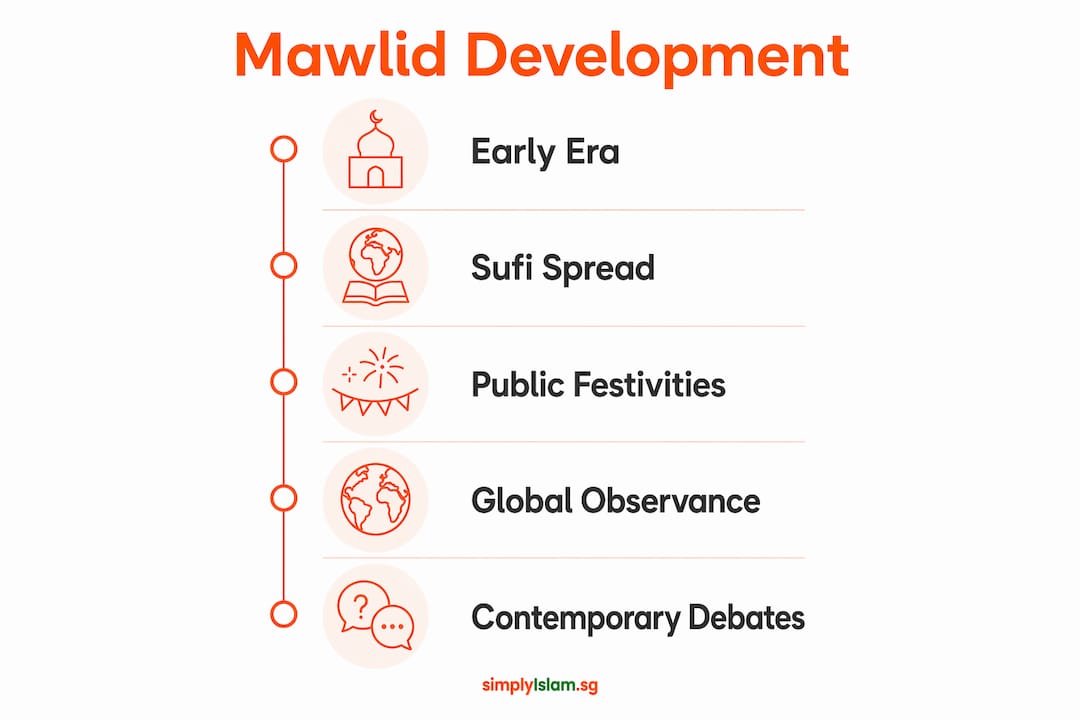
Early Muslim communities did not hold formal Mawlid celebrations in the way we recognize today. The Prophet’s Companions and the generations that followed them honored his memory through adherence to his teachings rather than through annual commemorative events. The first recorded public Mawlid festival on a grand scale was organized by the Turkic general Gökböri in 1207 in Erbil, Iraq, and it drew scholars, Sufi leaders, and pilgrims from across the Muslim world. Sufi culture was central to that event, and it remained the primary vehicle through which Mawlid spread across Muslim societies in the centuries that followed.
| Period | Development |
|---|---|
| Early Islamic era | No formal Mawlid celebrations; the Prophet’s memory honored through practice of his Sunnah |
| Fatimid Caliphate | Early state-sponsored commemorations in Egypt, though their exact nature is debated by historians |
| 1207, Erbil (Iraq) | Gökböri’s grand public Mawlid festival, widely cited as the model for later celebrations |
| 13th century onward | Spread across the Muslim world through Sufi networks; scholars begin writing formal Mawlid texts |
| 15th century | Imam Abdur-Rahman al-Dayba’i composes Mawlid al-Dayba’i, one of the most widely recited texts |
| 19th century | Colonial-era debates intensify; reformist movements challenge Mawlid’s legitimacy |
| Contemporary era | Mawlid observed as an official public holiday in many Muslim-majority countries; debated in others |
The Sufi influence on Mawlid’s development cannot be overstated. Sufi orders carried the practice along trade routes and pilgrimage paths, adapting it to local cultures while preserving its devotional core. That is why Mawlid looks so different in Morocco, Indonesia, and West Africa, yet shares the same spiritual intention across all three places.
What do Islamic scholars say about celebrating Mawlid?
The theological debate around Mawlid centers on the concept of bid’ah, meaning religious innovation. In Islamic jurisprudence, introducing a practice not explicitly sanctioned by the Prophet or his Companions requires careful scrutiny. Scholars who oppose Mawlid argue that it falls into the category of blameworthy innovation. Scholars who support it argue that not all innovation is blameworthy, and that expressing love for the Prophet through organized remembrance is consistent with the spirit of the Sunnah.
Perspectives that support Mawlid:
- The Hanafi, Maliki, and Shafi’i schools generally permit Mawlid as an expression of gratitude and love for the Prophet
- Shia Muslims observe Mawlid with particular enthusiasm, viewing it as a central religious occasion
- Scholars like Imam al-Suyuti argued that gathering to praise the Prophet and learn about his life is itself an act of worship
- Sufi scholars across centuries have written formal Mawlid texts precisely to give the occasion a structured, devotional character
Perspectives that oppose Mawlid:
- Salafism, Deobandism, and Hanbali followers who take a strict view of bid’ah consider Mawlid an unlawful innovation
- Their argument holds that the Prophet himself did not celebrate his own birthday, nor did his Companions after him
- Saudi Arabia and Qatar, whose religious establishments lean toward this view, do not recognize Mawlid as a public holiday
The controversy around bid’ah helps explain why Muslim communities worldwide hold such different attitudes toward Mawlid, even within the same country or city. This is not a simple disagreement. It reflects deep differences in how scholars interpret the sources of Islamic law and what counts as a praiseworthy versus blameworthy addition to religious practice.
How is Mawlid celebrated around the world?
Mawlid observances range from quiet, intimate gatherings to large public festivals, depending on geography, cultural tradition, and theological orientation. What unites them is the intention: to honor the Prophet Muhammad and draw closer to his example.
Celebrations typically include communal gatherings, recitations of poetry praising the Prophet, public processions, decorative lighting, and charity feasts. In many communities, the occasion extends well beyond a single day. Throughout the month of Rabi’ al-Awwal, Sufi-influenced communities hold a series of remembrance activities, making Mawlid a month-long spiritual season rather than a one-day event.
Mawlid texts and their role in observance
One of the most distinctive features of Mawlid is the use of structured literary texts composed specifically for the occasion. These are not casual readings. Mawlid al-Dayba’i, composed by the 15th-century Yemeni scholar Imam Abdur-Rahman al-Dayba’i, is among the most widely recited. It blends prose, poetry, Hadith, and Quranic verses into a single devotional composition that guides participants through the Prophet’s life from birth to prophethood.
Mawlid readings like Mawlid al-Dayba’i combine education about the Prophet’s life with acts of worship such as sending blessings, emphasizing Mawlid as devotional rather than merely festive. Proper etiquette for recitation includes ritual purity, a solemn environment, and attentive listening. You can explore the full Mawlid al-Dayba’i text through SimplyIslam’s dedicated resource page.
The traditional Mawlid sequence
Mawlid celebrations often follow a structured sequence that reflects the occasion’s spiritual seriousness:
- Tawasul: Seeking spiritual connection through the Prophet and righteous predecessors before beginning the recitation
- Full recitation of the Mawlid text: Read aloud, often responsively between a leader and the congregation
- Mahalul Qiyam: A standing recitation performed at the moment describing the Prophet’s birth, symbolizing the highest reverence
Pro Tip: If you are attending a Mawlid gathering for the first time, arrive in a state of ritual purity (wudu), dress modestly, and follow the congregation’s lead during the Mahalul Qiyam standing. Listening attentively, even if you do not know the text by heart, is itself considered an act of worship.
Regional variations
The cultural expression of Mawlid varies widely across the Muslim world:
- Morocco and North Africa: Large public processions, communal meals, and Sufi dhikr circles; the royal family in Morocco traditionally hosts a formal Mawlid ceremony
- Egypt: Festive street celebrations with sweets, lights, and gatherings at shrines of Islamic saints
- South Asia (Pakistan, Bangladesh, India): Na’at recitation competitions, large mosque gatherings, and distribution of food to the poor
- West Africa (Senegal, Mali): Sufi brotherhoods like the Tijaniyya and Qadiriyya lead multi-day celebrations with chanting and communal meals
- Indonesia and Malaysia: Structured Mawlid text recitations, often using Mawlid al-Dayba’i or Barzanji, held in homes, mosques, and community halls
- Turkey: Mawlid Kandili is observed as a national religious occasion, with mosques illuminated and special prayers offered
How is Mawlid observed in the United States and globally?
Mawlid carries official public holiday status in many Muslim-majority countries, including Egypt, Pakistan, Jordan, Morocco, and Indonesia. Saudi Arabia and Qatar do not recognize it as a public holiday, reflecting their governments’ alignment with religious establishments that view the celebration as bid’ah.
| Region | Status and Practice |
|---|---|
| Egypt, Pakistan, Jordan | Official public holiday; large public celebrations and mosque programs |
| Morocco | Royal-sponsored Mawlid ceremony; national public holiday |
| Indonesia, Malaysia | Widely observed; structured Mawlid text recitations in communities |
| Saudi Arabia, Qatar | Not a public holiday; private observance by some communities |
| United States | Not a public holiday; celebrated through mosque events, community gatherings, and educational programs |
| United Kingdom, Canada | Not a public holiday; active Muslim community celebrations in major cities |
Mawlid in the United States
The American Muslim community, estimated at several million people and representing extraordinary ethnic and theological diversity, brings that same diversity to Mawlid observance. In the United States, Mawlid is celebrated in mosques and community centers through educational talks, communal prayers, and cultural festivals that reflect the wide range of Muslim populations present in cities like New York, Chicago, Houston, and Los Angeles.
American Mawlid events often serve a dual purpose. They are devotional gatherings, yes, but they also function as community-building occasions that bring together Muslims from South Asian, Arab, African, African American, and convert backgrounds under one roof. That gathering itself carries meaning, especially for Muslim families raising children in a society where their faith is a minority.
Interfaith dimensions in the US
Mawlid has increasingly become a point of interfaith engagement in American cities. Some mosques and Islamic centers invite non-Muslim neighbors, local clergy, and civic leaders to Mawlid events, using the occasion to share the Prophet’s teachings on mercy, justice, and community care. Washington University in St. Louis, for example, lists Mawlid al-Nabi on its diversity and inclusion calendar, reflecting how the observance has entered mainstream American institutional awareness.
Mawlid and Muslim identity in North America
For Muslim families in the US, Mawlid offers something that few other Islamic occasions provide: a direct, celebratory focus on the Prophet as a person. Eid al-Fitr and Eid al-Adha are tied to ritual obligations; Mawlid is purely about love and remembrance. That distinction resonates with parents who want their children to feel an emotional and spiritual connection to the Prophet, not just an intellectual one. Educational programs at mosques and Islamic schools often use Mawlid as a teaching moment, introducing children to the Prophet’s biography (Sirah) through stories, poetry, and art.
What does the word “Mawlid” actually mean?
The word Mawlid (also spelled Mawlud or Milad) derives from the Arabic trilateral root w-l-d (و ل د), which carries the core meaning of birth and lineage. From this root come related words like walad (child or offspring) and mawlud (one who is born). In classical Arabic usage, mawlid refers both to the act of birth and to the time or place of birth, so the term is simultaneously an event and a moment in time.
The full phrase Mawlid al-Nabi means “the birth of the Prophet.” In South Asian Muslim communities, the Persian-influenced term Milad or Milad-un-Nabi is more commonly used and carries the same meaning. In Turkish, the occasion is called Mevlid or Mevlid Kandili, the latter word referring to the oil lamps traditionally lit in minarets on religious occasions. West African Muslim communities, particularly those in Senegal, often use the term Gamou to refer to their Mawlid celebrations, a word rooted in local linguistic tradition but pointing to the same observance.
Understanding the etymology matters because it clarifies what Mawlid is and is not. It is not a term for a general Islamic festival. It is specifically and literally about birth, about the moment the Prophet entered the world, and about what that moment means for those who follow him. That precision of meaning is part of why the occasion carries such emotional weight for those who observe it.
Key Takeaways
Mawlid is one of the most widely observed yet theologically debated occasions in Islam, with its legitimacy, form, and cultural expression varying significantly across communities and countries.
| Point | Details |
|---|---|
| Definition and date | Mawlid commemorates the Prophet Muhammad’s birth on the 12th of Rabi’ al-Awwal each year in the Islamic lunar calendar. |
| Historical origins | The modern public Mawlid festival was popularized by Gökböri in 1207 in Erbil, Iraq, shaped heavily by Sufi culture. |
| Theological debate | Most Hanafi, Maliki, and Shafi’i scholars permit Mawlid; Salafi and Deobandi scholars consider it an unlawful innovation (bid’ah). |
| Celebration forms | Observances range from structured Mawlid text recitations like Mawlid al-Dayba’i to public processions, charity feasts, and educational programs. |
| US context | American Muslim communities celebrate Mawlid through mosque events, interfaith gatherings, and educational activities that reflect their diverse backgrounds. |
Deepen your understanding of the Prophet’s life and legacy
If Mawlid has sparked a desire to learn more about Islamic history, the Prophet’s biography, or the theological foundations of Islamic practice, SimplyIslam offers structured courses and resources designed for exactly that. Whether you are a working adult fitting learning into a busy schedule or a parent looking to give your children a meaningful connection to their faith, the Islamic education for working adults programs at SimplyIslam provide a practical, guided path forward.
SimplyIslam’s free Islamic resources include materials covering major Islamic observances, the Prophet’s Sirah, and foundational theology, all developed by ARS-certified instructors who understand how to make classical knowledge accessible to modern learners. Mawlid is a beautiful entry point into a much deeper conversation about who the Prophet was and what his life means for us today.