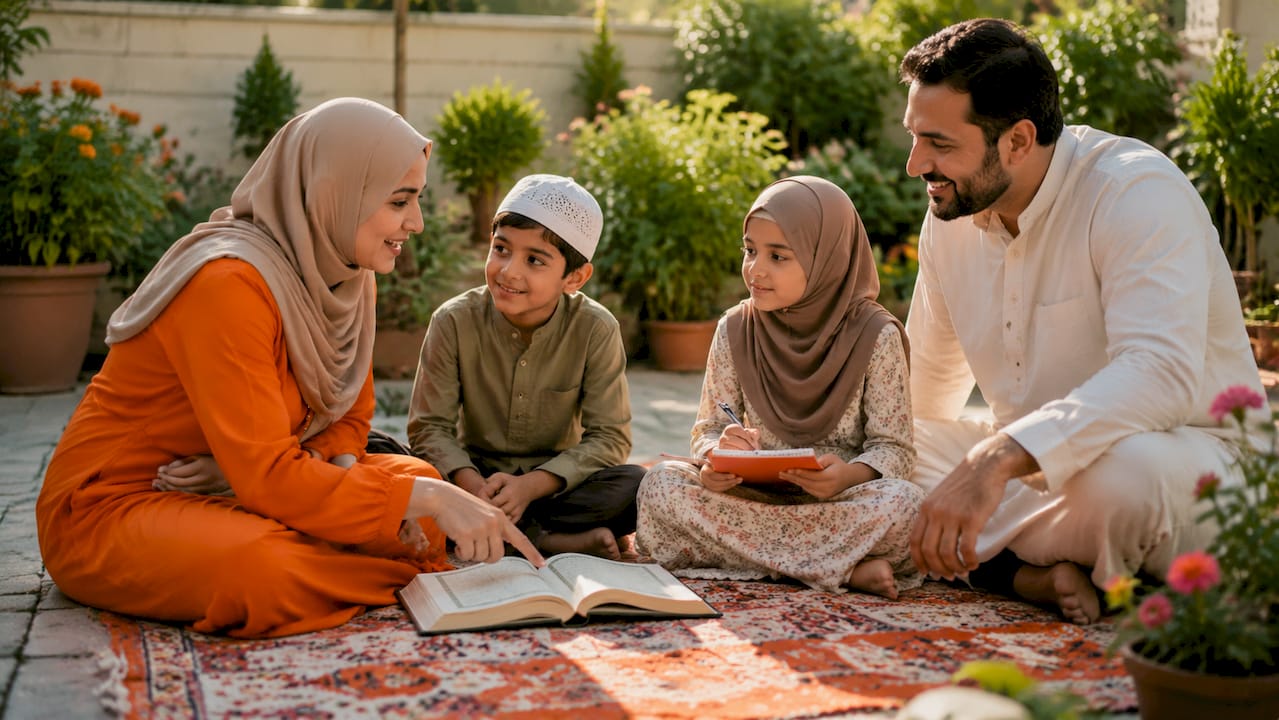

Weekend Islamic classes are structured religious education programs held on weekends to help Muslim children and adults build Islamic knowledge, strengthen their identity, and engage with their faith community. The role of weekend Islamic classes goes far beyond memorizing verses. These programs serve as the primary Islamic educational environment for many Muslim children who attend public schools during the week. For adult learners, they offer a practical path to deepen understanding of the Sunnah, Tawhid, and Islamic ethics without disrupting work schedules. SimplyIslam, which has served over 22,000 participants in Singapore, reflects exactly this need for flexible, community-centered Islamic study programs.
What formats and structures do weekend Islamic classes follow?
Weekend Islamic schools are the most widespread Islamic education format available, with nearly every mosque of significant size operating one. That accessibility makes them the first and most realistic option for most Muslim families. Understanding how these programs are structured helps parents and adult learners choose the right fit from the start.
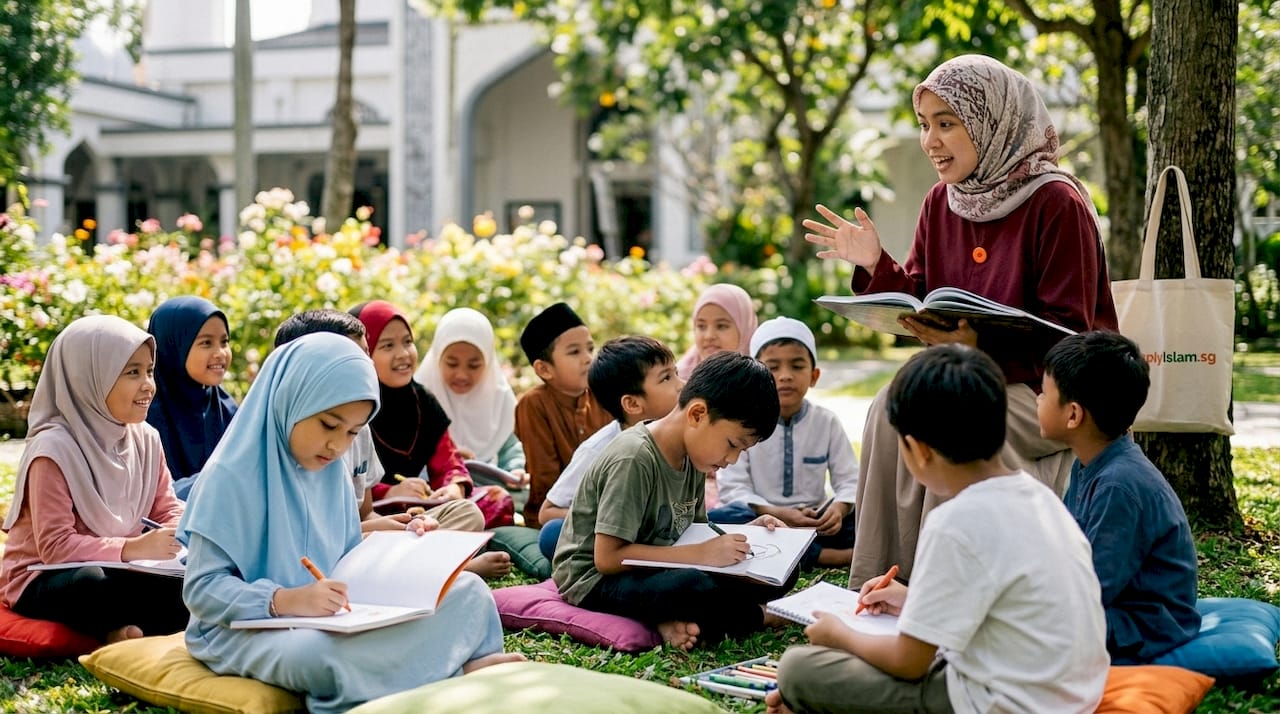
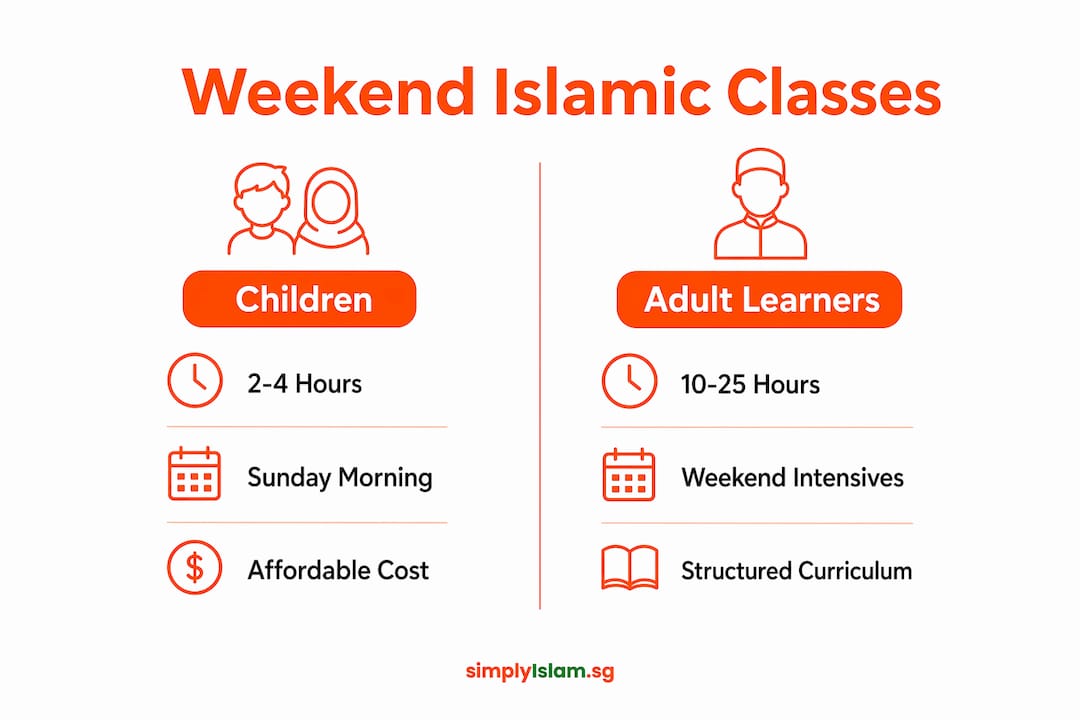
For children, the typical schedule runs 2–4 hours once per week, often on Sunday mornings, with monthly fees ranging from $30 to $60. That cost point makes weekend classes far more accessible than full-time Islamic day schools. Curriculum usually covers Quran recitation, Islamic studies, basic Arabic language, and character education rooted in the Sunnah.
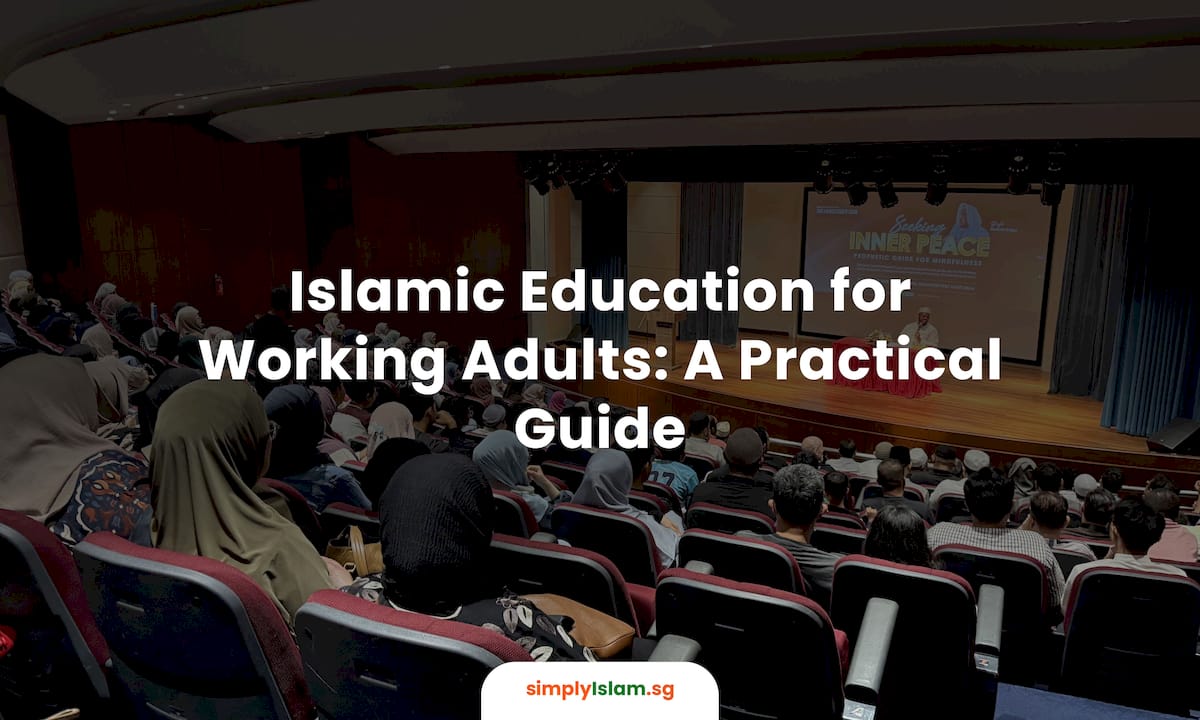
Adult learners have a different set of options. Weekend intensives for adults typically run 10–25 hours over two to three days, often including course materials and refreshments in the fee. Programs like the Hadith Fundamentals workshop led by Dr. Issam Eido at the Mecca Center demonstrate how concentrated weekend formats can deliver serious academic content without requiring a long-term enrollment commitment.
Pro Tip: Before enrolling, ask the program coordinator for a written curriculum outline. A clear scope and sequence signals that the program is organized and intentional, not improvised week to week.
The table below compares the most common weekend Islamic course formats:
| Format | Audience | Duration | Typical Cost | Core Focus |
|---|---|---|---|---|
| Mosque Sunday school | Children (ages 5–15) | 2–4 hours/week | $30–$60/month | Quran, Islamic studies, Arabic |
| Community weekend course | Teens and adults | 3–6 hours/week | Varies | Fiqh, Seerah, character education |
| Adult weekend intensive | Adults | 10–25 hours over 2–3 days | $30–$60 per event | Hadith, theology, Islamic law |
| Holiday or camp program | Children and youth | Full days during school breaks | Varies | Interactive Islamic learning |
Understanding these formats helps you match the right program to your child’s age, your schedule, and your learning goals.
How do weekend Islamic classes support religious identity and community?
Weekend mosque schools serve as crucial spaces for identity formation, giving children a positive environment that is distinct from formal schooling. For children growing up in majority secular settings, this matters deeply. A child who spends five days a week in a public school environment needs a dedicated space to practice articulating their faith, connecting with Muslim peers, and understanding what it means to live according to Islamic values.
The best programs recognize that children arrive on weekends already tired from a full school week. Social activities like group sports, community meals, and youth mentorship are built into quality weekend programs specifically to keep the environment welcoming. These elements are not extras. They are what separates a program children want to attend from one they dread.
The community dimension also benefits parents. When families gather regularly around shared Islamic education, they build the kind of social trust that reinforces values at home. Parents meet other Muslim families, children form friendships rooted in shared fitrah, and the mosque becomes a living community rather than a place visited only for Jumu’ah.
Pro Tip: Visit the class in person before enrolling your child. Watch how the teacher handles a restless student. A warm, patient response tells you more about program quality than any brochure.
Key community benefits of quality weekend Islamic programs include:
- Regular peer interaction with other Muslim children in a faith-centered setting
- Shared meals and group activities that build a sense of belonging
- Youth mentorship from older students or community volunteers
- Field trips and interactive Islamic learning that connect lessons to real life
- Parent networking opportunities that strengthen the broader Muslim community
These social dimensions are not incidental. They are what sustain long-term engagement and prevent the burnout that comes when weekend classes feel like a sixth school day.
Weekend Islamic classes vs. other Islamic education options
Weekend classes are not the only path to Islamic education, and understanding the alternatives helps parents make a genuinely informed decision. The main options are full-time Islamic day schools, after-school maktabs, hifz centers, and weekend programs.
Full-time Islamic day schools offer the most contact hours and the deepest integration of Islamic and academic learning. They also carry the highest cost and require a full commitment of the child’s school week. Hifz centers focus specifically on Quran memorization and typically require daily attendance. After-school maktabs run on weekday afternoons and offer more contact time than weekend schools, but they add to an already full weekday schedule.
| Option | Weekly contact hours | Cost level | Flexibility | Best for |
|---|---|---|---|---|
| Weekend Islamic school | 2–4 hours | Low | High | Families in public school systems |
| After-school maktab | 5–10 hours | Low to medium | Medium | Children needing more Quran focus |
| Full-time Islamic day school | 30+ hours | High | Low | Families prioritizing full Islamic integration |
| Hifz center | 10–20 hours | Medium | Low | Students committed to Quran memorization |
| Adult weekend intensive | 10–25 hours per event | Low | High | Working adults seeking structured learning |
Weekend classes win on flexibility and cost. Their limitation is pace. Quality varies significantly across programs because no uniform national curriculum standard exists for weekend Islamic schools. A child in one city may receive a structured, well-sequenced curriculum while a child in another city attends a program that relies entirely on the individual teacher’s judgment.
Accreditation and alignment with professional bodies like MESBA increase parental trust and improve program effectiveness. Parents should ask directly whether a program follows any recognized framework. SimplyIslam’s use of ARS-certified instructors is one example of how a program signals its commitment to teaching standards.
How can parents and adult learners choose the best weekend Islamic class?
Choosing the right program requires asking specific questions, not just checking convenience and cost. The right class for your child or for yourself as an adult learner depends on teaching quality, curriculum structure, and how well the program fits your actual schedule and goals.
Use this checklist when evaluating any weekend Islamic program:
- Ask about teacher qualifications. Are instructors certified? Do they hold recognized Islamic credentials or have formal training in pedagogy? Finding a qualified Islamic instructor is the single most important factor in program quality.
- Request a curriculum outline. A well-run program can tell you exactly what students will cover each term. Vague answers signal a lack of structure.
- Assess the teaching method. Programs that rely on rote memorization alone produce students who can recite without understanding. Look for programs that use discussion, application, and reflection.
- Evaluate community integration. Does the program include social activities, family events, or community service? These elements build lasting engagement.
- Check prerequisites for adult intensives. Some weekend intensives assume knowledge of classical texts. Beginners should look for foundational courses before enrolling in advanced programs covering Islamic law, theology, or ethics.
- Consider the schedule honestly. A program that conflicts with family commitments will not last. Consistency matters more than intensity.
Pro Tip: For adult learners, a structured Islamic curriculum that sequences topics from foundational to advanced will serve you better than a series of unconnected workshops, even if individual workshops are excellent.
Parents should also think about what success looks like at the end of the year. If your child can explain the meaning of their prayers, name the pillars of Islam with understanding, and feel proud of their Muslim identity, the program is working. If they dread attending, something needs to change.
Key Takeaways
Weekend Islamic classes deliver the most accessible and flexible path to Islamic education, but program quality depends entirely on teacher qualifications, curriculum structure, and community engagement.
| Point | Details |
|---|---|
| Accessibility and cost | Weekend classes run 2–4 hours weekly for children at $30–$60/month, making them the most widely available option. |
| Community and identity | Social activities and peer interaction are built-in features that support religious identity in secular settings. |
| Quality varies widely | No national curriculum standard exists; parents must ask about certification and teaching approach directly. |
| Adult learners need prerequisites | Advanced weekend intensives assume prior knowledge; beginners should start with foundational programs. |
| Accreditation signals quality | Programs aligned with recognized bodies like MESBA or using certified instructors offer more reliable outcomes. |
Why the community piece is the part most parents underestimate
Parents often evaluate weekend Islamic classes almost entirely on academic content. They ask about the Quran syllabus, the Arabic program, and the teacher’s credentials. Those questions matter. But in my experience, the programs that produce genuinely engaged young Muslims are the ones that get the community piece right.
A child who has Muslim friends, who looks forward to seeing those friends on Sunday, and who associates the mosque with warmth and belonging will carry their faith into adulthood. A child who associates Islamic education with boredom and obligation will find reasons to stop attending the moment they have a choice. The Prophet, peace be upon him, described the believer as a shepherd responsible for his flock. That responsibility includes creating the conditions in which faith can grow, not just transmitting information.
For adult learners, the same principle applies. The best weekend Islamic study programs I have seen are not the ones with the most impressive syllabi. They are the ones where participants feel accountable to each other, where learning happens in community, and where the content connects to real life. A weekend intensive on Hadith fundamentals means more when you discuss it with people you trust.
My honest advice to parents: prioritize programs that treat community as a core feature, not an afterthought. And for adult learners, do not wait until you feel “ready enough.” Start with a foundational course, build your knowledge base, and let the community around you carry you forward.
— Lily
SimplyIslam’s weekend programs for families and adult learners
SimplyIslam offers weekend Islamic education designed for exactly the families and adult learners described in this article. Flexible scheduling, ARS-certified instructors, and a curriculum built on interactive learning rather than rote memorization make SimplyIslam’s programs stand out for busy Singapore families.
The SimplyIslam Weekend Madrasah gives children a structured, engaging Islamic education that fits around public school schedules. For adult learners, SimplyIslam’s Islamic events and workshops cover topics from foundational creed to applied ethics, with formats that work for working professionals. With over 22,000 participants served and more than $1.1 million raised for charity, SimplyIslam brings both credibility and community to Islamic education in Singapore. Browse current programs and register for the 2026 intake to find the right fit for your family.
FAQ
What is the role of weekend Islamic classes?
Weekend Islamic classes provide structured religious education for Muslim children and adults outside of regular school hours. They build Islamic knowledge, support religious identity development, and create community connections through regular, faith-centered interaction.
How many hours per week do weekend Islamic classes typically run?
Children’s programs typically run 2–4 hours once per week, while adult weekend intensives can cover 10–25 hours over two to three days.
How do I know if a weekend Islamic school is high quality?
Ask about teacher certification, request a written curriculum outline, and observe whether the program uses interactive teaching methods. Programs affiliated with recognized bodies like MESBA or that employ certified instructors offer more reliable quality.
Are weekend Islamic classes suitable for adult beginners?
Yes, but adults should verify course prerequisites before enrolling. Some weekend intensives assume prior knowledge of classical texts, so beginners should start with foundational programs covering basic Islamic creed and practice.
How do weekend Islamic classes compare to full-time Islamic day schools?
Weekend classes offer far more flexibility and lower cost, making them accessible to families in public school systems. Full-time Islamic day schools provide more contact hours and deeper integration but require a significantly larger time and financial commitment.