


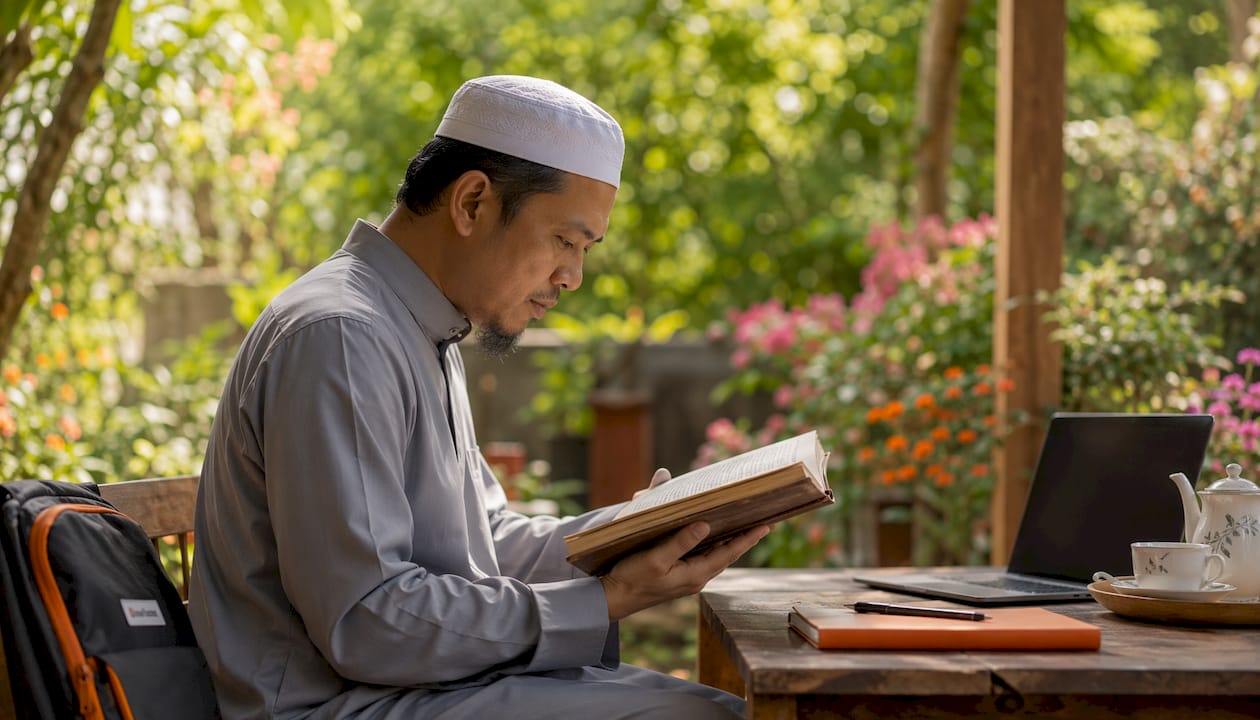



Everywhere we go, our smartphones are attached to us much like a second limb. We need our phones because most of our necessities and our means of ‘survival’ stems from the device.
Our data privacy. Connections. Even our bank cards are scannable via phone these days.
That said, with the ever-evolving technology that is increasingly dominating our lives, our children subconsciously take note of this very obvious behaviour. Then, the cycle repeats itself.
Our children are handed a device of their own at a very young age, without knowing the distinction between right and wrong, completely unmonitored, and we wonder why they behave a certain way as they get older.
Excessive screen time among Muslim kids has been an epidemic since the beginning of the era of digitalisation.
The difference in how we raise our children this year, compared to perhaps a decade ago, has shown a stark difference that affects our children’s overall development.
This article is going to expose certain truths about excessive screen time and how it affects not only the psychological development of our children, but their spirituality as well.
It’s now or never, dear parents. Let’s dive in, and re-educate our children.
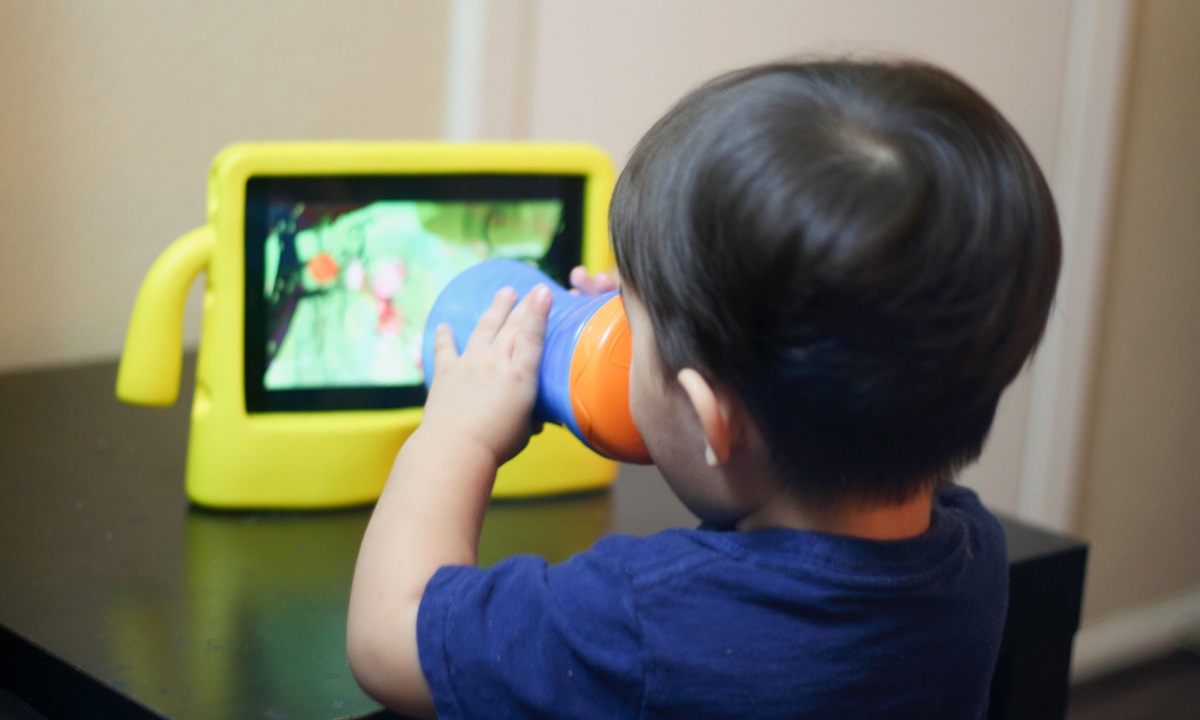
📱 How much screen time is too much?
Here’s what Singapore’s MOH recommends: Less than 1 hour daily for children aged 3–6, and under 2 hours for ages 7–12, excluding schoolwork. Most kids are way beyond this.
We understand the struggle of wanting our own ‘me-time’ to relish in solitude without the constant nagging from our kids.
You might think that one hour for a child under age 3-6 years old is not a lot of time at all for you to complete your chores or enjoy that quiet time.
However, this is the truth that parents have to face. It was never about our comfort, but the future and development of our children.
Will their attention span hold long enough? Will they focus? Will they understand the difference between right and wrong? These are the important questions.
At the end of the article, we’ll share tips on how to slowly detach your child from their screens, but this requires effort from parents as well. At the end of the day, we are their real-life role models. We shape their values and worldview.
10 Ugly Truths About Excessive Screentime on Muslim Kids

Truth #1: Screens Are Literally Rewiring Your Child’s Brain
Let’s start with the science, because it’s harder to dismiss than parental instinct.
Every time your child watches a short video; a YouTube clip, an Instagram Reel, a TikTok, their brain releases a small hit of dopamine. That feel-good chemical signals: more of this, please. The more they consume, the more their brain recalibrates around the expectation of instant reward.
The problem? Real life doesn’t deliver dopamine on a 15-second loop. A classroom doesn’t. A Quran lesson doesn’t. A conversation with a parent definitely doesn’t.
A 2025 meta-analysis published in Psychological Bulletin, reviewing 117 studies across more than 292,000 children, confirmed that excessive screen time causes emotional and behavioural problems, which then drive children to seek out even more screen time. It’s a cycle that feeds itself.
In Islam, the ‘aql, the intellect, is one of the five things our faith explicitly protects (alongside life, lineage, wealth, and religion). We are accountable for what we allow to shape the minds Allah Almighty placed in our care. When we hand a child a screen without limits, we are not being neutral. We are making a choice about whose hands shape their ‘aql.

Truth #2: It’s Destroying Their Sleep, and Sleep Destroys Everything Else
Here’s something that doesn’t get said loudly enough: a screen in the bedroom is a sleep thief.
Research published in the Annals of the Academy of Medicine Singapore confirms that screens suppress melatonin, the hormone that signals to the body that it’s time to sleep.
Children with devices in their rooms experience shorter night-time sleep, later bedtimes, delayed sleep onset, and greater sleep resistance. They don’t just sleep less. They sleep worse.
Truth #3: It’s Quietly Replacing You
This one might sting a little.
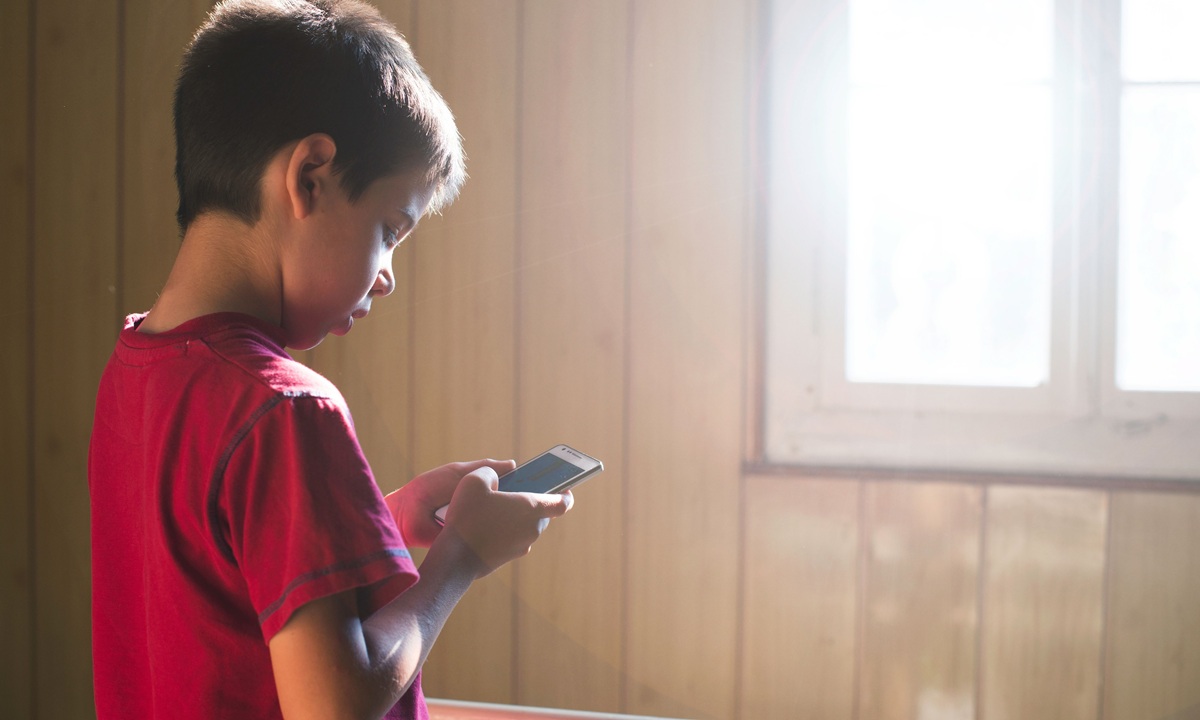
Researchers call it “techno-ference”, the way screens interfere with the quality of parent-child interaction. When a child is on a device, they are not sharing stories with you. They are not problem-solving with you. They are not building memories with you. They are in a parallel world that you have no part of.
Here’s the painful irony: most parents hand their child a screen precisely because they need time. Time to cook, to rest, to answer emails. The screen buys them twenty minutes, but it costs something harder to measure. The daily texture of closeness that forms a child’s sense of being known and loved by their parents.
The Prophet ﷺ was famous for his full presence. When he spoke to someone, that person felt like the only person in the world. He would lower himself to the level of children. He would listen completely. That quality of attention, of being truly seen, is what builds a child’s foundation of security and trust.
Tarbiyah is not a curriculum. It is a relationship, and relationships require presence, not just proximity.

Truth #4: It’s Making Them Emotionally Fragile
Watch what happens when you take the phone away.
For many children, the reaction is disproportionate. Tears, rage, negotiation, despair. That response is data. It tells you how dependent their emotional regulation has become on a device.
A 2026 study published in Humanities and Social Sciences Communications, analysing data from over 50,000 children and adolescents, found that excessive screen time is directly linked to anxiety, depression, behavioural problems, and ADHD symptoms.
Crucially, the study found that screens displace the two things children need most for mental health: physical activity and sleep.
In Islam, patience is not a personality trait. It is a spiritual muscle, developed through difficulty, through boredom, through the experience of waiting and not getting. A child who has never had to sit with boredom has never had the chance to build that muscle.
Boredom is not the enemy. It is the soil in which imagination, resilience, and tawakkul grow. Screens eliminate boredom completely, and with it, the conditions for emotional and spiritual strength.

Truth #5: Their Grades Are Paying the Price Too
Singapore parents know academic pressure better than most. PSLE. CCA commitments. Tuition schedules. The weight of it is real.
Yet, one of the most consistent findings in child development research is that excessive screen time, particularly recreational screen time is associated with poorer executive functioning and academic performance.
The ability to focus, sustain attention, sit with a difficult problem without immediately seeking distraction are the skills that screens erode and exams demand.
The irony is that many children use screens as a reward after studying. But if the screen is rewiring their baseline for stimulation, the studying that comes before it becomes harder each time.
The Prophet ﷺ said: “Seeking knowledge is an obligation upon every Muslim.” If we take that seriously, then anything that systematically impairs our children’s capacity to learn is not just a parenting concern. It is a spiritual one.

Truth #6: You Don’t Always Know What They’re Watching
Let’s be honest about how algorithms work.
They are not designed to show your child what is good for them. They are designed to maximise watch time, and they are extraordinarily good at it because they are built by some of the most intelligent engineers in the world, with access to more behavioural data than any parent could ever have.
One innocent search leads to a recommendation. That recommendation leads to another. Within minutes, a child looking for Minecraft tutorials can end up somewhere you never intended.
Singapore parents have flagged this specifically; concerns about inappropriate content are among the top anxieties around children’s digital use, according to local research.
In Islam, the concept of guarding the gaze is typically taught to adolescents. But its spirit applies to children too. The eyes are a gateway to the heart. What enters through them shapes what the heart becomes. Until your child is old enough to guard their own gaze, that responsibility belongs to you.

Truth #7: The Physical Damage Is Real and Measurable
Singapore already has one of the highest rates of childhood myopia in the world. While genetics play a role, research increasingly points to screen exposure and reduced time outdoors as major contributing factors.
But myopia is just the beginning. Excessive screen time is also linked to obesity, because screens are sedentary, and sedentary children move less, burn less, and eat more mindlessly while watching. Poor posture is becoming a childhood epidemic. The combination of physical inactivity and poor sleep creates a baseline of sluggishness that affects everything.
The Prophet ﷺ said: “Your body has a right over you.” This is not a wellness slogan. It is a divine reminder that the physical form we inhabit is not ours to waste. We will be asked about it.
Raising a Muslim child means raising a whole person, body, mind, and soul. The body is not separate from the spiritual project. It is part of it.

Truth #8: They’re Losing the Ability to Actually Talk to People
Here is something subtle that is easy to miss: children who spend significant portions of their time on screens have fewer opportunities to practise the skills of human interaction. Reading facial expressions, managing disagreement, sitting with silence, and taking conversational turns.
These are not soft skills. They are the foundation of every relationship your child will ever have, with friends, teachers, spouses, children of their own one day.
In Islam, this matters deeply. Our faith is not a solo practice. It is built on congregation, community, and collective worship. The masjid is meant to be a gathering place. The ummah is meant to function as a body. A child who grows up unable to connect with people will struggle to connect with the community that their faith asks them to be part of.
We are raising children for the ummah. That requires raising children who can show up for other people.

Truth #9: It’s Building a Wall Between Your Child and Allah
This is the one that should keep Muslim parents up at night.
Salah requires stillness. Quran recitation requires sustained attention. Dhikr requires a quiet mind willing to settle. These are not complicated practices, but they are increasingly countercultural in a world designed to prevent exactly the kind of stillness they need.
A child whose baseline is a 15-second video loop will find salah boring. Not because they don’t believe, but because their nervous system has been conditioned to expect constant stimulation, and prayer does not provide that. The masjid will feel slow. The Quran will feel hard. Sitting in a class about Islam will feel like punishment compared to what their phone offers.
Khushu’, that deep, present, humble absorption in prayer, is not something that can be switched on at will. It is cultivated over years of a mind that has learned to be still. Every hour of unmanaged screen time is an hour spent training the mind to be the opposite of still.
We cannot give our children Islam on one hand and unlimited screens on the other, and expect both to take root equally. One will win.

Truth #10: You Already Know Something Is Wrong
Here’s the final truth, and maybe the most uncomfortable one.
Sixty percent of parents globally feel guilty about their child’s screen time. The top reasons: too much of it, using screens as a babysitter, and the sense that it’s eating into real family time. Most parents, when they’re honest with themselves, already know that something is off.
The problem is that guilt without action is just suffering. It doesn’t change anything. It just adds weight.
So here’s what we want to say, as gently and as firmly as we can: You are not a bad parent for having reached this point. Screens are designed by billion-dollar companies to be as compelling as possible. The default, in 2026, is addiction. Swimming against that current takes intentionality, structure, and community.
The good news is that return and renewal is always available. Small changes compound. A no-screen dinner table. A phone-free hour before bed. A Saturday morning at madrasah instead of in front of a screen. These are not dramatic interventions. They are daily choices that, made consistently, build a different kind of childhood.
Your child’s relationship with Allah, with knowledge, with people, and with their own inner life — all of it is still being formed. It is not too late to shape it.

So What Can Muslim Parents Actually Do?
Knowing the problem is one thing. Living the solution is another, especially when you’re tired, when your child is crying, and when the phone is right there.
This section is not a list of rules. It’s a set of shifts in mindset, in habit, and in how we understand our role as Muslim parents. Not all of them will apply to your family right now. Pick one. Start there.
1. Set Screen-Free Times
The most effective way to reduce screen time is not to fight it in the moment, but to build structures around it before the moment arrives. When expectations are clear and consistent, there is far less negotiation.
Start with two non-negotiables:
Meals and prayer times are screen-free. Full stop. No phones on the table, no tablets propped against the wall, no background YouTube while eating. These two moments, the family table and the prayer mat are among the most formative spaces in a child’s life. Protect them fiercely.
2. The Hour Before Bed Belongs to Wind-Down
This one is backed by both neuroscience and Islamic wisdom, and it might be the single highest-impact change you can make.
Screen light suppresses melatonin. A child who is on a device right up until bedtime is a child whose brain is being actively told: stay awake. The result is a child who cannot sleep, cannot wake for Fajr, and starts every day already behind.
Replace the hour before bed with something quieter. It doesn’t have to be elaborate:
- Read together: Islamic stories, age-appropriate books, anything that invites imagination rather than passive consumption
- Do simple adhkar together: SubhanAllah, Alhamdulillah, Allahu Akbar, the bedtime duas are short enough for even young children to learn and meaningful enough to carry them into sleep with Allah’s name on their lips
- Just talk: about their day, about something they’re curious about, about a story from the Sirah
The Prophet ﷺ had a practice of reciting specific du’as and surahs before sleep. When we build that into our children’s evenings, we are not just following Sunnah — we are training their bodies and hearts to associate rest with the remembrance of Allah, not the glow of a screen.
3. Replace, Don’t Just Remove
Here is the mistake most parents make: they take the screen away and give nothing in its place. The child, bored and resentful, simply waits until they can get the screen back.
Reduction works best when it’s substitution, when the screen is replaced by something that meets the same underlying need.
Ask yourself: what is my child getting from the screen?
- Stimulation and entertainment → Replace with physical play, building, drawing, LEGO, outdoor time
- Social connection → Replace with playdates, family visits, community activities
- Downtime and rest → Replace with reading, quiet play, creative activities
- A sense of competence and mastery → Replace with learning a skill like cooking, a sport, memorising a surah
This is not about filling every minute. Children need unstructured time. Boredom, as we said earlier, is where creativity grows. But when you remove a screen, give them a bridge, something to land on while they rediscover how to occupy themselves without one.
4. Be the Example First
Let’s be honest about the elephant in the room.
Our children are not watching YouTube in a vacuum. They are watching us. They see us reach for the phone the moment we sit down. They see us scroll at the dinner table. They see us half-present during conversations because part of our attention is on a notification.
Children do not do what we tell them. They do what they see us do.
This does not mean you need to be perfect. It means you need to be honest with yourself and with your children. If you are working on your own screen habits, say so.
“Baba is trying not to use his phone so much at home too. It’s hard for grown-ups as well.”
That kind of honesty builds trust and models the very quality, self-awareness and effort, that we want to cultivate in them.
The Prophet ﷺ never asked of his companions what he did not first embody himself. The most powerful parenting tool we have is not a rule. It is a life lived in a way worth imitating.
5. Create Phone-Free Zones in Your Home
Boundaries work better when they are spatial. Designate certain spaces in your home as permanently screen-free as a statement about what those spaces are for.
The dining table is for conversation and presence. The bedroom is for sleep and rest. The prayer area, if you have one, is for ibadah.
When a space has a clear identity, this is where we eat together, this is where we sleep, this is where we pray, children internalise that identity. The absence of screens in those spaces stops feeling like deprivation and starts feeling normal.
You might also consider a family charging station, a specific spot, outside the bedrooms, where all devices charge overnight. No screens sleep in the bedroom. This one structural change eliminates the late-night scrolling problem almost entirely.
6. Teach Them Why, Not Just What
Rules without understanding breed resentment. Children who are told “no screens” without being told why will simply wait until they are old enough to make their own choices and then make the opposite one.
Talk to your children about what screens do to their brains, in language they can understand. You do not need to lecture. You need to have a conversation.
“Do you notice how you feel grumpy when we turn off the iPad? That’s because your brain got used to getting a reward really fast, and now it needs time to rest and reset.”
“Do you know why we pray? Because Allah Almighty wants us to stop and remember Him. But if our brain is always busy with videos, it becomes hard to be quiet enough to feel close to Allah. That’s why we protect our prayer time.”
Children who understand the reasoning become partners in the solution, not just subjects of the rule. Children who grow up understanding the Islamic framework for guarding their hearts and minds will carry that understanding into adolescence and adulthood.
7. Use Screens Intentionally, Not as Default
The goal is not zero screens. That is neither realistic nor necessary. The goal is intentionality, using screens as a deliberate choice rather than the automatic default whenever a child is bored, restless, or needs to be managed.
Ask before turning on a screen: What are we watching? Why? For how long?
Co-view when possible, especially with younger children. Watch with them, ask questions, talk about what you’re seeing. This transforms passive consumption into active engagement and keeps you in the loop about what they’re absorbing.
There is genuinely good content available: Islamic educational videos, age-appropriate documentaries, creative tutorials. The screen is not the enemy. Unconscious, unlimited, unmonitored screen use is.
A useful rule of thumb: if you wouldn’t be comfortable describing what your child is watching to their ustaz or ustazah, that’s information worth acting on.
8. Invest in Islamic Community and Structured Learning
Here is something that often gets missed in the screen time conversation: the reason screens are so powerful is partly because they fill a vacuum. A child who has strong friendships, engaging activities, a sense of purpose, and a community they belong to simply has less need for the escape that screens provide.
Islamic education and community are not just about religious knowledge. They are about belonging. A child who goes to a weekend madrasah every week has a community — friends who share their values, teachers who know them by name, a weekly rhythm that grounds them in something real.
That groundedness is one of the most powerful long-term protections against digital dependency. Children who know who they are and where they belong do not need to lose themselves in a screen.
The Prophet ﷺ said: “A person is upon the religion of their close friend, so let each of you look at whom they take as a close friend.” The community we place our children in shapes who they become. A screen gives them the world — but not always the world we would choose for them.
9. Make Dua, And Mean It
Finally, this: parenting is one of the greatest acts of tawakkul a Muslim can perform.
You can set every boundary, build every structure, teach every lesson and your child still has their own will, their own fitrah, their own journey to Allah. Control is an illusion. What you have is influence, intention, and dua.
Make dua for your children specifically and regularly. By name. For their hearts, their ‘aql, their relationship with the Quran, their love for the Prophet ﷺ. Ask Allah to make them from those who guard their eyes and their time and their hearts.
Prophet Ibrahim (as) made dua for his children before they were born.
رَبِّ ٱجْعَلْنِى مُقِيمَ ٱلصَّلَوٰةِ وَمِن ذُرِّيَّتِى ۚ رَبَّنَا وَتَقَبَّلْ دُعَآءِ ٤٠
Lord, grant that I and my offspring may keep up the prayer. Our Lord, accept my request. [Qu’ran 14:40]
The greatest of fathers knew that ultimately, guidance belongs to Allah Almighty and that dua is the most powerful parenting tool there is.
Do the work. Build the structures. Have the conversations, and then make dua, and trust the One who loves your child more than you do.
A Final Word
No parent gets this perfectly right, but remember that our goal was never perfection. It is doing our best.
A home that is moving, even slowly, toward more presence, more salah, more conversation, and more intentionality around screens is already doing something profound.
Your child may not thank you for it now, but the adult they become will carry the fruit of the choices you made today. Start with one thing. Then another. Then another.
If you’re looking for a structured, screen-free space where your child can learn, grow, and belong — SimplyIslam’s Weekend Madrasah runs every Saturday, offering Islamic education in a real, warm community environment.