

Islamic history is defined as the record of Muslim civilization’s moral, theological, and political development from the time of the Prophet Muhammad (peace be upon him) to the present day. Why understanding Islamic history matters goes far beyond memorizing dynasties or dates. One-third of the Quran consists of historical narratives, which means history is not a supplement to divine guidance. It is woven into the guidance itself. For anyone serious about Islamic culture, global relations, or the forces shaping our world today, this history is not optional reading. It is a moral and intellectual foundation.
Why understanding Islamic history matters as a moral compass
Islamic history’s core value is not its catalog of scientific achievements or architectural wonders. Its true purpose is to transmit a moral and ethical framework across generations. Islamic historiography functions as a moral compass, shaping theology, law, and political thought rather than simply preserving Greek and Roman knowledge for later civilizations.

The Ahl ul-Bayt, the family of the Prophet, serve as a central example of this moral function. They act as a normative yardstick for legitimacy and justice within Islamic historiography. When their role is minimized or erased from the historical record, the moral vocabulary of Islam weakens. Concepts like justice, accountability, and legitimate authority lose their grounding.
This is not an abstract concern. When historical narratives are distorted, political thought suffers real consequences. Communities lose the language to articulate what just governance looks like. They lose the models that demonstrate how power should be held and questioned.
“Historiography is never neutral. Every account reflects the author’s context, patronage, and purpose. Readers of Islamic history must ask who wrote it, for whom, and why.”
The practical takeaway is clear. Reading Islamic history means reading it critically, with awareness of who shaped the narrative and what moral lessons were meant to be preserved or suppressed.
-
Justice and authority: Historical accounts define what legitimate rule looks like in Islamic tradition.
-
Accountability: Stories of rulers who failed their communities serve as warnings, not just records.
-
Moral language: The vocabulary Muslims use to discuss ethics today was shaped by how history was written and taught.
-
Theological grounding: Theological disputes were often resolved by appealing to historical precedent, making history inseparable from doctrine.
How does Islamic history connect to contemporary global issues?
The brevity of human life makes direct experience of civilizational change impossible. A person living 60–80 years cannot witness the rise and fall of empires firsthand. Historical study fills that gap. It gives you access to patterns that no single lifetime can reveal.
This matters urgently for contemporary issues. The conflict in Palestine, for example, cannot be understood without knowing the Ottoman period, the colonial mandates of the early twentieth century, and the political movements that followed. Reducing it to a modern territorial dispute strips away the context that explains why it carries such deep meaning for Muslims worldwide.
Islamic history is woven into global history, not a marginal footnote. Muslim scholars preserved and advanced mathematics, medicine, and philosophy during periods when other civilizations were in decline. Ignoring this contribution produces a distorted picture of how the modern world was built.
-
Conflict context: Historical knowledge reveals the roots of ongoing disputes in the Middle East, South Asia, and Africa.
-
Diplomatic lessons: Past Muslim statecraft offers models of negotiation, coexistence, and governance that remain relevant.
-
Countering shallow narratives: A grounded knowledge of Islamic history prevents reductive portrayals in media and politics.
-
Global contribution: Recognizing Muslim intellectual and cultural contributions corrects the record and builds more accurate cross-cultural understanding.
Pro Tip: When following news about Muslim-majority regions, pair each story with at least one historical source covering that region’s pre-twentieth-century context. The contrast between what you assumed and what you learn will sharpen your analysis significantly.
What are the most effective approaches to studying Islamic history?
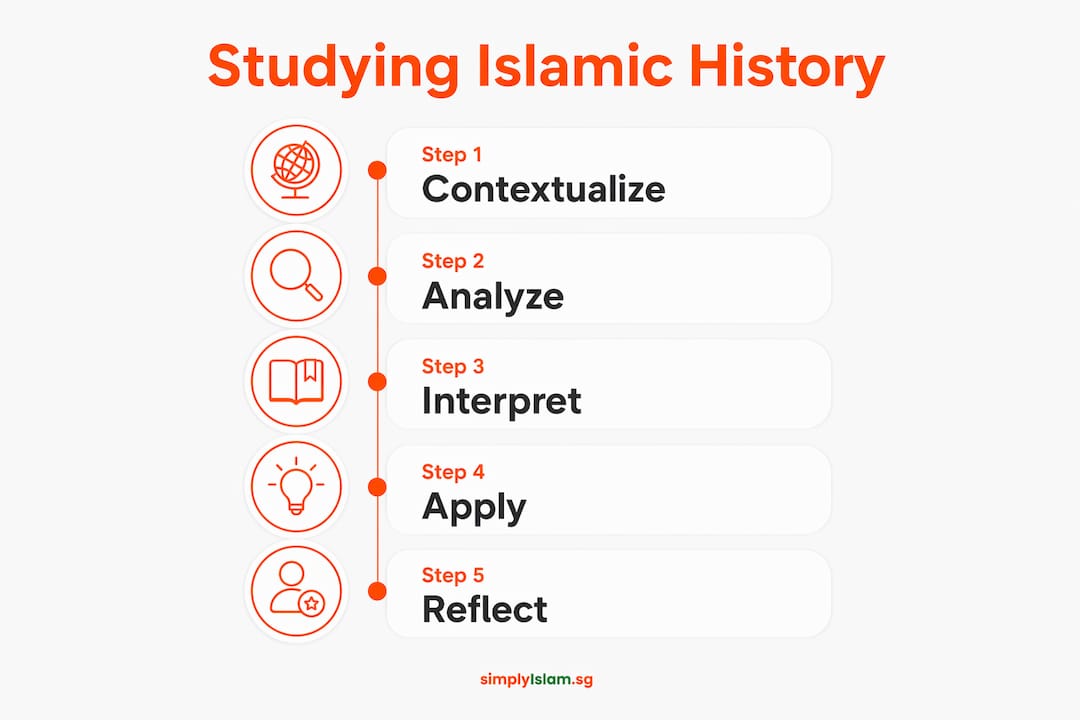
The most common mistake beginners make is treating Islamic history as a list of names, dates, and dynasties to memorize. That approach produces trivia, not understanding. A structured, step-by-step study method allows beginners to reach confident mastery within months rather than years.
Blending chronological narrative with thematic analysis is the most effective method. Chronology gives you the sequence. Thematic analysis, covering politics, economy, theology, and gender, gives you the meaning. Together, they connect historical events to modern realities without getting lost in overwhelming detail.
A practical study sequence looks like this:
-
Start with the Seerah. The biography of the Prophet provides the moral and theological foundation for everything that follows. Read a reliable, scholarly account before moving to later periods.
-
Study the Rightly Guided Caliphs. This era establishes the first models of Islamic governance, justice, and community building. It also introduces the first major internal disputes, which shaped later history profoundly.
-
Move through major dynasties thematically. Cover the Umayyad, Abbasid, and Ottoman periods not just as political sequences but as case studies in how Islamic values were applied, tested, and sometimes compromised.
-
Evaluate your sources critically. Ask who wrote each account, when, and under whose patronage. Historiography is shaped by power and bias. A source written under an Abbasid caliph will frame the Umayyad period differently than one written by an independent scholar.
-
Connect history to the present. After each period, ask what patterns or lessons apply to current events. This habit transforms history from a passive record into an active analytical tool.
Pro Tip: Credible Islamic scholars make a significant difference at this stage. A qualified instructor can flag biased sources, explain contested events with nuance, and prevent you from building your understanding on a flawed foundation.
Employers in fields like diplomacy, journalism, and international law actively value Middle East literacy and critical source analysis. The skills you build studying Islamic history transfer directly to professional contexts where understanding complex, contested narratives is a core competency.
How does historiography shape Muslim identity and cultural resilience?
Historiography, the study of how history is written and why, shapes identity as powerfully as the events themselves. The way Islamic history is framed determines whether Muslims see themselves as heirs to a living civilization or survivors of a collapsed one. That distinction carries real consequences for confidence, purpose, and collective action.
Relying solely on external academic frameworks risks inheriting biases that prioritize material progress over spiritual goals. Western historiographical traditions, particularly those rooted in historical materialism, tend to measure civilizational success by economic output and military power. Islamic civilization’s greatest contributions, its theological depth, its legal sophistication, its ethical frameworks, are systematically undervalued by those measures.
Muslims who engage with their own historiographical tradition develop a more complete and accurate self-understanding. They can affirm Muslim contributions as integral to global civilization rather than peripheral to it. This is not defensiveness. It is accuracy.
| Historiographical approach | Effect on Muslim identity |
|---|---|
| External materialist framework | Undervalues spiritual and ethical achievements; produces a sense of civilizational inferiority |
| Islamic moral historiography | Centers justice, accountability, and Prophetic example as measures of success |
| Uncritical lamentation | Produces passivity and grief without analysis or direction |
| Critical Islamic historiography | Builds accountability, strategic thinking, and civilizational confidence |
-
Reclaiming moral vocabulary: Restoring the Ahl ul-Bayt’s role in historical narratives recovers the ethical language Islam needs for political thought.
-
Countering external bias: Owning your historiography means you set the terms of evaluation, not outside observers.
-
Civilizational strategy: Understanding past successes and failures gives communities the tools to make better decisions today.
-
Identity formation: Young Muslims who know their history carry a sense of belonging and purpose that resists both radicalization and assimilation pressures.
The shift Muslims need, as scholars have noted, is from lamentation to interpretation and accountability. Grieving over historical losses is understandable. Building a rigorous, morally grounded account of what happened and why is what actually protects a civilization’s future.
Key Takeaways
Understanding Islamic history is the foundation of Muslim moral identity, and structured study of its historiography is the most direct path to that understanding.
| Point | Details |
|---|---|
| History is divine guidance | One-third of the Quran consists of historical narratives, making history central to Islamic epistemology. |
| Moral framework, not just facts | Islamic history’s core value lies in its ethical and theological frameworks, not its catalog of achievements. |
| Structured study works | A step-by-step approach blending chronology and thematic analysis enables mastery within months. |
| Historiography shapes identity | How Islamic history is written and taught directly affects Muslim confidence, political thought, and cultural resilience. |
| Global relevance is real | Islamic history is woven into global history, and understanding it counters shallow narratives in media and diplomacy. |
Deepen your knowledge with SimplyIslam’s structured courses
Islamic history is best learned with qualified guidance, not through scattered reading. SimplyIslam offers structured Islamic education for adults designed specifically for busy professionals who want depth without sacrificing their schedules.
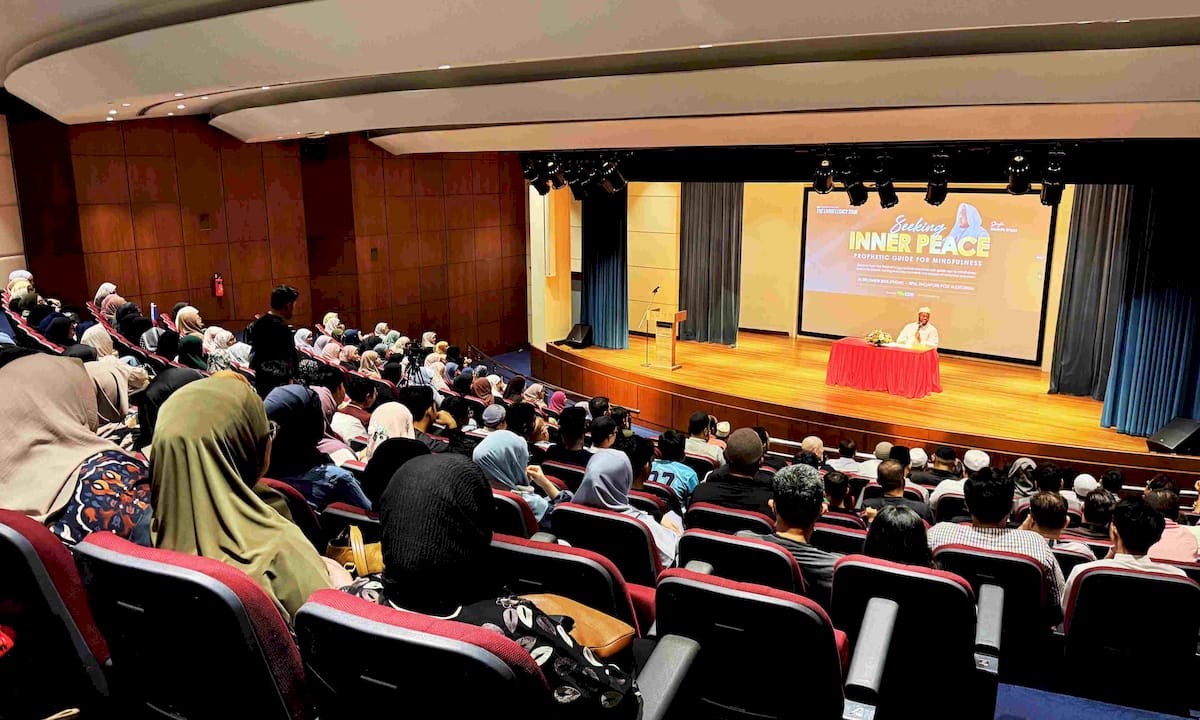
SimplyIslam’s ARS-certified instructors bring both scholarly rigor and practical teaching methods to every course. With evening classes for professionals and a growing library of free Islamic resources, there is a starting point for every level of prior knowledge. Over 22,000 participants have engaged with SimplyIslam’s programs, and the platform has raised over $1.1 million for charity. That track record reflects a community that takes Islamic learning seriously. Your study of Islamic history can begin today, with the right support behind it.
FAQ
Why does Islamic history matter for non-Muslims?
Islamic history is woven into global history, shaping science, law, philosophy, and diplomacy across centuries. Understanding it produces more accurate cross-cultural analysis and counters reductive narratives in media and politics.
How much of the Quran is historical narrative?
One-third of the Quran consists of historical narratives, making history a foundational element of Islamic divine guidance rather than a supplementary subject.
What is the biggest mistake beginners make when studying Islamic history?
The most common mistake is memorizing names, dates, and dynasties without understanding the moral and theological context that gives those events meaning.
How long does it take to gain a solid grasp of Islamic history?
A structured, step-by-step study approach that blends chronological and thematic analysis allows beginners to reach confident mastery within months rather than years.
What is historiography and why does it matter for Islamic history?
Historiography is the study of how history is written and why. In Islamic history, it determines whose moral framework shapes the narrative, which directly affects Muslim identity, political thought, and cultural resilience.