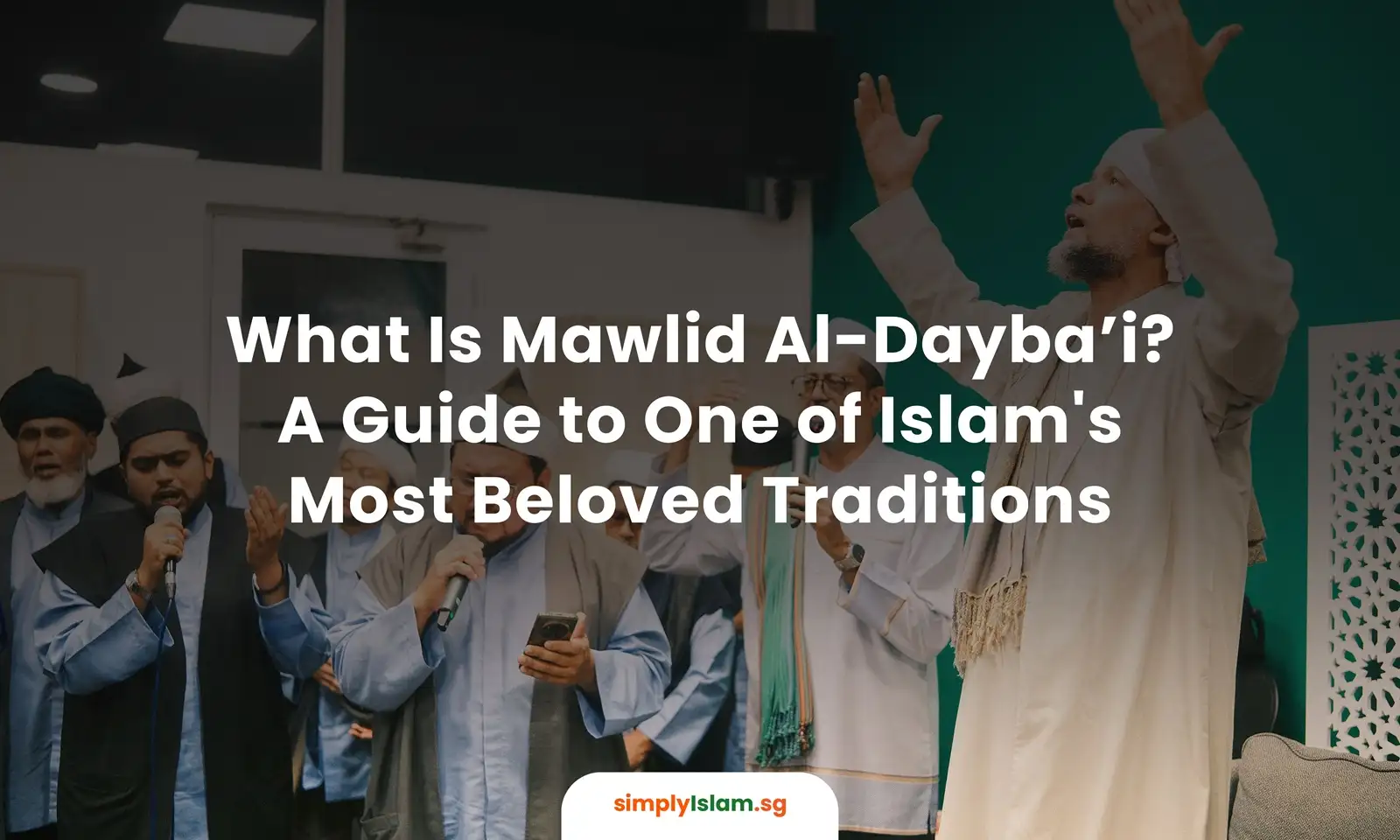

Have you ever attended Mawlids in your lifetime? If you have, you may or may not be familiar with the famous tradition of Mawlid Al-Dayba’i.
Beloved across the Muslim world, from the Arabian Peninsula to Southeast Asia, this tradition has been a centrepiece of communal devotion for centuries. But what exactly is it, where did it come from, and why does it continue to hold such a cherished place in the hearts of Muslims today?
What Is Mawlid Al-Dayba’i?
Mawlid Al-Dayba’i, also written as Maulid Al-Dayba’i or simply Al-Dayba’iyyah, is a classical Arabic text composed in honour of the Prophet Muhammad ﷺ. It is a work of mawlid literature, a genre of Islamic devotional writing that recounts the life, birth, and noble character of the Prophet ﷺ and is one of the most widely recited mawlid texts in the Muslim world.
The word mawlid itself refers to the time, place or celebration of a birth, and in Islamic usage, it specifically refers to commemorations of the Prophet’s birthday ﷺ, as well as the texts and gatherings associated with that commemoration. Al-Dayba’i refers to the author, the renowned Yemeni scholar Imam ‘Abd al-Rahman Al-Dayba’i.
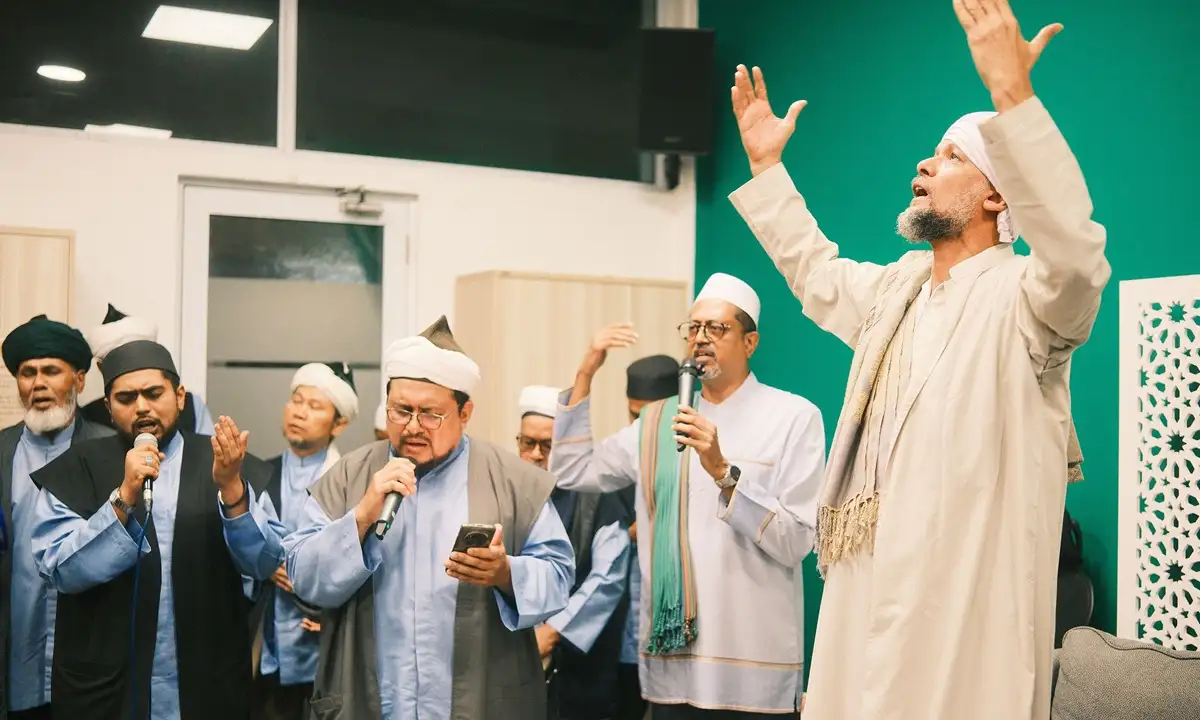
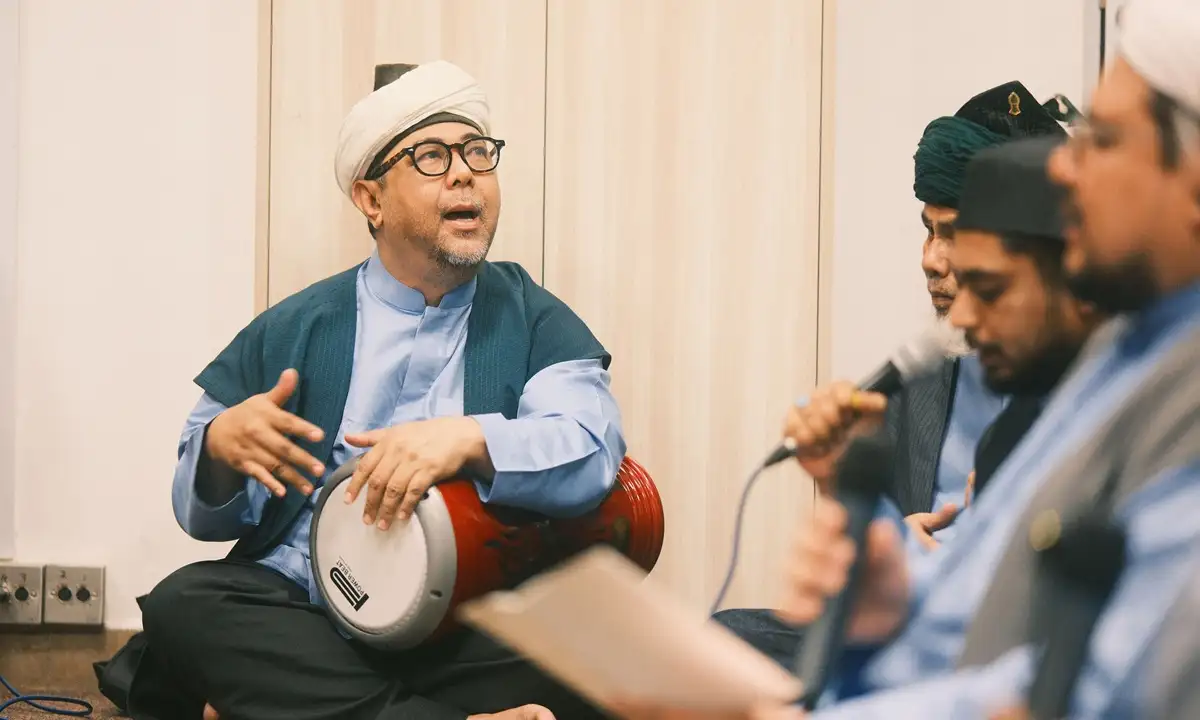
In essence, Mawlid Al-Dayba’i is both a text and a gathering. It is a literary work that is recited communally as an act of worship, gratitude, and love for the Prophet ﷺ.
Who Wrote It? The Story of Imam Al-Dayba’i
The author of this celebrated mawlid was Imam Wajih al-Din ‘Abd al-Rahman ibn ‘Ali Al-Dayba’i al-Shaybani al-Zubaidi (1461–1537 CE / 866–944 AH), a towering figure of Islamic scholarship from Zabid, Yemen.
Imam Al-Dayba’i was a polymath. He was a hadith scholar (muhaddith), historian, jurist, and poet of the highest order.
He studied under more than five hundred scholars during his lifetime and was considered a hafiz (one who has memorised the entire Qur’an) as well as a master of hadith sciences.
His works span theology, history, Sufism, and biography, and he is regarded as one of the great luminaries of the Shafi’i tradition.
He composed his mawlid text in the tradition of devotional Arabic poetry, weaving together Qur’anic allusions, prophetic biography, and heartfelt praise into a work of literary beauty and spiritual depth.
His intent was an act of love, a gift of praise to the one whom he considered the most beloved of Allah’s creation.
What Is Recited in Mawlid Al-Dayba’i?
The text of Mawlid Al-Dayba’i is a richly layered composition that moves through several spiritual and biographical stages. Download the Mawlid Al-Dayba’i PDF here to recite and understand the contents of this beautiful text.
1. Opening Supplications and Qur’anic Verses
The gathering usually begins with the recitation of Surah al-Fatihah and prayers of intention, dedicating the rewards of the gathering to the Prophet ﷺ and the souls of the deceased.
2. Praise of Allah Almighty (Hamd)
The text opens with verses of glorification and praise of Allah ﷻ, establishing the theological foundation of the gathering, that all honour ultimately belongs to God, and that praising the Prophet ﷺ is an act of obedience to the Creator.
3. The Story of the Prophet’s Birth (Wiladah)
This is the spiritual heart of the mawlid. The text narrates the miraculous events surrounding the birth of the Prophet Muhammad ﷺ, the light that preceded him, the signs that accompanied his arrival, and the joy that spread through creation at his coming into the world. It is at this point in the recitation that the congregation typically stands in honour of the Prophet ﷺ, a practice known as qiyam.
4. The Qiyam (Standing in Honour)
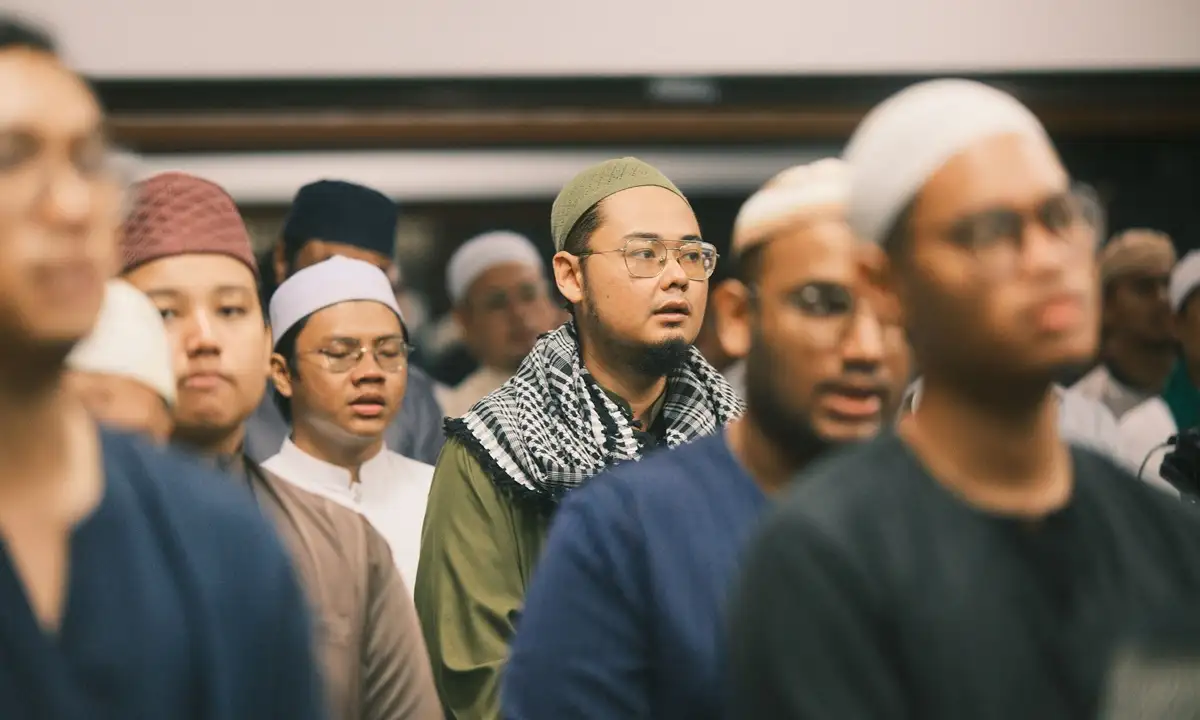
When the birth narrative reaches its peak, the reciter and congregation rise together as a mark of reverence and love. This moment is often the most emotionally moving part of the gathering. Some gatherings include the recitation of specific qiyam verses or salawat (prayers upon the Prophet ﷺ) while standing.
5. Prophetic Biography and Character
Following the birth narrative, the text moves through key aspects of the Prophet’s life ﷺ , his noble lineage, his character (akhlaq), his prophethood, his migration, and his role as the seal of all prophets. These passages are composed in a manner that inspires love, longing, and reflection.
6. Salawat and Prayers of Intercession
Throughout the text, and especially toward its conclusion, the congregation recites salawat and blessings and prayers upon the Prophet ﷺ. These are based on the Quranic injunction: “Indeed, Allah and His angels send blessings upon the Prophet. O you who believe, send blessings upon him and salute him with peace.” (Surah al-Ahzab, 33:56)
7. Closing Du’a
The gathering closes with a communal supplication (du’a), asking Allah ﷻ for His mercy, blessing, and the intercession of the Prophet ﷺ on the Day of Judgement. Refreshments — often kurma (dates), air mawar (rose water), or light food — are sometimes served afterwards as a mark of celebration.
The Virtues and Significance of This Gathering
Expressing Love for the Prophet ﷺ
At its core, Mawlid Al-Dayba’i is an expression of mahabbah (love). Islam teaches that loving the Prophet ﷺ is not merely encouraged but is a condition of faith: “None of you truly believes until I am more beloved to him than his father, his children, and all of mankind.” (Bukhari & Muslim). The mawlid gathering is one of the ways this love is given form, voice, and community.
Sending Salawat Upon the Prophet ﷺ
One of the greatest virtues of attending a mawlid is the abundance of salawat recited throughout. The Prophet ﷺ said: “Whoever sends one blessing upon me, Allah will send ten blessings upon him.” (Muslim). A single mawlid gathering may contain hundreds of these blessings and is considered a tremendous source of Allah’s Divine Mercy for all who participate.
Gathering in Remembrance of Allah
The Prophet ﷺ described gatherings of dhikr as gatherings that are surrounded by angels, enveloped in mercy, and remembered by Allah Almighty before the inhabitants of the heavens. Mawlid gatherings, centred on praising Allah and His Prophet ﷺ, carry this spirit of sacred remembrance.
Strengthening Community and Spiritual Identity
Beyond the individual spiritual benefits, the mawlid is a communal act. It gathers families, neighbours, and communities together in a shared moment of devotion. In Singapore and across the Malay Muslim world, mawlid gatherings have long been a pillar of community life, marking births, weddings, completions of the Qur’an, and the calendar of the Prophet’s birth month, Rabi’ al-Awwal.
Transmitting Knowledge of the Prophet ﷺ
Through the biographical narrative woven into the text, the mawlid also serves as a vehicle for sirah, the life story of the Prophet ﷺ. Each recitation is, in a sense, a lesson in prophetic biography, ensuring that knowledge of who the Prophet was ﷺ is passed from generation to generation through the living tradition of song and verse.
Join Our Spiritual Gatherings to Increase the Love for Our Prophet ﷺ
Whether it’s our upcoming Islamic events our simply our monthly Dala’il Al-Khayrat gathering to engage in remembrance and love for our Prophet ﷺ, everyone is welcome to open their hearts and souls and join other like-minded seekers.
A Living Tradition
Mawlid Al-Dayba’i is very much a living practice recited in homes, mosques, and community halls from Yemen to Indonesia, from East Africa to the heart of Singapore.
Every generation that raises its voice in praise of the Prophet ﷺ adds another link to an unbroken chain of love stretching back more than five centuries.
In a world that often pulls us toward the fast and the fleeting, the mawlid invites us to slow down, gather together, and remember that we are an ummah bound by love for one man ﷺ, whose light continues to guide us still.
May Allah the Most Merciful grant us true love for His Prophet ﷺ, and may that love be a light for us in this world and the next. Allahumma salli ‘ala Sayyidina Muhammad.