





Parenting is never easy, and some Muslim parents in particular haven’t even the faintest idea on how to teach children salah.
Getting kids to pray in Islam is not something we should overlook. In fact, it must be one of our top priorities to not only educate our children the fiqh of salah, but the spirit of it so they grow to understand why they must pray everyday.
But here’s the main issue about some of us as Muslim parents: some of us weren’t taught how to make salah fun for kids. Most of us teach salah step by step in a very mechanical way, force it or totally ignore this very crucial part of our deen.
Teaching children salah in Singapore can be a tough challenge, so here are 15 ways on how to teach children salah so they don’t grow feeling forced to pray, but rather, feeling the true spirit of salah itself.
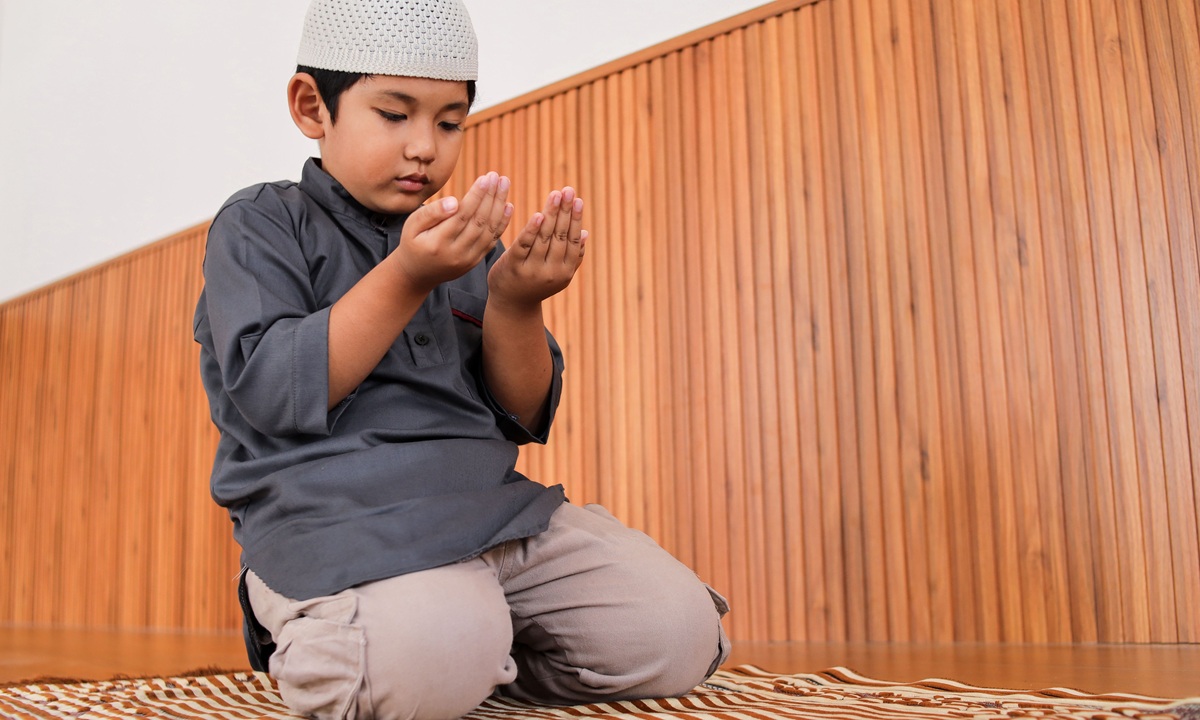
When to Start Teaching Salah for Kids
Before we begin teaching our children salah, let’s first understand the Prophetic guide to raising our children, especially in the Singapore context.
Many parents begin too late, push too hard, or are inconsistent in teaching their children salah. Let’s remedy that by understanding when is the right time to expose our children to salah.
‘Amr b. Shu’aib said on his father’s authority that his grandfather reported God’s Messenger as saying, “Command your children to observe prayer when they are seven years old, and beat them for [not observing] it when they are ten years old,” [Mishkat Al-Masabih]
According to this hadith, it is Sunnah for your children to begin their salah journey by the age of seven, and that means exposure to it should begin way earlier so they grow to become familiar with salah in their environment itself.
If you ‘d like a step-by-step guide to teach your child Salah, download our PDF here for free!

Can you give a light physical reprimand if your child refuses to pray?
If they fail to fulfil the obligation, try and talk to them first. If they continue to persist or refuse, ask why and try to find a solution together. Once all efforts have been exhausted, then only you may discipline them by a light physical reprimand.
However, it is also worth noting that the hadith does not mean a parent is allowed to resort to violence or physical abuse. There is also etiquette in disciplining your children that Islam has outlined.
Hitting the Face is Off-limits: Jabir told that God’s Messenger ﷺ forbade striking the face and branding on the face. [Mishkat Al-Masabih]
Severity: Hitting should never be violent, abusive, or leave marks. It should be a light, educational correction.
15 Ways to Get Your Child Started in Performing Salah
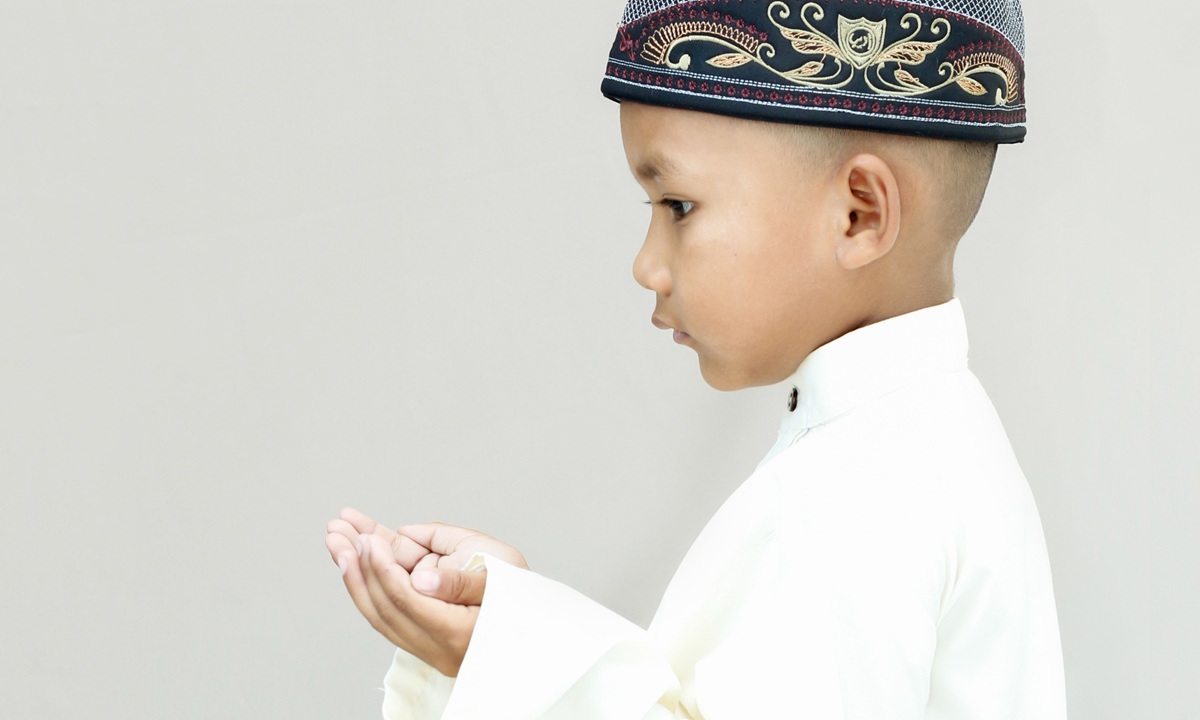
🌱 PHASE 1: LAY THE FOUNDATION BEFORE THE PRAYER (Ways 1–4 — for younger children, pre-salah)
Way 1: Build Their Love for Allah Almighty First
A child who loves Allah Almighty will willingly want to talk to Him. A child who sees salah as an obligation without understanding why, resents it.
Teach them about Allah Almighty in everyday moments; in nature, in gratitude, in safety. Expose them to the Mercy of Allah Almighty, and highlight how Loving He is. Tell them moments from the hadith Qudsi and Qur’an that portray Allah’s Divine Love for us.
Tarbiyah begins with ma’rifatullah, which means knowing and loving Allah the Most Merciful. The movements of salah are the body following what the heart already feels.
Way 2: Let Them Watch You Pray Without Saying a Word
Before instruction comes observation. This is where the pre-salah education takes place, ideally before they even turn seven years old.
Children are wired to imitate, and you’d be surprised how they absorb everything we do and say like a sponge. It’s how they learn language, social behaviour, and emotional responses.
When your child sees you stop everything for salah, put down your phone, lay out the mat, face the qiblah, they are absorbing something profound without a single word being spoken.
If you’re the kind to pray in private, start praying at home in a more open area where they can see you pray, whether it’s in the living room, or a designated prayer space.
Way 3: Give Them Their Own Prayer Mat and Make It Theirs
Give children their own prayer mat, kopiah or prayer garments! They will feel excited and proud to pray beside you.
When a child has their own mat, especially one they helped choose, salah stops being something adults do and becomes something they belong to. Just like us, we’d all prefer to be given the power of choice, so give them that too!
Practical tips: let them pick the colour, keep it accessible (not stored away), give it a spot in a visible place at home.
Way 4: Structure the Family Day Around Prayer Times
Structure the day around the five daily prayers to encourage congregational salah.
This is also about normalising salah as a time marker, not an interruption in daily activities. When it’s prayer time, instead of saying “Oh no, we have to pray!”, say “SubhanAllah, it’s time to pray. We’ll continue after our prayer. Let’s go!”
For family outings such as this, use an adhan clock or app, pause activities when the adhan sounds. Familiarity breeds comfort, and comfort precedes love.
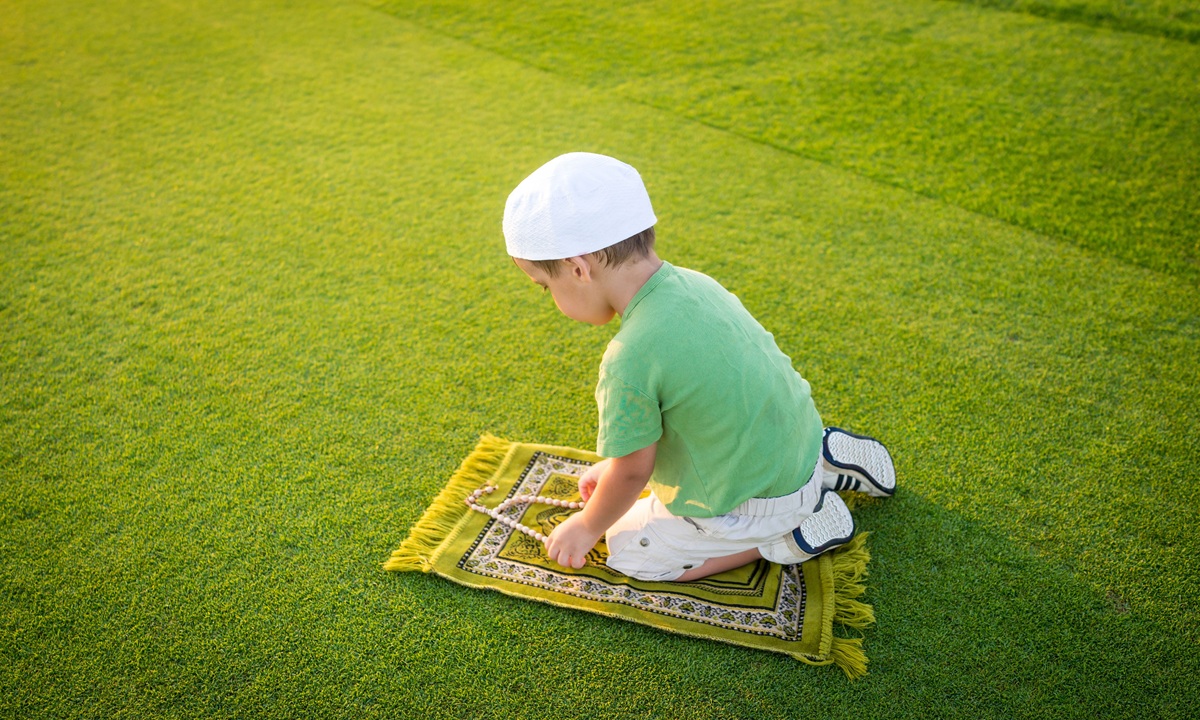
🕌 PHASE 2: TEACH THE PRACTICE (Ways 5–9 — the actual how-to)
Way 5: Start With Wudhu’
Most parents jump straight to the movements of salah and it usually ends up overwhelming for children to follow from start to finish.
So, starting with wudhu’ is the gateway. It signals to the body and mind: we are shifting into something sacred now.
Teach wudhu’ first, teach it slowly, make it sensory and intentional. For young children, the splashing water is already engaging. Make performing wudhu’ fun. If they can’t handle cold water, use warm water instead.
Frame it: “We’re getting clean to talk to Allah Almighty.” That sentence alone is worth more than a ten-minute lesson.
Way 6: Teach One Rakah at a Time
Overwhelm is the enemy of habit. Just like adults, we hate that feeling and would do anything to avoid feeling like we’re incompetent and behind.
Parents often try to teach the full prayer at once; all the Arabic, all the movements, all five prayers, and there’s a small wonder why the child shuts down.
Break it down radically. One movement this week. One phrase next week. Celebrate each milestone. Download our simple guideline to teach salah for your child step by step!
Way 7: Pray Together as a Family, Make Jama’ah the Default
Take children to Friday prayers and Eid prayers so they can witness a whole community praying together. The power of that gives them a strong sense of identity.
However, it starts at home. When the family prays together even once a day, the child understands that salah is something we do together as a family. It is part of quality time, not something you have to do.
Jama’ah at home is the training ground for jama’ah in the masjid.
Way 8: Let Them Lead, Even If It’s Imperfect
Children who lead prayer feel confident and enjoy praying. The goal is not to make imams out of them but to make them feel ownership over their salah, even if it’s imperfect.
As a start, let your child call the adhan or Iqamah, lead the family in a Sunnah prayer (since an obligatory prayer requires it to be done in the most perfect manner), and ask them to teach their younger siblings.
Confidence in salah is built through doing, even if it’s imperfect.
Way 9: Teach Them What They’re Actually Saying
Let’s face it. Some of us are like this. We recite without truly internalising the meaning of them and we end up spacing out in our salah.
To truly appreciate every moment of salah, we should of course understand the content of our recitation, and this is the same method we should apply when teaching salah to our children.
SubhanAllah Rabbiyal Adhim. “Glory be to my Lord, the Most Great.”
When a child understands what they are saying to Allah, the prayer transforms from recitation to conversation. This doesn’t require full Arabic mastery. It requires one sentence of meaning per phrase, in the language they understand.
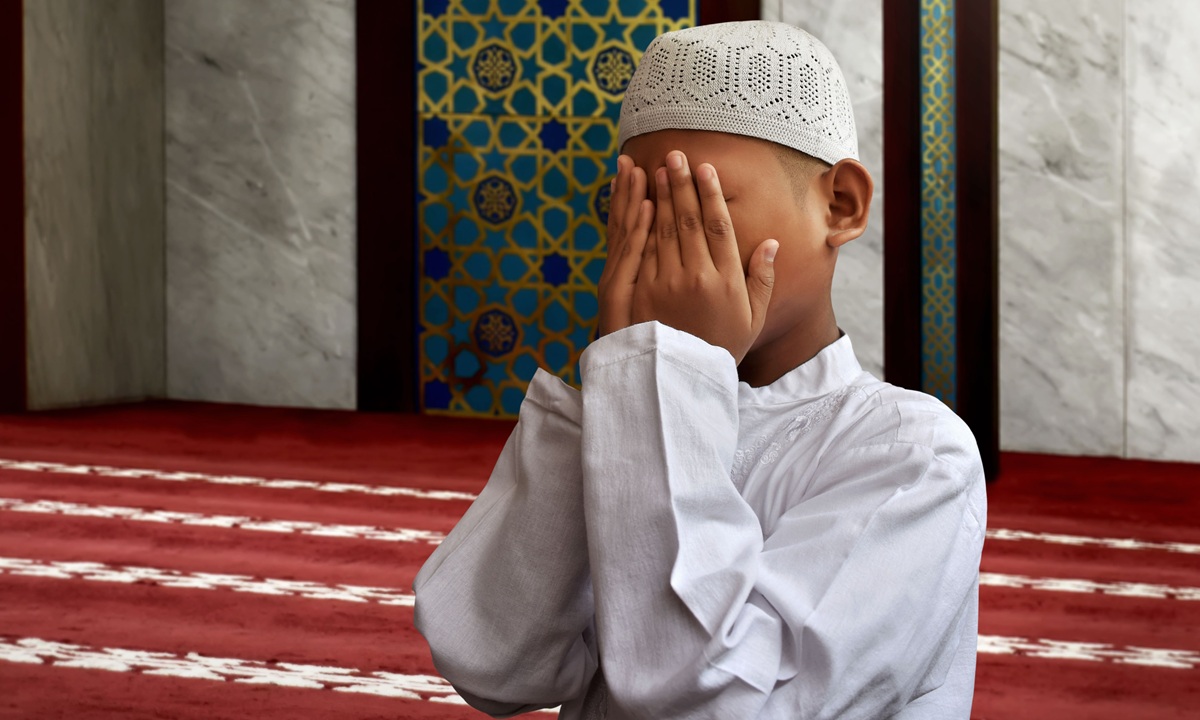
🌟 PHASE 3: BUILD THE HABIT (Ways 10–13 — consistency and motivation)
Way 10: Use Encouragement, Not Shame
You do not want your child to connect prayer with punishment or shaming.
Describe to them the immense love Allah Almighty has for them and how much we want to thank Him for all the blessings we have.
The emotional association a child forms with salah in these early years will follow them into adulthood. Parents who use shame, comparison (“your cousin already prays all five”), or punishment as the primary motivators are building a child who prays to avoid negative consequences, not one who prays out of love.
Way 11: Create a Simple Salah Chart, But Use It Wisely
Salah charts work brilliantly for some children and backfire for others. Rectify your intention when you create the chart.
Remember this is about celebrating progress and motivating your children to do better, not a performance tool or tracker that may end up overwhelming them.
Tips: let the child decorate it themselves, focus on consistency over perfection, and never use the chart to shame a missed prayer. This will deflate them and worse, reduce their self-esteem.
Way 12: Make Fajr a Special Moment
Fajr is the hardest prayer and the most important to establish in childhood, because a child who grows up praying Fajr carries that habit into adolescence and adulthood far more reliably than one who learns it later.
Some of the strategies you can include is early bedtime which is highly recommended for young children, gentle waking that doesn’t startle them into a tantrum, a warm drink of water and a quiet moment before the day begins.
Frame it as a secret between the child and Allah Almighty, something special that happens while the world sleeps.
Way 13: Connect Salah to Things They Already Love
A child who loves superheroes can be told: “Five times a day, we check in with Allah Almighty. That’s stronger than any superpower.”
A child who loves nature can be taken outside for Maghrib and shown the sky changing colour as the adhan is called.
As a parent, it is our responsibility to be creative when teaching our children something important. Analogies, stories, songs and others.
Find the bridge between what your child already loves and the meaning of salah, so that prayer starts to feel like part of their world, not separate from it.

🤲 PHASE 4: GO DEEPER (Ways 14–15 — spiritual roots)
Way 14: Share Stories of the Sahabah and How They Loved Salah
Children are moved by captivating stories far more than instructions. The story of Bilal bin Rabah (ra) calling the first adhan.
The story of the Prophet ﷺ saying “the coolness of my eyes is in salah.” The sahabi who was so deep in salah he did not feel an arrow in his body.
These are not just historical anecdotes or boring facts. These are the kinds of stories, traditions of people who found something real in prayer, and wanted it desperately.
We should practice our story-telling skills and tell them with vigour and passion so that it reaches their hearts and minds.
When children grow up knowing these stories, salah is no longer an obligation handed down by parents. It’s a practice inherited from heroes.
Way 15: Make Dua for Them, Out Loud, and In Private
This is the most underused tool in Islamic parenting and the most powerful.
When your child hears you make du’a, “Ya Allah, make my child from those who establish salah, and make salah the coolness of their eyes”, something happens in them that no instruction can replicate.
They realise: my parents want this for me enough to ask Allah Almighty for it. They begin to understand that salah is not your rule. It is Allah’s gift to all mankind, and you love them enough to want them to have it.
Conclusion
Teaching our children salah is a long game, not a quick fix we hope to see overnight.
A child’s relationship with salah is built over years of small, consistent, loving moments. Some days they’ll pray beautifully. Some days they’ll resist everything, and it’s completely fine. Human beings are never meant to be perfect. What matters is that you keep showing up, keep inviting, keep making du’a for your children so they’ll be guided on the right path, Insha’Allah..
If you’re looking for structured Islamic learning that reinforces salah and builds your child’s love for the deen in a real community environment, SimplyIslam’s Weekend Madrasah might be what you’re looking for.
FAQs
Q: At what age should I start teaching my child salah?
The Prophet ﷺ instructed parents to begin teaching salah at age 7 and to be firmer about it by age 10. However, exposure can begin much earlier — letting toddlers observe, giving them a prayer mat, and talking about Allah from infancy all lay the groundwork.
Q: My child refuses to pray. What should I do?
Resistance usually signals one of three things: the child doesn’t understand why salah matters, the emotional association with salah is negative (pressure, shame), or the habit hasn’t been built gradually enough. Go back to basics — focus on connection before compliance.
Q: Should I reward my child for praying?
Extrinsic rewards (stickers, treats) can be useful in the early stages to build habit, but should be gradually phased out. The goal is for salah to become intrinsically meaningful — something they do for Allah, not for a reward. Use praise and presence more than prizes.
Q: How do I teach salah if I’m not confident in my own prayer?
Learn alongside your child. There is something profoundly beautiful about a parent saying: “Let’s learn this together.” It models lifelong learning and removes the pressure of parental perfection.
Q: What’s the best way to teach the Arabic in salah to young children?
Start with meaning, not memorisation. When a child knows that Allahu Akbar means Allah is the Greatest, the words carry weight. Memorisation follows naturally when there’s understanding. Use repetition during actual prayer times rather than drilling separately.
Q: My child prays at madrasah but won’t pray at home. Why?
This is more common than parents realise. It usually means salah is associated with the madrasah environment but hasn’t been embedded in the home routine yet. The solution is consistency at home — praying together, making it normal, and connecting what they learn at madrasah to what happens in your family’s daily life.