
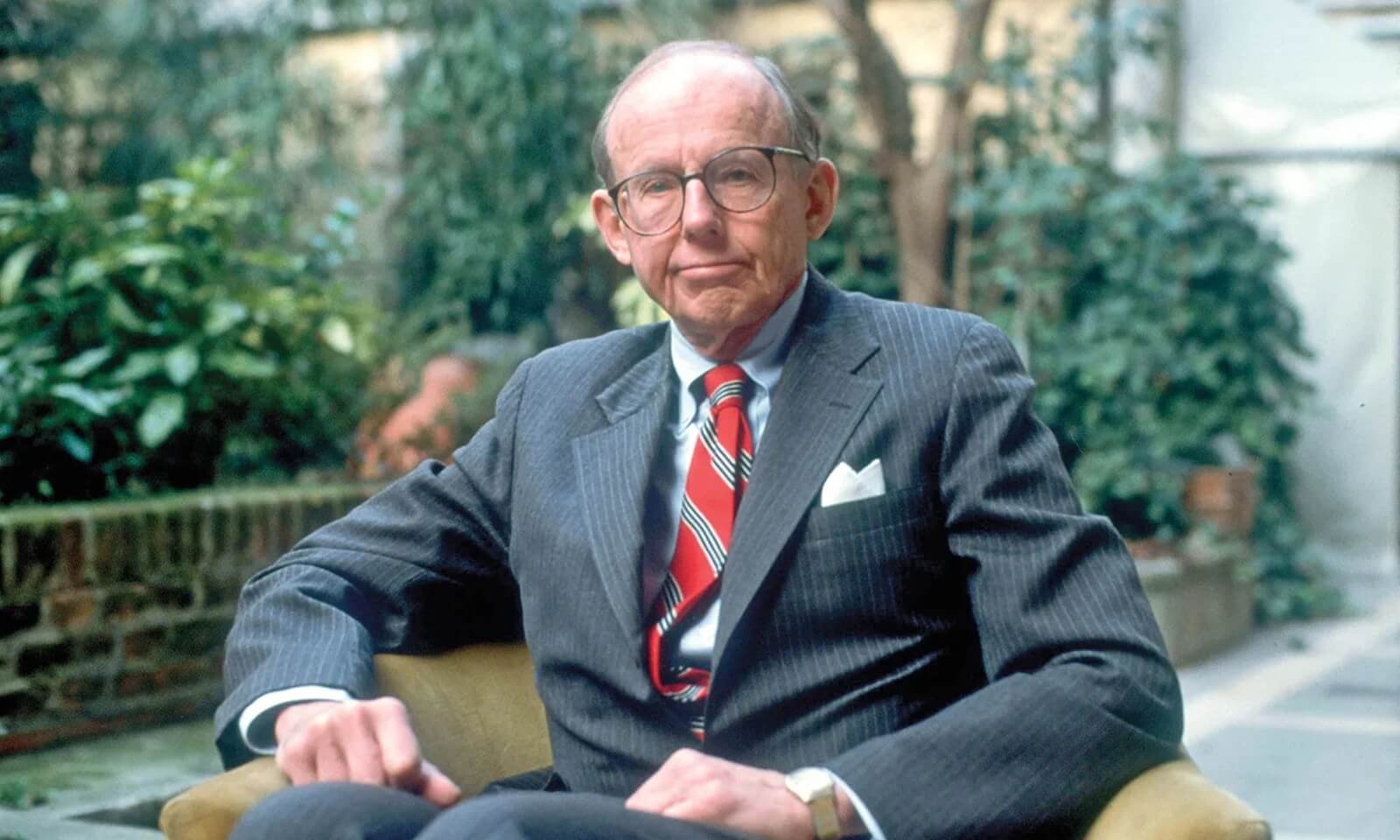
In 1993, an American political scientist named Samuel Huntington published a journal article that would go on to become one of the most debated — and most dangerous — ideas in modern geopolitics. He argued that after the end of the Cold War, the primary source of conflict in the world would no longer be ideology or economics, but culture and civilisation. He predicted that the world’s great civilisational blocs — Western, Islamic, Confucian, Orthodox, and others — would increasingly come into conflict along what he called ‘fault lines.’
For the Muslim world, Huntington’s ‘Clash of Civilisations’ thesis has never been merely an academic proposition. It has been used — and misused — to justify military interventions, discriminatory policies, and the demonisation of Muslim communities across the world. Understanding this thesis, engaging with it critically, and offering a compelling alternative vision are among the most important intellectual and civic tasks of our time.
Understanding Huntington’s Argument
To engage with an idea fairly, we must understand it accurately. Huntington was not a fool, and his thesis was not simple-minded bigotry. He was a serious scholar with decades of experience in security policy, and his argument contained genuine insights alongside its serious flaws.
Writing at the onset of the first Gulf War in 1991, Huntington observed that the end of the Cold War had removed the ideological framework — communism versus liberal democracy — that had organised global politics for half a century. In its absence, he predicted, older and deeper identities would reassert themselves: ethnic, religious, and civilisational.
He argued that the ‘fault lines’ between civilisations — particularly between the West and the Islamic world — would become the battlegrounds of the future. He pointed to historical patterns of conflict between Christian and Muslim societies, and he predicted that these patterns would intensify rather than diminish.
Huntington’s thesis is not wrong in observing that civilisational identity matters. Where it fails is in treating conflict as inevitable rather than as a choice.
The Flaws in the Thesis
Huntington’s framework has been criticised by scholars across the political spectrum, and the criticisms are well-founded. First, it vastly oversimplifies the internal diversity of each civilisation. The ‘Islamic world’ is not a monolith — it encompasses over 1.8 billion people across dozens of nations, languages, cultures, and theological traditions. To treat this diversity as a single unified ‘civilisation’ with unified interests and values is analytically incoherent.
Second, the thesis treats conflict as the natural state of inter-civilisational relations, ignoring centuries of productive exchange, trade, scholarship, and mutual enrichment between Muslim and non-Muslim societies. The Islamic Golden Age was built, in part, on the absorption and transformation of Greek, Persian, Indian, and Chinese knowledge. Civilisations have always been in dialogue — even when they have also been in conflict.
Third, the thesis became a self-fulfilling prophecy in dangerous ways. When political leaders accepted the frame of civilisational clash, their policies produced the very conflicts they claimed to be responding to. The Iraq War — widely acknowledged as catastrophic — was shaped partly by a worldview that saw the Islamic world as a monolithic adversary to be subdued.

An Islamic Alternative: The Dialogue of Civilisations
Five years after Huntington’s article, a leader from one of the countries most associated with anti-Western sentiment offered a striking counter-proposal. In 1997, Iranian President Seyed Mohammad Khatami launched his ‘Dialogue Among Civilisations’ initiative — first as an election campaign idea, then as a formal proposal to the United Nations General Assembly.
Khatami’s proposal was politically courageous. Iran had defined itself for nearly two decades by its hostility to the West; the slogan ‘Death to America’ was a standard fixture of public gatherings. Against this backdrop, Khatami argued that the world needed not confrontation but understanding — that cultures and civilisations need not collide if people genuinely seek to know one another.
His proposal found remarkable resonance. The UN General Assembly, on 4 November 1998, proclaimed 2001 as the Year of Dialogue Among Civilisations. Unfortunately, 2001 would be remembered for something very different — but the principle Khatami articulated remains as urgent as ever.
Khatami’s vision was grounded in an Islamic understanding of humanity. Islam teaches that Allah created human beings in diverse nations and tribes so that they may come to know one another (Quran 49:13). Diversity is not a problem to be solved; it is a divine gift to be honoured through genuine encounter. True dialogue, Khatami argued, cannot take place without sympathy and affection, and without a genuine effort to understand others without the desire to overpower them.
What Islam Actually Teaches About Other Civilisations
The Islamic tradition has rich resources for thinking about civilisational diversity and inter-religious relations. The Quran acknowledges the existence of many communities and traditions, affirms the dignity of all human beings, and commands Muslims to respond to hostility not with matching hostility but with wisdom and fair argument (Quran 16:125).
Islamic history is full of examples of productive engagement with other civilisations. The Abbasid caliphate’s translation movement — in which Greek, Persian, Indian, and Syriac texts were translated into Arabic on a massive scale — was one of the greatest acts of civilisational dialogue in human history. Muslim scholars did not simply absorb this knowledge passively; they critically evaluated it, debated it, built upon it, and ultimately transformed it.
Islam has never been threatened by knowledge from other traditions. What threatens Islam is not engagement with the world, but the retreat from knowledge, from wisdom, and from the prophetic vision of a just and merciful society.
The Muslim Community’s Response in Singapore
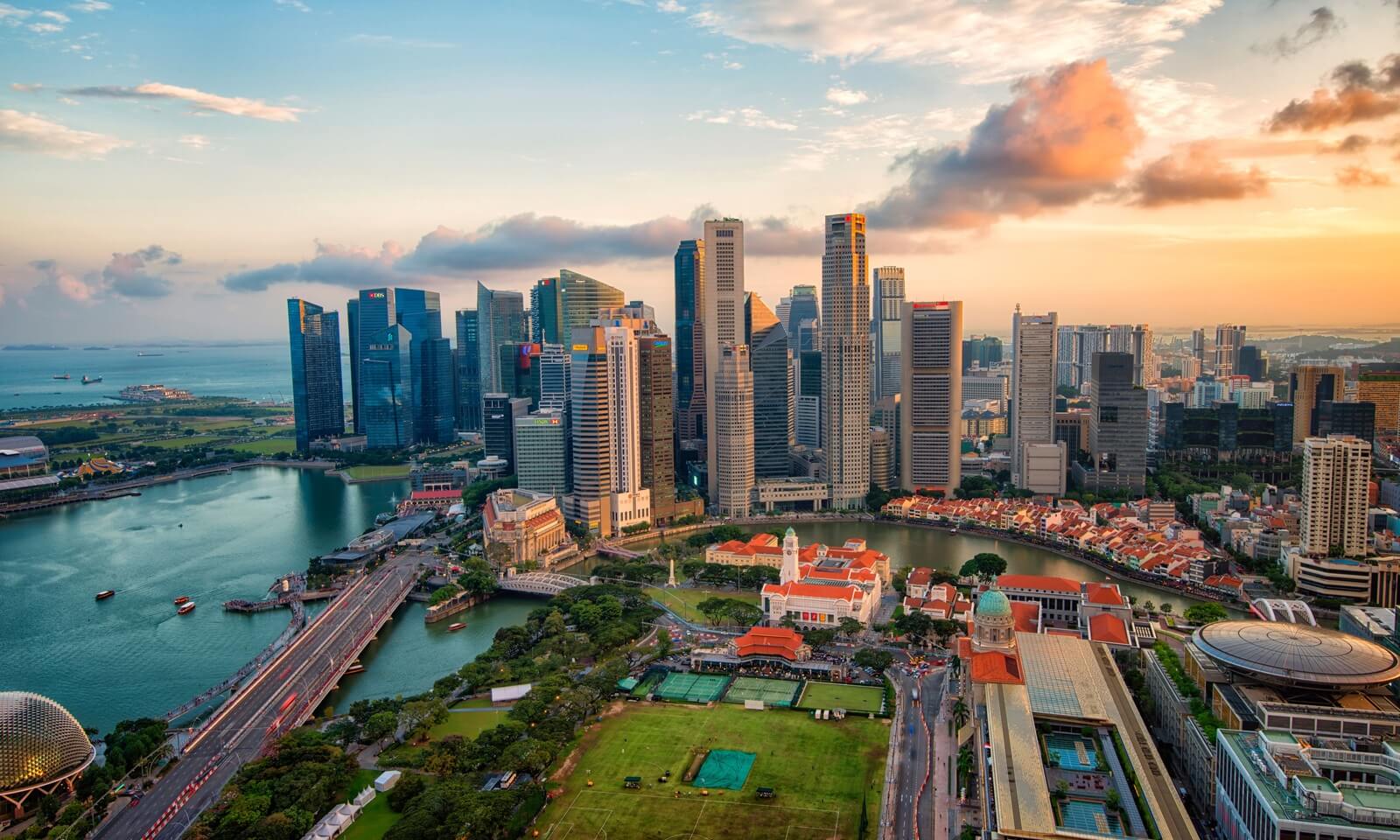
For Singapore’s Muslim community, the choice between the ‘clash’ narrative and the ‘dialogue’ vision is not abstract — it plays out in our daily lives. We live in one of the most religiously diverse cities in the world, sharing neighbourhoods, schools, and workplaces with people of many faiths and cultures. The question of how to engage with this diversity is deeply practical.
The Islamic tradition gives us clear guidance. We are called to be witnesses to justice (Quran 4:135), to cooperate in goodness and piety (Quran 5:2), and to speak with wisdom and beautiful counsel (Quran 16:125). These are not just principles for inter-faith relations — they are the foundations of a genuinely Islamic approach to civic life in a plural society.
Engagement across religious and cultural lines does not require us to compromise our faith. It requires us to live our faith fully — with confidence, integrity, and genuine care for others. The Muslim who knows her or his tradition deeply, and who engages with the world from that foundation, is the best ambassador for Islam.

Conclusion: Choosing Dialogue
Samuel Huntington was right that civilisational identities matter. He was wrong to conclude that conflict is their natural expression. The Islamic tradition — at its best — has always understood that human diversity is an invitation to mutual enrichment, not a cause for war.
As Singapore’s Muslim community, we have a unique opportunity to embody the dialogue of civilisations in our own context. We can show, through how we live, that a deeply committed Muslim is also a deeply engaged citizen; that Islamic values are not an obstacle to plural coexistence but one of its most important foundations.
May Allah make us ambassadors of wisdom, justice, and peace in our communities and in the world. Ameen.
Mohamed Nassir is Chairman of the SimplyIslam Education Group and is Head of Studies at the Inter-Religious Relations in Plural Societies (SRP) Programme at the S. Rajaratnam School of International Studies (RSIS), Nanyang Technological University (NTU), Singapore. His research interests include interfaith studies, Islamic education, and religious exclusivism and extremism.